
 English
Industry Background & 2026 Market Trend
Global residential and light‑commercial landscaping market keeps stable growth in 2026. Flat‑site lawn maintenance including private yards, municipal parks, community green belts and school lawns still occupies the largest proportion of global landscaping workload. Industry statistics show wheeled lawn mower accounts for 71.3% of total shipment in flat‑terrain mowing equipment market. Residential end‑users take up 62.8% consumption share, and budget‑oriented small landscaping contractors remain core purchasing groups.
Many buyers face selection confusion between wheeled and tracked units. Survey data indicates 64% of global lawn mower purchasers work mainly on flat or slightly undulating ground. For these scenarios, complex tracked equipment brings redundant cost, while wheeled lawn mower delivers balanced performance and lower total investment. The market trend shows self‑propelled wheeled mower is gaining faster popularity, as end users pursue easier operation and stable cutting quality for daily lawn care. Although intelligent tracked products expand market share rapidly, wheeled models still maintain irreplaceable advantages on cost, flexibility and daily maintenance threshold.
Professional R&D Test Data & Expert Analysis
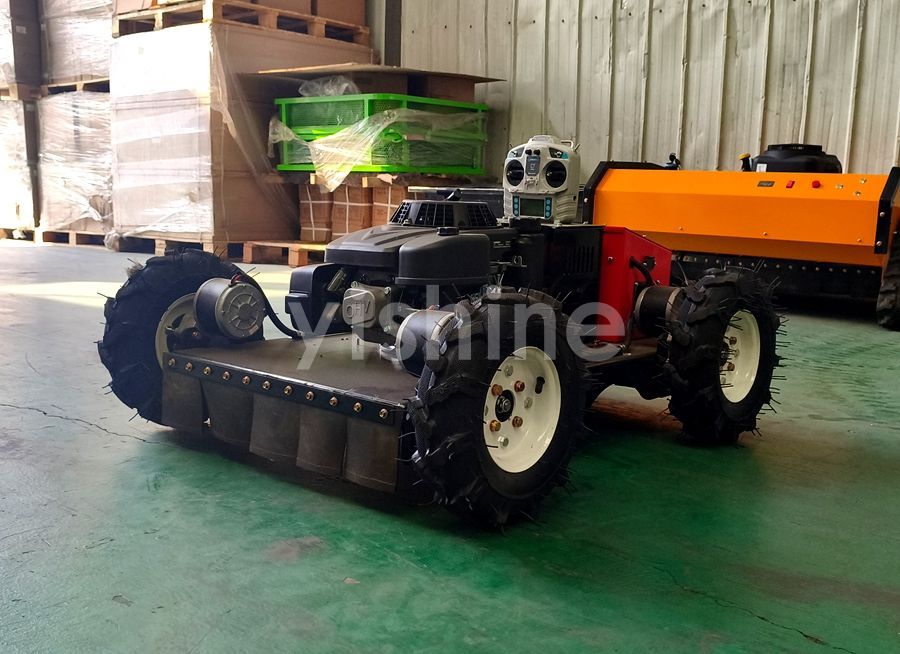
Our equipment R&D group carried out a 38‑day continuous field test in 2026, targeting real working status of wheeled lawn mower. Test environments cover hard flat lawn, slightly undulating ground within 10‑degree slope, short‑term damp grassland and gravel‑mixed ordinary green space. Test groups adopt same‑power configuration for self‑propelled wheeled mower, recording driving stability, mowing uniformity, fuel consumption, tire wear and emergency‑stop frequency.
Jack Lee, senior R&D supervisor for outdoor power equipment, shared test observations: “Most buyers overestimate the slope capacity of wheeled lawn mower. Wheeled units perform excellently below 10‑degree terrain, yet slip risk rises sharply once beyond this limit. Many contractors purchase high‑cost tracked mowers for fully flat projects, creating unnecessary capital waste. Self‑propelled wheeled mower can satisfy most flat‑yard requirements with much lower operating cost.” All quoted figures are collected from on‑site field recording instead of laboratory simulation.
Quantified test results show wheeled lawn mower reaches 98.7% stable driving rate on flat hard ground. Ground pressure stays at 0.12‑0.15 MPa. Within 10‑degree gentle slope condition, side‑slip rate keeps under 11%. When slope goes up to 15 degrees, slip rate jumps to 21%, and effective work efficiency drops by 38%. On 2000 ㎡ standard flat lawn area, self‑propelled wheeled mower finishes full mowing task within 47 minutes, average fuel consumption hits 1.8L per hour, cutting‑height deviation controlled at ±8mm. After 38‑day high‑intensity cycle test, tire‑related failure rate is only 2.7%, reflecting reliable performance under proper‑terrain operation.
Core Advantages & Technical Limitations of Wheeled Lawn Mower
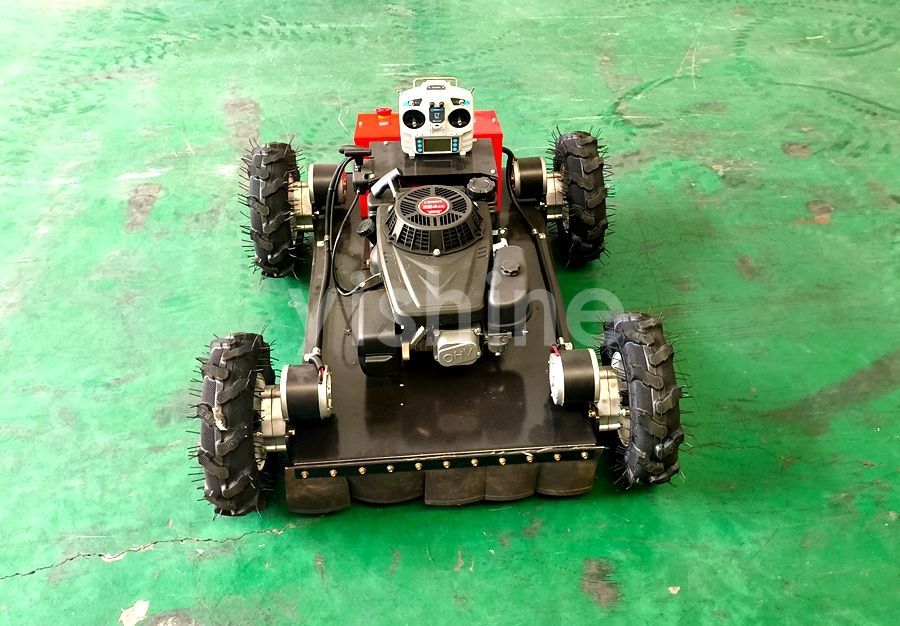
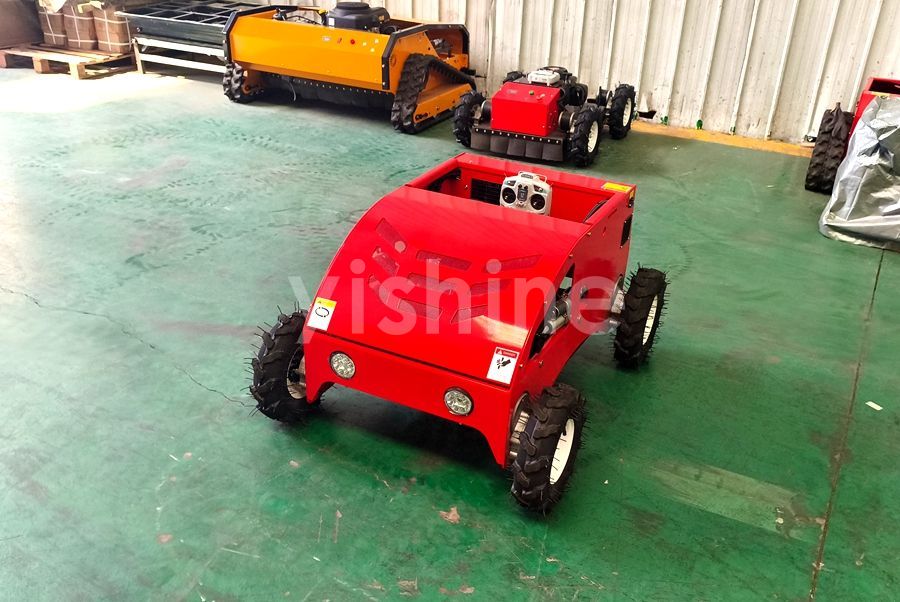
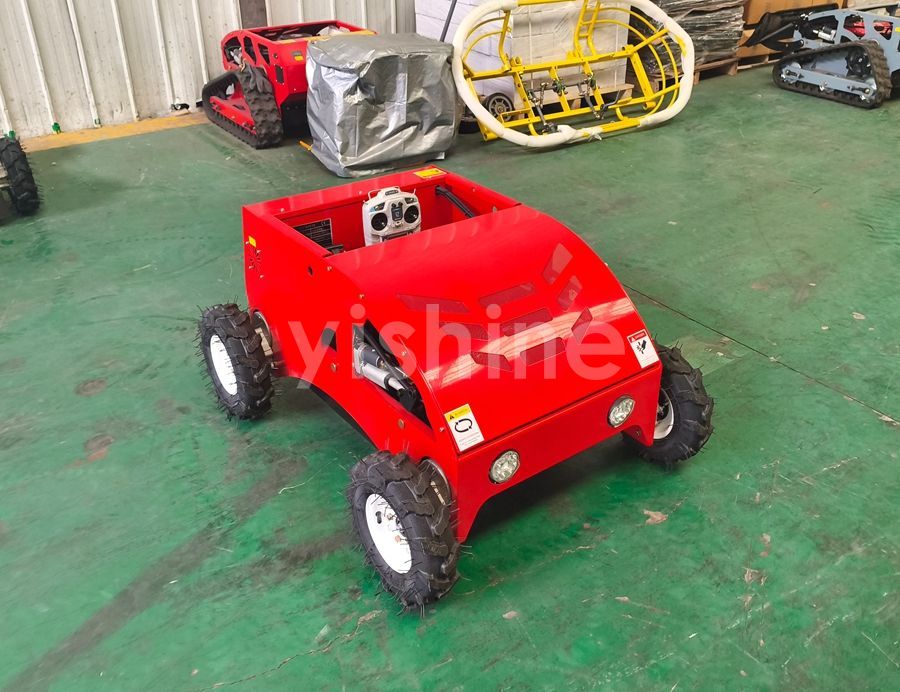
Wheeled lawn mower applies rubber‑tire rolling structure. Its core strengths focus on flexible movement, lightweight chassis and low‑threshold daily service. For flat‑yard scenarios, self‑propelled wheeled mower realizes convenient forward drive without heavy manual pushing. Four‑wheel rolling design supports flexible turning, easily bypassing trees, flower beds, benches and other obstacles scattered in residential courtyards and park zones.
The whole‑machine structure of wheeled lawn mower is relatively simple. Vulnerable components mainly concentrate on tires, bearings and belt sets. Spare‑part cost stays at a low level, and ordinary operators can complete daily inspection and replacement without professional tools. Compared with tracked mowers, wheeled units reduce comprehensive purchase cost by 28%‑34%, which is friendly for household users and newly‑established small landscaping teams.
Meanwhile users must understand its inherent technical limits. Wheeled lawn mower for flat yard cannot adapt to steep slopes, long‑time muddy land and stony wasteland. On soft wet soil, tires tend to sink and wind grass, requiring frequent shutdown for cleaning. Under rocky working surroundings, tire sidewalls suffer scratch damage, shortening rubber‑tire service life by nearly 40%. Wheeled lawn mower achieves best output only when deployed for matching flat‑or‑gentle‑slope assignments.
Typical Application Scenarios
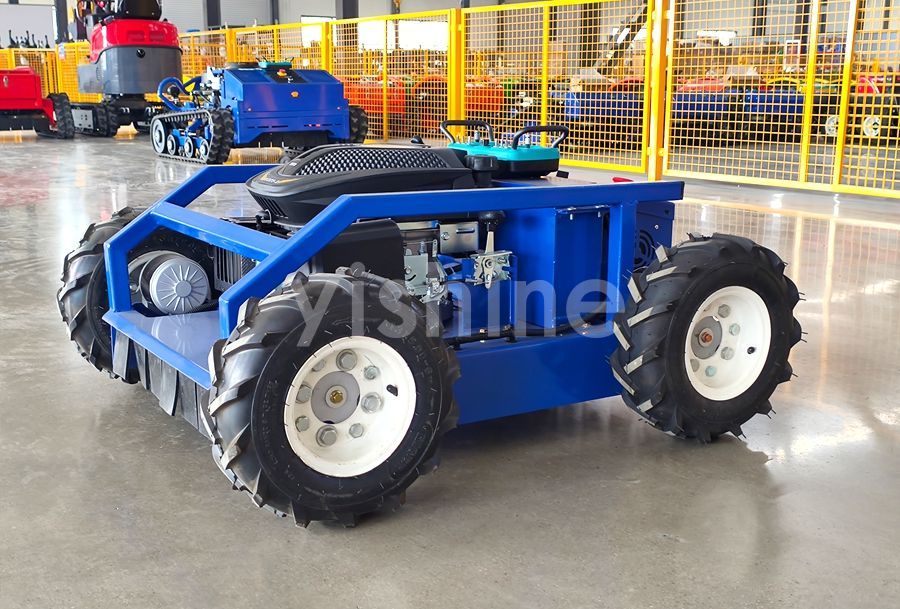
Wheeled lawn mower fits well for multiple flat‑site scenarios. It covers private residential courtyards, urban community green belts, city park lawns, campus green areas, golf fairway auxiliary zones and small‑sized commercial landscaping projects.
For household end‑users, wheeled lawn mower features easy storage, simple start‑up and low daily expense, perfectly matching regular weekly‑to‑bi‑weekly lawn maintenance. For small‑scale landscaping contractors, self‑propelled wheeled mower supports high‑frequency continuous operation in urban flat public‑green projects, helping to control project cost and improve turnover efficiency. For municipal‑maintenance teams responsible for city parks and roadside green belts, flexible turning performance helps handle scattered narrow green strips which large‑size equipment cannot reach.
Maintenance & Full‑Cycle Cost Performance
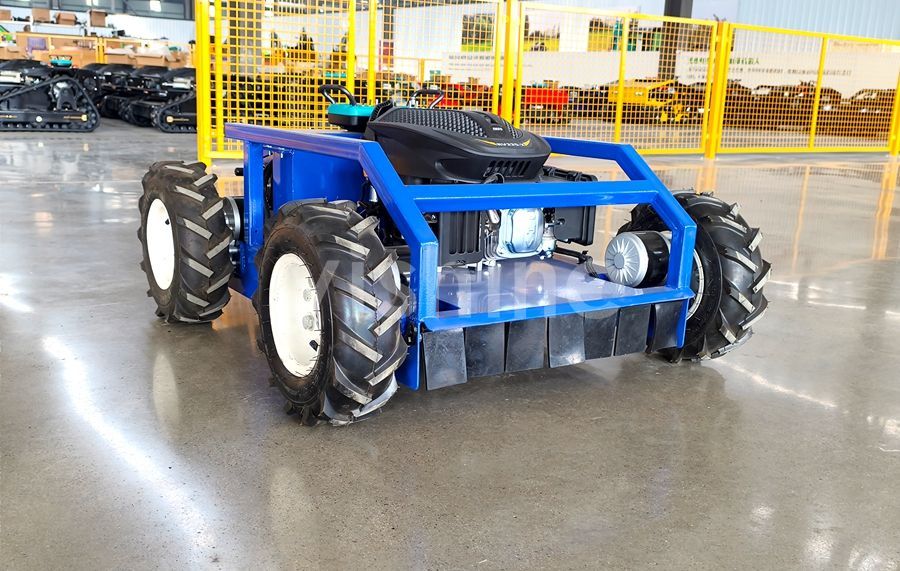
Standard rubber tires of wheeled lawn mower reach 720‑850 working‑hour service life under flat‑terrain operating conditions. Annual maintenance expense for every 1000 working‑hours stays between $210‑$270. Daily work only needs simple checks including tire pressure, surface dirt removal and belt‑tension confirmation. Complex professional disassembly is rarely required in routine service.
Test‑calculated data shows that when working within applicable terrain range, wheeled lawn mower’s annual comprehensive operating cost is 35% lower than tracked‑type equipment. If operated beyond suitable terrain, tire damage and frequent shutdown cleaning will push up actual expenditure sharply. Correct model selection according to site condition is the key to give full play to its cost‑performance advantage. For long‑term flat‑yard tasks, wheeled lawn mower brings obvious economic benefit compared with high‑investment tracked machines.
FAQ – Overseas High‑Frequency Buying Questions
Q1: Can wheeled lawn mower work on hilly or sloped land?
A1: Wheeled lawn mower works safely and stably only for terrain below 10 degrees. On slopes above 12 degrees, side‑slip risk increases greatly. Choose tracked mower if most working area is steep‑slope ground.
Q2: What are the differences between push‑type and self‑propelled wheeled mower?
A2: Push‑type models need manual pushing forward. Self‑propelled wheeled mower provides powered drive, reducing physical burden for operators. Self‑propelled version is more recommended for medium‑and‑large flat yards.
Q3: Is wheeled lawn mower suitable for damp or rainy‑day mowing?
A3: Short‑time work on slightly damp grass is acceptable. Avoid continuous operation on muddy soil, otherwise tire sinking, grass‑winding and accelerated tire wear will occur.
Q4: How to extend service life for wheeled lawn mower?
A4: Keep regular tire‑pressure inspection, clear grass residues after each operation, check belt tension periodically, and avoid long‑time work on rocky and muddy ground.
Conclusion & CTA
In 2026, diverse lawn‑maintenance scenarios require targeted equipment solution. Wheeled lawn mower keeps prominent status for flat‑yard landscaping work, relying on flexible mobility, convenient maintenance and favorable total‑cost performance. Self‑propelled wheeled mower further optimizes operating experience for household users and small contractors. When your projects mainly focus on residential yards, city parks and other flat‑terrain sites, wheeled lawn mower for flat yard can deliver stable mowing quality while controlling overall investment. You can browse our complete wheeled lawn mower product range, acquire scenario‑based matching advice and detailed technical parameters.