
 English
Against the backdrop of fast‑growing global landscaping and slope maintenance industries, more commercial contractors and farm operators are shifting from manual grass removal to automated machinery. Traditional walk‑behind and ride‑on mowers encounter multiple bottlenecks when working on steep slopes, uneven ground and orchard zones. Slip risk, low working efficiency and high labor cost have long troubled many project operators, pushing market demand for remote control lawn mower robot to keep rising in recent years.
Our technical team completed a 42‑day continuous field test covering hillside orchard, riverbank slope and wild grassland scenarios, aiming to record the actual working data of remote lawn mower under real‑world operating conditions. The test team set up comparison groups between remote control lawn mower robot and conventional wheeled mowing equipment, recording working speed, slip rate, fuel consumption, cutting qualification rate and continuous working duration in different terrain environments. In slope test sections with inclination between 22‑32 degrees, the remote control lawn mower robot reduced ground slip occurrence to less than 3%, while ordinary wheeled mowing machines recorded slip rate up to 27% under identical terrain. In terms of working efficiency, the tested remote lawn mower finished grass‑cutting tasks 22% faster than manual operation with same cutting width, and the qualified rate of grass cutting height reached 94.2% across 126 test sampling points.
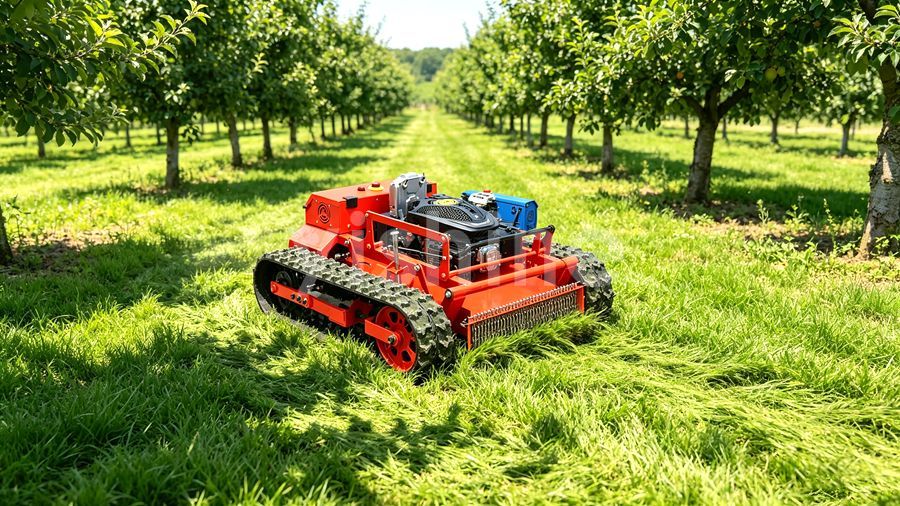
Li Ming, R&D Director of the machinery manufacturing department, shared professional observations based on the whole round of field verification. “Many buyers only focus on engine parameters when selecting lawn mower for grass cutting, ignoring chassis traction performance and remote‑control anti‑interference capability. On rugged sites, even powerful engines cannot deliver stable output if traction is insufficient. Our test data shows that chassis structure determines over 60% of comprehensive field performance for remote‑operated mowing devices.” He further explained that signal stability directly influences operational safety. Under outdoor conditions with partial tree barrier, qualified remote control lawn mower robot should maintain stable signal connection within rated remote distance, and trigger immediate blade stop once signal loss is detected, which serves as a core safety indicator for commercial‑grade models.
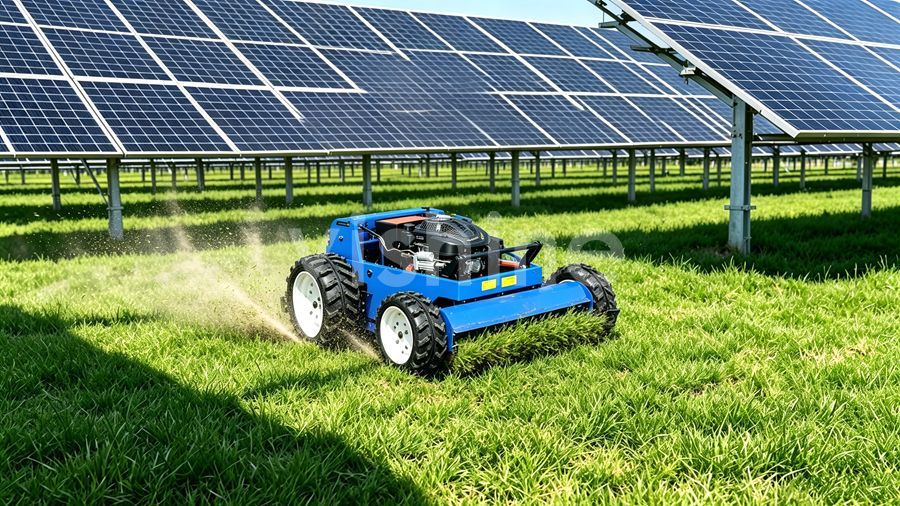
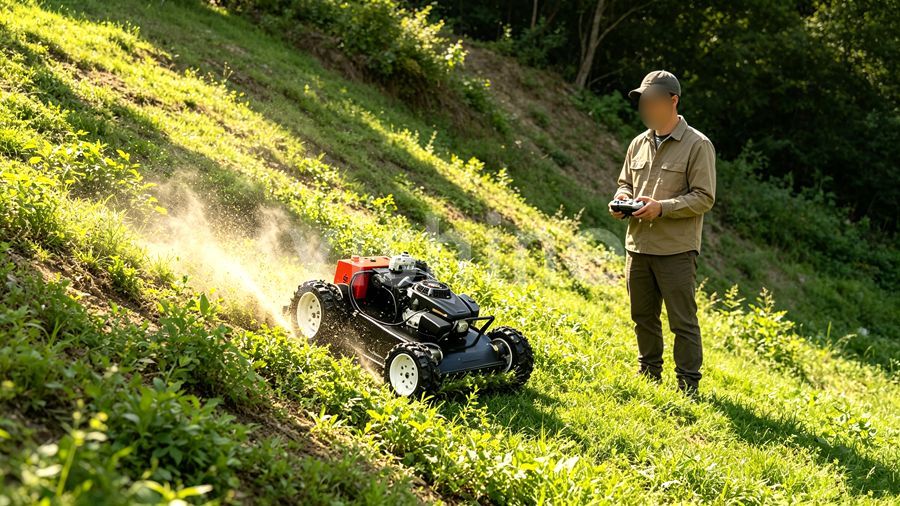
The core working logic of remote lawn mower lies in separating operators from high‑risk working zones. Operators finish walking, steering and cutting‑height adjustment via handheld remote controller on flat safe ground, without standing on slippery slope surfaces. For orchard grass management, photovoltaic station weed clearance and highway slope green maintenance, this operating mode greatly lowers injury risks caused by slipping, falling and blade contact. During our 42‑day test cycle, the remote control lawn mower robot completed continuous shift operation up to 7.8 hours each day under mixed thick‑grass conditions, dealing with mixed growth of weeds and soft shrub shoots. For lawn mower for grass cutting applied on slope projects, uniform ground pressure distribution avoids deep sinking on soft muddy soil, protecting root systems of surface vegetation while finishing mowing work, which satisfies requirements of ecological slope‑protection maintenance.
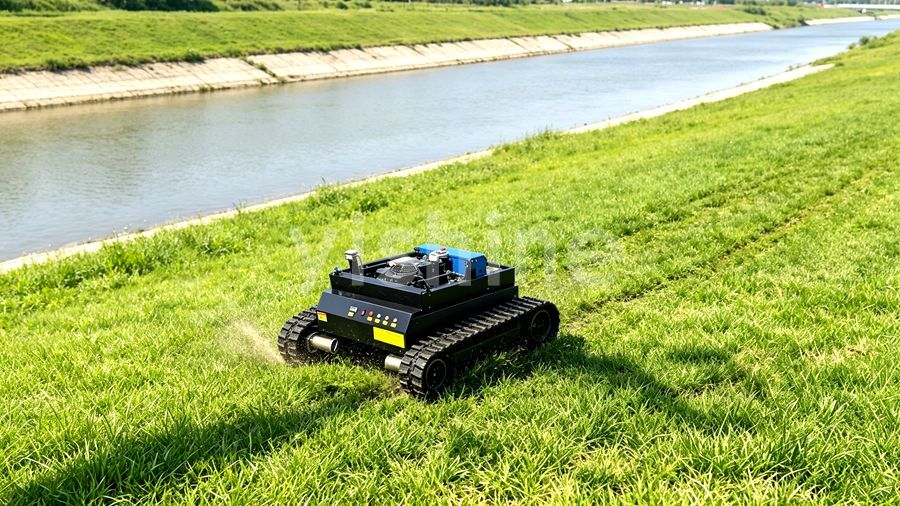
Apart from field working performance, daily maintenance condition determines the whole service life of remote control lawn mower robot. According to test‑period statistics, regular daily inspection including blade cleaning, track tension adjustment and air‑filter check can cut long‑term component replacement frequency by roughly 28%. Many end‑users overlook post‑operation cleaning work; grass residue and mud accumulated inside chassis will accelerate wear of transmission assemblies. The R&D department optimized partial module disassembly structure for the tested remote lawn mower, allowing operators to finish core component inspection without special tools, shortening daily maintenance time to within 18 minutes per shift. For bulk‑purchase landscaping enterprises, this improvement brings obvious time saving in daily equipment management work.
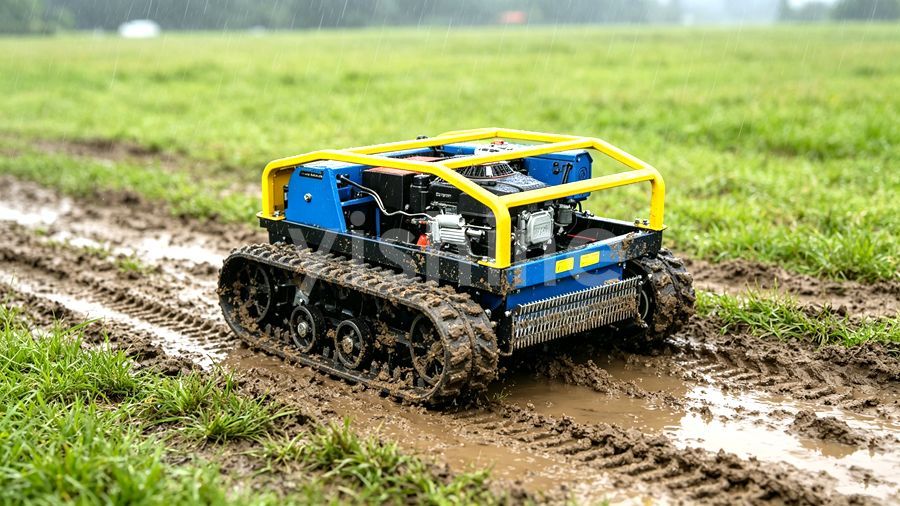
Different application scenarios put forward differentiated requirements on lawn mower for grass cutting. Gentle flat ground can adopt multiple mowing solutions, while slopes exceeding 20 degrees, fruit‑tree orchard under‑tree zones and riverbank soft soil areas are more suitable for remote‑controlled tracked configuration. Purchasers need to confirm maximum terrain inclination, average grass height of working sites and daily required mowing area before selection. Excessively pursuing high‑power configuration without matching actual site conditions will cause resource waste, while selecting under‑powered units leads to frequent overload operation and shortened machine lifespan. Real‑world test data is more valuable than theoretical parameter sheets when making purchasing decisions, as parameter indexes under laboratory environment often deviate from complex outdoor working conditions.
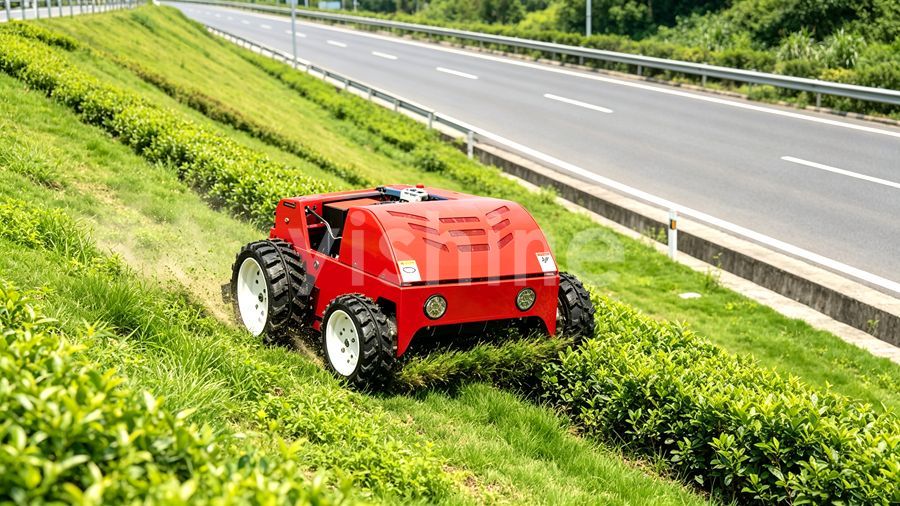
Market feedback collected from global dealers also reflects growing recognition of remote control lawn mower robot. Landscaping contractors point out that labor cost keeps climbing year by year, and experienced slope‑mowing operators become harder to recruit. Remote lawn mower helps one operator manage multiple sets of equipment under proper arrangement, improving overall project capacity without expanding worker quantity. For small‑and‑medium farm owners, flexible unit size makes lawn mower for grass cutting accessible for orchard and pasture weed management, solving the pain point of high cost of large‑size professional equipment.
Even with mature machinery performance, standardized operation still cannot be ignored. Operators need to read through operation manuals, get familiar with emergency‑stop trigger method, and check remote‑control battery status before each startup. Do not carry out maintenance work when engine is running. Regularly observe blade wear condition; heavily worn blades will reduce cutting quality and bring extra load to power assemblies. Storage environment also influences equipment status: keep remote control lawn mower robot in dry ventilated space after finishing work, clean grass clippings and mud to prevent corrosion of metal parts and aging of rubber components.
Frequently Asked Questions
What terrain can remote control lawn mower robot adapt to?
This remote lawn mower fits hillside slopes, orchards, riverbank zones, photovoltaic stations and wild grassland. Track‑type chassis delivers good passing performance on uneven and soft ground, applicable for most slope‑greening and farm grass‑removal work.
How about the anti‑interference performance of remote‑control signal?
Commercial‑grade lawn mower for grass cutting adopts anti‑interference frequency‑hopping module. Under normal outdoor environment with partial tree obstruction, it maintains stable signal transmission. Once signal disconnects, the machine will stop blades and walking movement automatically for safety protection.
How much time does daily maintenance take?
Under normal working conditions, routine cleaning and inspection for remote control lawn mower robot takes about 15‑20 minutes each day. Modular structure simplifies disassembly work, and no special professional tools are required for daily check items.
Can it handle thick overgrown weeds?
Matching with proper blade assemblies, remote lawn mower can cut thick grass and thin shrub shoots. When facing highly overgrown vegetation, multiple low‑height cutting passes are recommended to avoid long‑time overload of power system.
What is the main advantage compared with traditional mowing machines?
The core advantage of lawn mower for grass cutting lies in safety and terrain adaptability. Operators work from safe distance, effectively lowering slope‑operation risks. On inclined and uneven ground, it keeps stable traction, obtaining higher qualified cutting rate than many conventional wheeled mowing machines.