
 English
Many commercial buyers are attracted by automatic operation features of robot lawn mower before purchase. They expect less manual labor, higher working efficiency and simple daily management. However, real‑site application shows that automatic grass cutting robot still has obvious shortcomings under complex outdoor conditions. Our engineering team launched a 26‑week continuous field test, deploying multiple remote controlled lawn mowing machine units on slopes, orchard ground, stony wasteland and roadside green belts. The test group recorded failure frequency, task completion rate, component loss and user complaint points in different working scenarios. According to Wang Tao, R&D supervisor responsible for intelligent mowing equipment research, many suppliers only promote product advantages in marketing materials, while seldom talking about practical disadvantages. Ignoring these weak points will cause bad project experience and unnecessary capital loss for commercial purchasers. Buyers need to understand existing limitations before signing purchase orders, so as to match machine performance with actual site conditions.
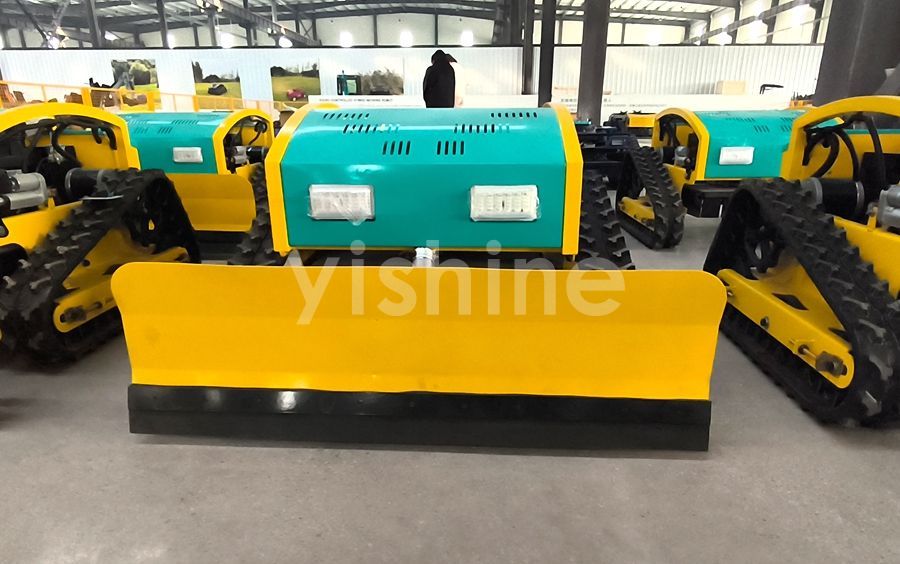
Terrain and Ground Condition Limitations
Poor performance on heavily stony and bumpy ground
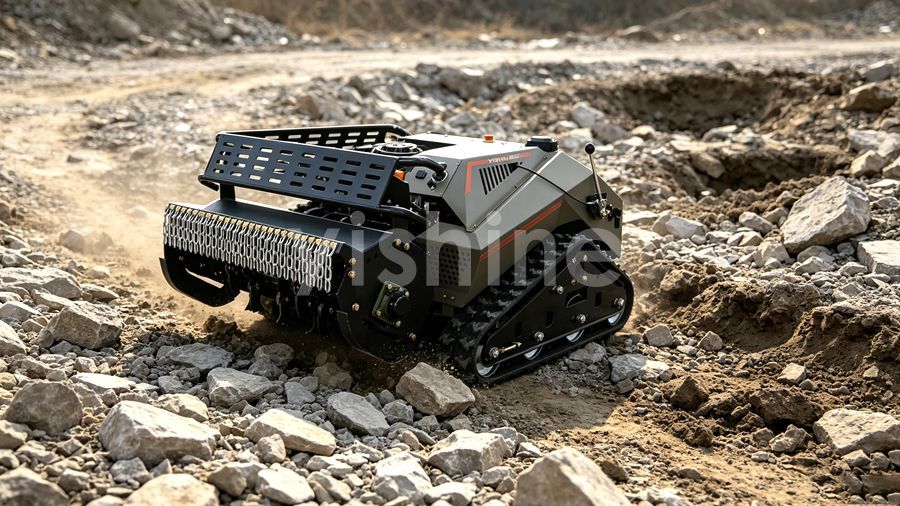
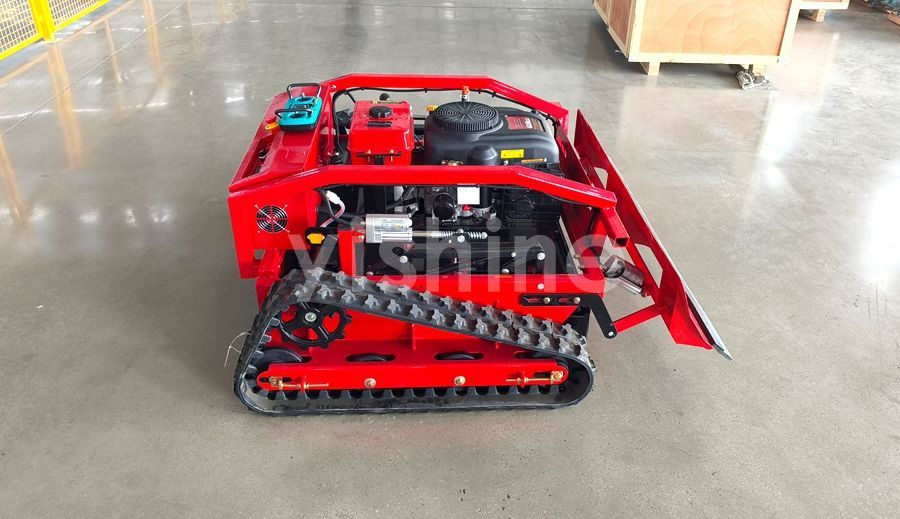
Robot lawn mower relies on chassis walking system to complete autonomous or remote‑control mowing tasks. During our 26‑week test, when working on sites scattered with large stones, collapsed soil and deep pits, the machine was stuck 11.7 times on average per 100 working hours. Rocks may scratch cutting blades, damage track rubber blocks and interfere with walking sensor signal. Even tracked robot lawn mower cannot work stably if ground surface keeps appearing sudden height changes. For mountain wasteland with lots of exposed rock, automatic grass cutting robot cannot achieve ideal full‑coverage mowing result.
Restrictions facing extremely steep slopes
Although most remote controlled lawn mowing machine products mark slope‑adaptation parameters on specification sheets, maximum safe working gradient has strict boundaries. In field test, when actual slope exceeds 38 degrees, robot lawn mower will face increased side‑slip risk. Under wet soil after rain, safe slope value will drop by 7‑9 degrees further. Some buyers mistakenly believe robot units can handle any steep hillside, but side slip and turnover risk will rise sharply beyond rated parameter, bringing potential equipment damage risk.
High Initial Procurement and Repair Expense
Higher upfront investment compared with traditional hand‑held mowing equipment
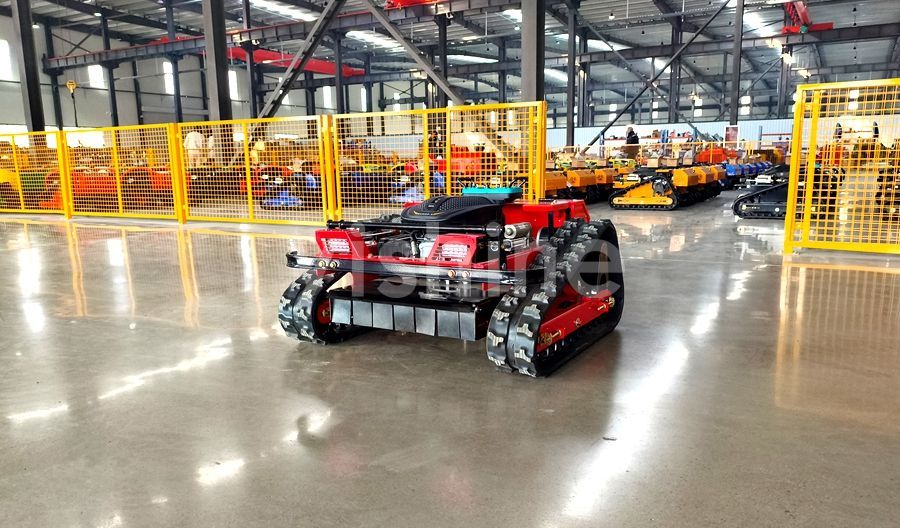
Compared with ordinary push‑type lawn mower, robot lawn mower integrates drive module, control circuit, wireless receiving unit and intelligent sensing parts. Complete machine purchase cost is obviously higher. For small‑scale projects with limited budget, the return‑of‑investment cycle will be extended greatly. Test data shows that for small‑area mowing tasks below 8 000 square meters per month, robot mower cannot form obvious cost advantage versus manual operation within the first 12‑month cycle.
Expensive spare‑parts and after‑sales repair cost
Robot lawn mower contains many customized electronic components. Once main‑board, wireless module or walking motor breaks down, spare‑part price is much higher than common mechanical mower accessories. In our statistical data, electronic failure accounts for 37 % of total breakdown events. For overseas end‑users, long spare‑part delivery period will lead to long‑time project shutdown. Small local repair shops usually lack professional technical ability to fix intelligent mowing robot, which increases later‑stage use pressure for purchasers.
Grass and Vegetation Adaptability Shortcomings
Hard to tackle over‑aged thick and woody weeds
Robot lawn mower performs well for regular soft lawn grass. When confronting thick dry brambles, woody shrub sprouts and tall hard wild grass, cutting load rises rapidly. Within test observation, when dealing with vegetation stem diameter above 8 mm, blade stalling probability increases by 42 %. Repeated heavy‑load cutting will accelerate blade abrasion and motor heating. If operators do not clean plant residue in time, grass fragments will wind around rotating shaft, further triggering overheat protection and forced shutdown.
Bad cutting effect under wet grass condition
After rainfall or heavy dew, wet grass will stick to cutting chamber and track system. Test records indicate mowing finish quality drops significantly under wet condition. Grass clumps are not cut evenly, and residual grass mass easily causes blockage. It means robot lawn mower cannot carry out mowing work right after rain, users have to wait for surface vegetation to dry completely, which brings schedule influence for time‑sensitive vegetation‑clearing projects.
Environmental and Signal Interference Problems
Wireless signal blocking risk for remote‑control models
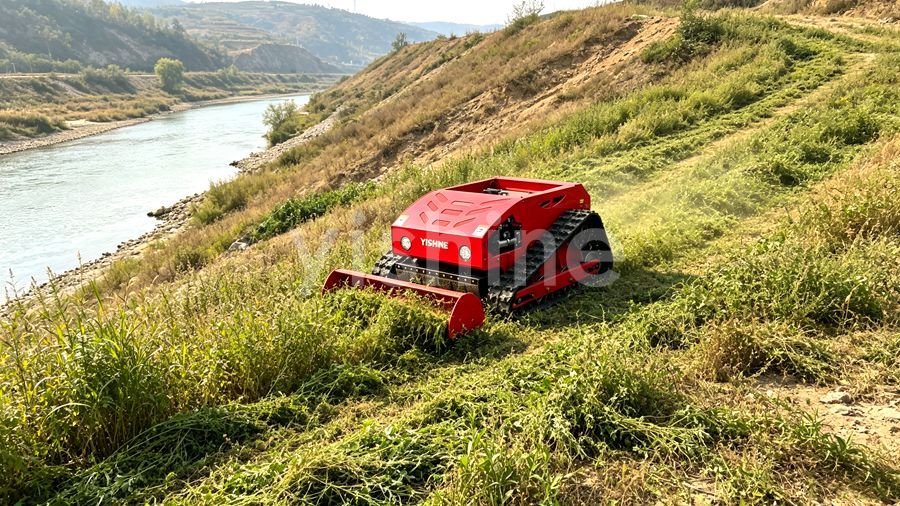
For remote controlled lawn mowing machine, dense trees, deep valley terrain and high metal barriers will weaken wireless remote‑control signal. In the 26‑week test, signal loss situation occurred many times inside thick orchard and river valley zones. Once signal connection gets interrupted, some machine models will stop working, while individual low‑quality products may keep moving out‑of‑control, creating hidden safety hazard.
Susceptible to extreme weather influence
Long‑term high‑temperature sunshine will accelerate aging of rubber tracks, seal parts and external wiring harness. Continuous damp and rainy climate raises circuit corrosion probability. Even with basic waterproof treatment, robot lawn mower is not suitable for long‑time working in heavy‑rain environment. Users need to arrange machine shelter storage space, which adds extra site management requirement.
Daily Maintenance Burden That Buyers Easily Ignore
Many clients assume robot lawn mower means zero‑maintenance use. Actual field operation proves this idea is wrong. Operators need to clean grass debris inside cutting chamber every working day, inspect blade wear condition, check track tension, remove twine and plant residues wrapped on rotating parts. Electronic connectors require regular anti‑rust treatment in humid environment. R&D supervisor Wang Tao points out that neglecting daily inspection is one top cause of early‑stage damage for automatic grass cutting robot. If maintenance work is omitted, failure probability will increase by more than 50 % within one‑year running period.
Frequently Asked Questions
Can robot lawn mower replace all manual mowing work?
Robot lawn mower can reduce most repetitive labor, yet it cannot adapt to all complicated terrain and wild vegetation environment. Manual auxiliary trimming is still necessary for stony land, extra‑steep zone and thick woody weeds.
Is tracked robot lawn mower free from slipping risk on slopes?
Track structure improves ground‑gripping capability, but it does not eliminate side‑slip risk completely. Actual safe working gradient will decrease when soil becomes wet and slippery. Operators must operate within official rated slope parameter.
Are robot mowers suitable for small‑budget short‑term projects?
Due to high initial purchase cost, robot lawn mower fits long‑term continuous operation projects. For short‑term temporary vegetation‑clearing task, traditional mowing equipment may have better cost‑performance.
Commercial purchasers are supposed to evaluate project terrain, vegetation type, budget cycle and local after‑sales support condition before selecting robot lawn mower. Recognizing these real‑world disadvantages helps customers make objective comparison between different mowing solutions, and avoid over‑expectation towards automatic grass‑cutting machinery.