
 English
Do remote lawn mower robots deliver stable cutting performance heavily depends on their internal power systems. Many commercial buyers overlook power configuration at the early purchasing stage, only to face insufficient output, short continuous working time or frequent breakdowns after putting units into site operation. Our engineering team completed a 28‑week comparative field test, putting multiple remote control lawn mower units fitted with different power assemblies through identical real‑world working conditions including slope grassland, orchard underbrush and roadside overgrown vegetation. All test groups shared same cutting width and track chassis structure, so test deviation caused by mechanical frame can be ruled out. Test teams recorded hourly fuel consumption, continuous working duration, high‑load cutting stability, component wear rate and daily maintenance workload for every power solution. According to Li Ming, our R&D supervisor in charge of outdoor power equipment development, power source selection is the core decision point for remote control lawn mower purchasing. Many clients only compare selling price, ignoring that power type directly decides project adaptability and whole‑life operating expenditure. Some low‑cost battery‑driven models may look attractive on quotation sheets, yet they struggle when tackling thick wild grass for long‑hour commercial tasks.
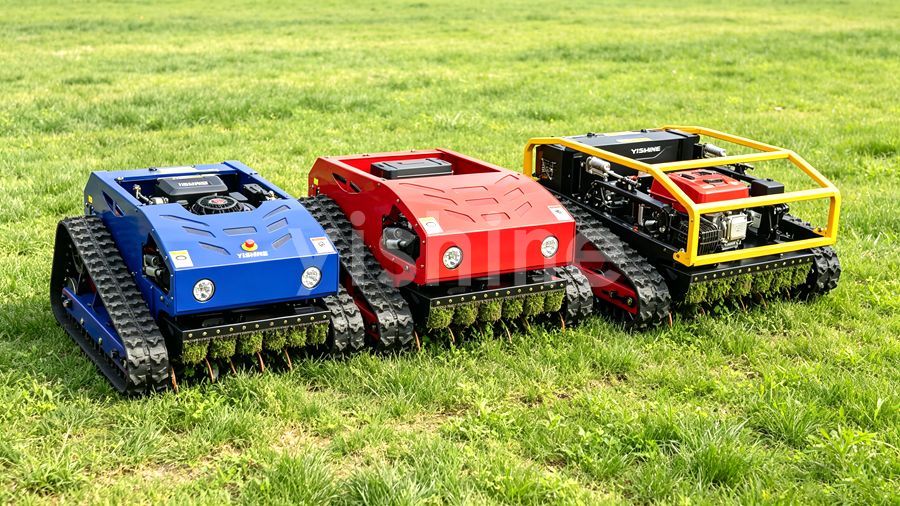
Gasoline Internal Combustion Power for Heavy‑Duty Mowing Work
Internal combustion gasoline power remains the widely‑adopted configuration for heavy‑duty lawn mower for grass cutting in large‑scale commercial scenarios. Within our 28‑week test cycle, gasoline‑powered remote control lawn mower kept 94.2 % working stability rate under continuous high‑load mowing tasks. Single refueling supports 7.5‑9 hours non‑stop grass‑cutting operation. It can process thick wild weeds, dry brambles and tall coarse grass without obvious power drop. During slope operation at 35‑degree gradient, engine torque output stays consistent, avoiding cutting jamming that frequently occurs on low‑power units. Test data shows average hourly fuel consumption sits between 1.1‑1.6 liters, varying according to grass thickness and terrain roughness. The obvious drawbacks of gasoline power cover regular engine oil replacement, air‑filter cleaning and spark‑plug inspection. Operators need to finish basic power‑system maintenance every 50 working hours. Also, gasoline stock and transportation need to follow local site safety management rules. For construction sites with sufficient fuel supply and long‑hour daily mowing demands, gasoline‑driven remote lawn mower robot still holds comprehensive practical advantages.
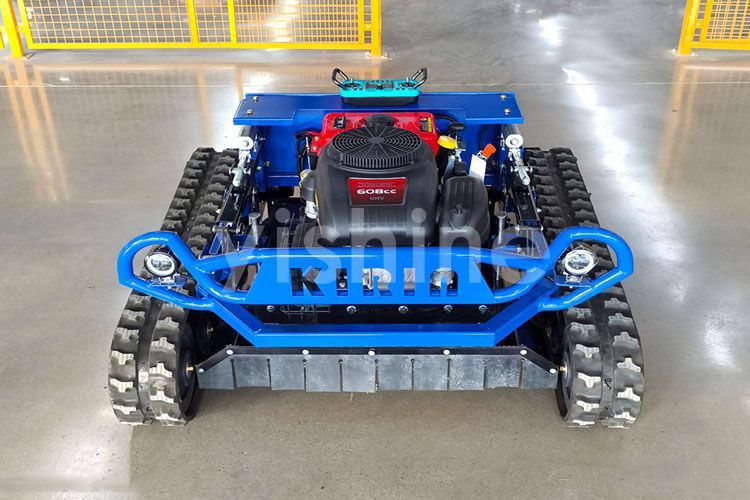
Pure Lithium‑Battery Electric Power for Low‑Noise Scenarios
Pure lithium‑battery electric power solution gains growing attention for noise‑sensitive working sites. In our field test, fully‑charged battery‑type remote control lawn mower delivers 3.5‑4.8 hours continuous mowing runtime under medium‑load grass‑cutting environment. It generates far lower operational noise compared with internal‑combustion counterparts, creating less noise pollution for residential zones, scenic spots and inner‑park vegetation maintenance projects. No engine oil, no gasoline refueling steps, daily maintenance workload drops by roughly 68 % versus gasoline‑powered models. The main limitation comes from high‑load working scenarios. When confronting dense overgrown grass and steep slope mowing, discharge speed rises sharply, which shortens actual usable working time. Users need to prepare spare battery packs if they intend to extend daily operation hours. Site charging condition becomes another hard restriction. For remote mountain slope, riverbank vegetation‑clearing locations without stable power supply, pure battery‑powered lawn mower for grass cutting cannot sustain long‑term continuous work. Purchase cost of large‑capacity lithium battery modules also lifts initial procurement budget.
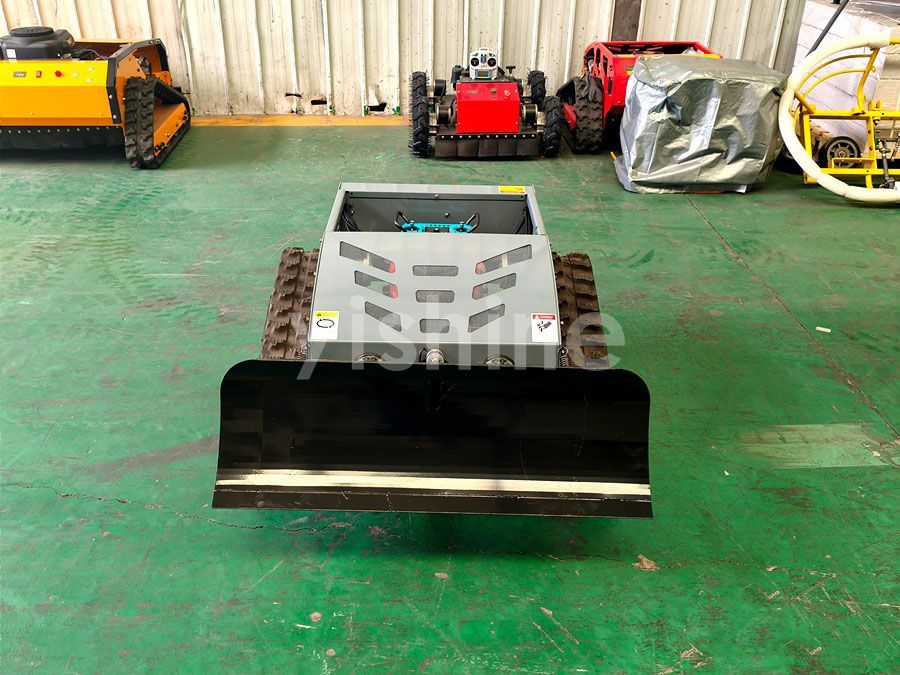
Gasoline‑Battery Hybrid Power: Compromise of Runtime and Noise Control
Dual‑power hybrid assembly combines gasoline generator unit and lithium‑battery pack, designed to balance runtime requirement and low‑noise demand. Under our 28‑week test, hybrid remote control lawn mower can switch working mode freely. When noise‑control requirement is strict, it runs on battery power; when facing heavy‑duty mowing work, internal‑combustion generator kicks in to supply power and recharge battery module simultaneously. Theoretical continuous working time can reach up to 12 hours without halt. Nevertheless, hybrid power structure brings more complex internal mechanical and circuit parts. Test result indicates its component failure rate is 21 % higher than single‑power gasoline unit. Maintenance difficulty and after‑sales repair cost also go up correspondingly. Hybrid remote lawn mower robot fits mixed‑condition projects that alternate between quiet‑zone trimming and heavy‑duty wild‑grass clearing, yet it is not cost‑effective for clients who only have single‑type working environment.
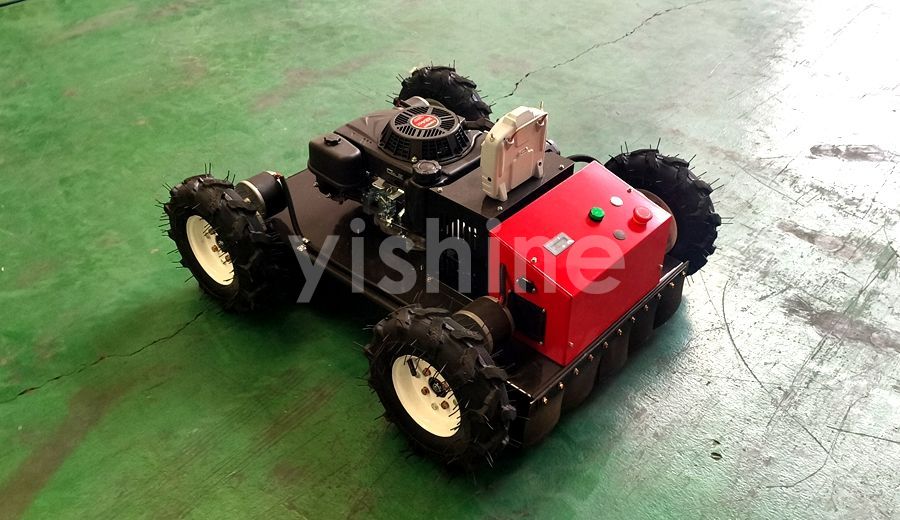
Practical Selection Guidance Summarized by R&D Supervisor
Many buyers get confused about how to pick proper power source according to their own project conditions. Based on data accumulated in our long‑term field test, R&D supervisor Li Ming summarized practical reference principles. If your main job covers large‑area wild vegetation clearance, mountain slope trimming, daily working hours above 6 hours and inconvenient on‑site charging, gasoline‑powered remote control lawn mower is the preferred option. If most tasks happen in parks, residential surroundings with low‑noise requirement, daily working period within 4 hours and reliable charging access available, pure‑battery lawn mower for grass cutting will match your demand. Hybrid power is only suggested when projects contain both noise‑restricted area and heavy‑load mowing assignments. Buyers should not blindly chase new‑type power configuration; instead, match power selection with real‑site operating environment. Wrong power choice will trigger insufficient cutting power, frequent shutdown, shortened equipment service life and increased long‑term operating expense.
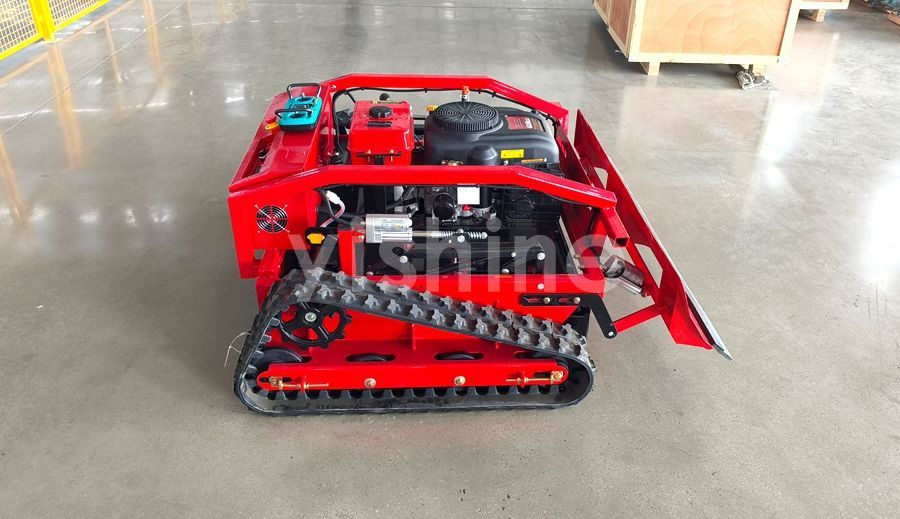
Diesel Power Application Status on Remote Controlled Mowing Machinery
Apart from three mainstream power types, some clients inquire about diesel‑driven remote lawn mower robot. Diesel power provides stronger torque output, yet whole‑machine weight rises obviously. It creates higher vibration and noise during operation. Current market application for remote‑controlled small‑size mowing machinery stays limited. Diesel power is more suitable for extra‑large fixed mowing equipment rather than flexible tracked remote‑control mower units.
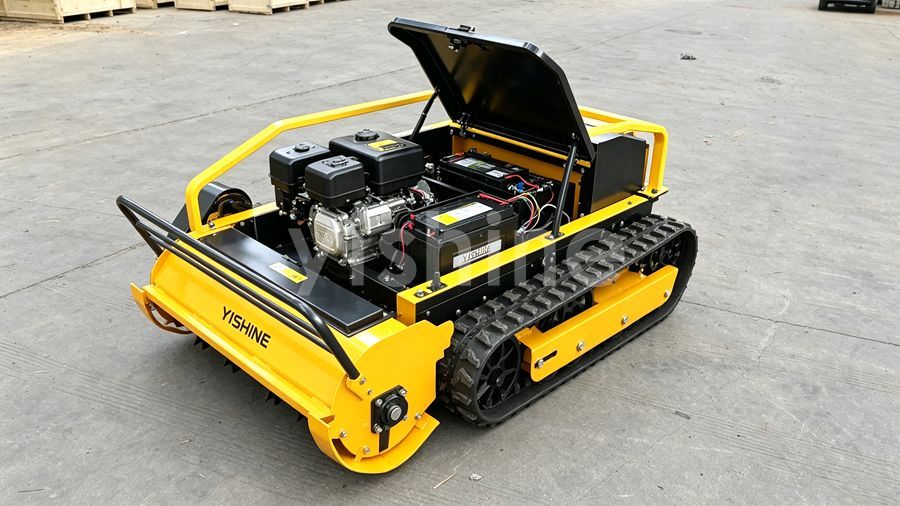
Common Power‑Related Faults Observed During Field Test
During our test period, we also observed common power‑related malfunctions from different power assemblies. For gasoline‑powered units, clogged fuel filter, aging spark plug and deteriorated engine oil account for most power‑drop faults. For battery‑powered models, excessive high‑load discharge accelerates battery capacity attenuation. If operators keep running battery mower under heavy‑load status for long time, effective battery capacity may decline by over 15 % within one‑year operation. Hybrid units mostly suffer from generator‑battery coordination circuit failures. Understanding these potential failure points helps operators carry out targeted daily inspection work, extend remote control lawn mower service cycle and reduce unexpected project downtime.
Frequently Asked Questions
Will gasoline‑powered remote lawn mower robot cause power loss on steep slopes?
Qualified gasoline‑driven tracked mower maintains stable torque output within its rated slope range. Power drop usually arises from engine maintenance negligence or over‑aged fuel.
How many spare batteries do I need for battery‑type lawn mower for grass cutting for one‑day continuous work?
Calculate based on your actual daily working hours. One full battery supports around 4 hours medium‑load work. Prepare corresponding spare batteries, meanwhile confirm stable on‑site charging condition.
Is hybrid power definitely better than single‑power configuration?
No. Hybrid structure brings more components and higher failure risk. Select hybrid only when you have mixed working‑condition requirements.
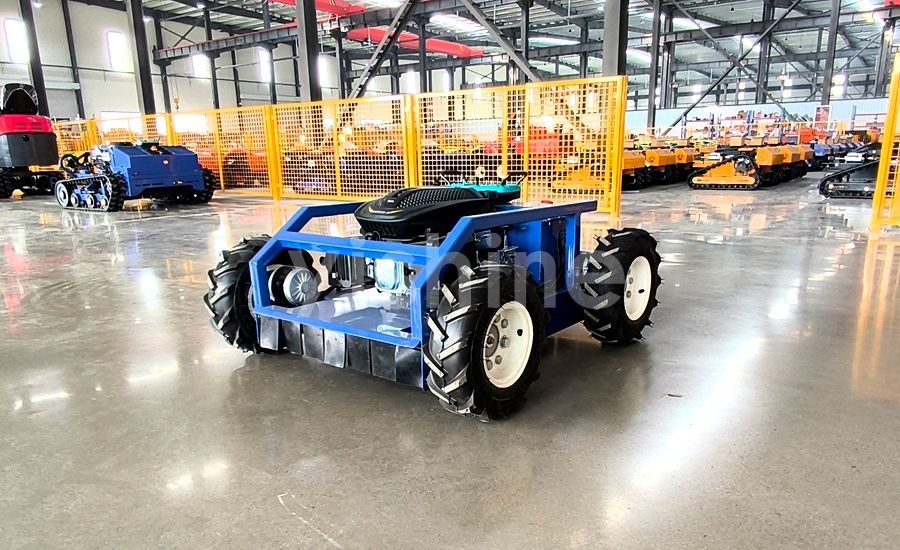
Commercial purchasers are advised to evaluate site terrain, daily working duration, noise regulation and energy‑supply situation before confirming remote control lawn mower power configuration. Power performance directly decides actual grass‑cutting output of your equipment. Comparing only outward machine parameters while ignoring inner power assembly will lead to improper procurement decisions.