
 English
Many commercial purchasers search online for the most suitable robot lawn mower, hoping to find one universal model that fits all working scenarios. After comparing dozens of product specifications and marketing introductions, buyers often feel confused by various performance labels and functional descriptions. Our engineering team completed a 30‑week multi‑scenario field test, putting different configurations of remote controlled lawn‑mowing robot into slope land, orchard ground, stony wasteland, park green belt and riverside vegetation clearance sites. The test group recorded task completion rate, continuous working performance, component loss rate and comprehensive input‑output ratio of each unit under real‑world load. According to Zhang Wei, R&D supervisor of intelligent grass‑cutting machine project, there is no absolute “one‑size‑fits‑all” best robot lawn mower in commercial market. The most worthwhile unit is the one that highly matches project terrain, vegetation condition, daily working hours and local after‑sales support. Blindly pursuing high‑configuration parameters beyond actual demands will cause waste of procurement budget, while buying low‑cost units that cannot meet site requirements will bring heavy operating losses later.
Core Evaluation Dimensions for Selecting Robot Lawn Mower
Terrain adaptability matching project site
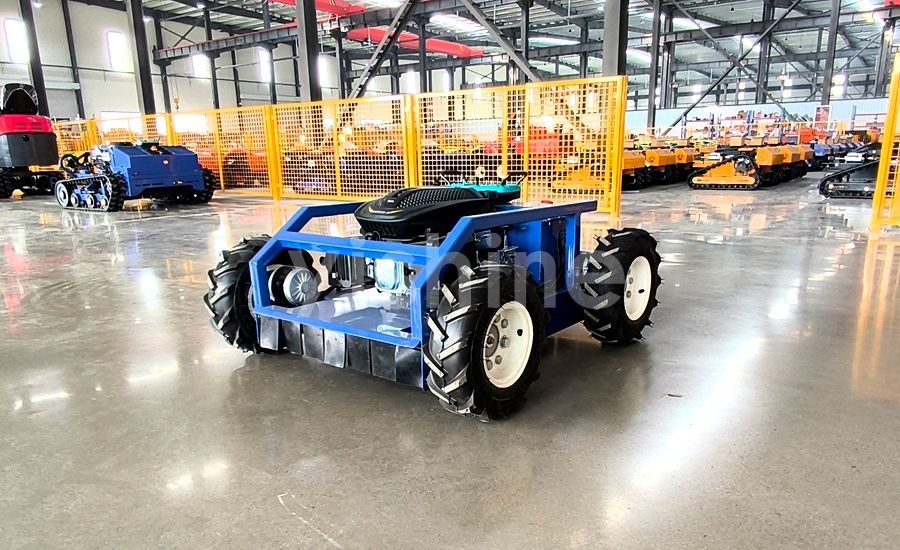
Terrain condition ranks first among all selection indexes. In our 30‑week test, wheel‑type robot lawn mower shows stable performance on flat or gentle‑slope ground below 18 degrees, with low running noise and fast moving speed. Once working environment contains frequent slopes above 25 degrees, uneven ground and soft wet soil, wheel‑chassis models appear slip risk obviously. Track‑type remote controlled lawn‑mowing robot owns lower ground pressure and stronger grip capability. Qualified tracked units can adapt to slope range from 30‑38 degrees in rated state. Nevertheless, tracked structure brings higher unit cost and slightly faster rubber track wear speed. Buyers need to confirm maximum gradient, ground flatness and soil humidity of main working area before making decisions, instead of only comparing parameter numbers on brochures.
Power configuration corresponding to vegetation and working intensity
Power type directly decides cutting capacity and continuous working capacity of intelligent grass‑cutting machine. Gasoline‑powered robot lawn mower delivers stable torque output when tackling thick weeds, woody sprouts and large‑area daily mowing missions. Single refueling supports 7‑9 hours non‑stop operation, which suits projects with long daily working time and inconvenient charging condition. Pure battery‑driven robot lawn mower features low noise and simple daily maintenance. It performs well for medium‑soft lawn trimming inside parks and scenic spots, yet continuous working duration is limited to 3‑5 hours under medium‑load condition. Hybrid power models can switch between battery and internal‑combustion mode, but internal circuit and mechanical structure become more complex; test data shows its overall failure rate is 22 % higher than single‑power gasoline configuration. Purchasers shall judge power solution according to grass thickness, weed hardness and daily working cycle rather than simply judging which power technology is newer.
Control mode and anti‑interference performance
Two mainstream control modes exist for commercial robot lawn mower: pure remote‑control operation and semi‑automatic navigation mode. Pure remote‑control robot lawn mower depends on operator real‑time manipulation, with lower requirement for site environment. It can cope with scattered obstacles, stony land and irregular boundaries, which is widely adopted in wild vegetation‑clearing projects. Semi‑automatic navigation models can finish fixed‑route mowing without frequent manual operation, but they are sensitive to dense tree shelter, valley sheltering and complex obstacle distribution. In field test, semi‑automatic units show 34 % rise of task‑missing rate under heavy tree canopy. Signal anti‑interference ability cannot be ignored either. For sites with dense trees and deep valleys, purchasers need to pay attention to remote‑control signal transmission distance and anti‑shielding performance of intelligent grass‑cutting machine.
Spare‑part supply and after‑sales service capability
Many buyers only focus on machine performance and ignore after‑sales condition during selection. Robot lawn mower contains motor, control main‑board, walking components and wearing consumables. Statistics from our test show wearing parts including blades and tracks need regular replacement every 250‑350 working hours. Electronic parts may fail under long‑term outdoor damp and high‑temperature environment. If local market lacks corresponding spare‑part stock, equipment will stay idle for weeks waiting for component delivery. R&D supervisor Zhang Wei reminds commercial clients, do not ignore supplier’s overseas spare‑part delivery cycle and technical guidance response speed. Even a machine with excellent technical parameters will become useless without effective after‑sales support.
Recommended Configuration Matching for Typical Commercial Projects
Mountain slope, riverbank and wild land vegetation‑clearing project
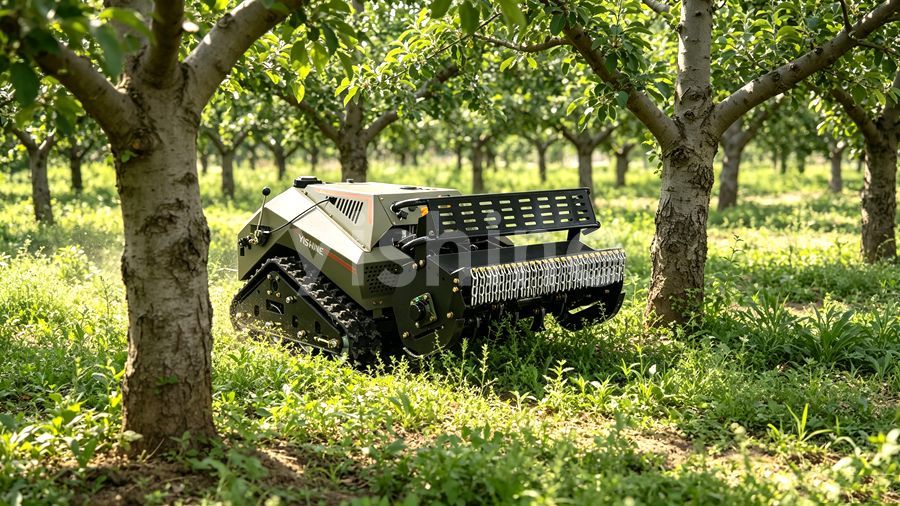
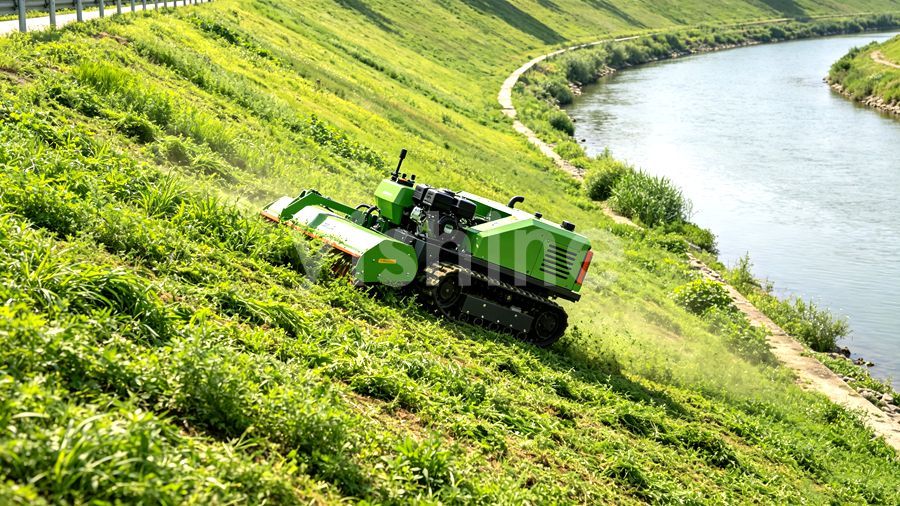
For this type of scenario featured by large gradient, mixed thick weeds and inconvenient power supply, tracked gasoline‑powered remote‑control robot lawn mower is the most suitable option. It maintains stable cutting torque facing coarse wild grass, and delivers reliable grip performance on slope surface. Manual remote‑control mode can flexibly avoid exposed stones and irregular obstacles. This combination occupies 61 % of real‑site good‑feedback cases collected in our 30‑week test.
Orchard under‑grass maintenance working condition
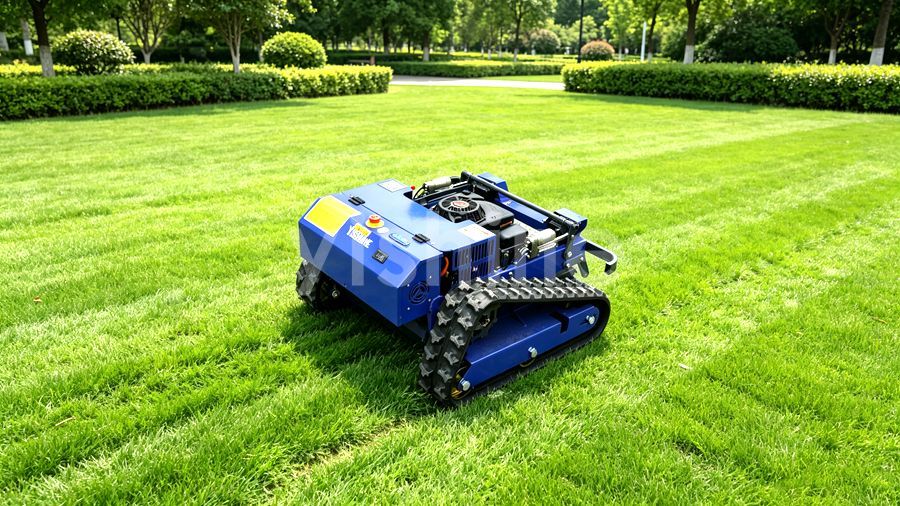
Orchard sites contain scattered fruit‑tree trunks, mixed soft grass and partial thick weeds. Purchasers can choose tracked robot lawn mower with medium‑displacement power module. If noise restriction exists inside orchard zone, hybrid‑power intelligent grass‑cutting machine can be considered. Operators need to ensure remote‑control signal will not be heavily blocked by dense tree crowns.
Park, scenic spot and residential peripheral lawn trimming
Working sites are mostly flat or gentle slope, grass texture is soft, and local noise‑control regulations exist. Pure‑battery robot lawn mower is preferred. Low‑noise operation meets environmental requirements, and daily maintenance workload decreases obviously. Users need to guarantee stable charging condition on working site, and arrange reasonable daily working range according to battery actual endurance.
Common Misjudgments When Choosing Robot Lawn Mower
Some purchasers believe the higher maximum‑slope parameter marked on specification sheet, the better the robot lawn mower. Actually the rated slope data is measured under ideal dry and flat test ground. Once soil becomes wet after rain, actual safe working gradient will drop by 7‑10 degrees. Over‑relying on brochure parameters will bring turnover risk on real‑world site. Another common mistake is over‑pursuing automatic navigation function. Automatic function brings convenience for regular lawn, but it cannot handle complex wild land with random obstacles. Extra automatic modules also raise procurement cost and failure probability. In addition, several clients select ultra‑low‑price products only by unit price. Those white‑brand robot lawn mower usually adopt non‑standard components; wearing‑part life shortens greatly, and electronic failure frequency rises in short‑term usage. Comprehensive total‑cost‑of‑ownership should be calculated including later‑stage consumable replacement and repair expense, instead of only comparing initial offer.
Frequently Asked Questions
Does higher horsepower definitely mean the most suitable robot lawn mower?
Not exactly. High‑horsepower unit brings stronger cutting capacity, meanwhile it increases fuel consumption, whole‑machine weight and purchase cost. If your work mainly focuses on soft lawn trimming, excessive power will cause budget waste. Match horsepower grade with actual vegetation hardness.
Is semi‑automatic navigation robot lawn mower always better than pure remote‑control type?
Semi‑automatic mode improves convenience for regular flat lawn. For wild slope, stony wasteland and orchard with dense obstacles, pure remote‑control unit owns higher site adaptability. Choose control mode based on site complexity.
How can buyers verify whether one robot lawn mower fits their project before bulk purchase?
If condition permits, carry out short‑term real‑site trial mowing on your own working ground. Observe walking stability, cutting effect, signal receiving condition and heat dissipation performance under local actual vegetation and terrain environment. Site trial can avoid deviation caused by laboratory‑environment test data.
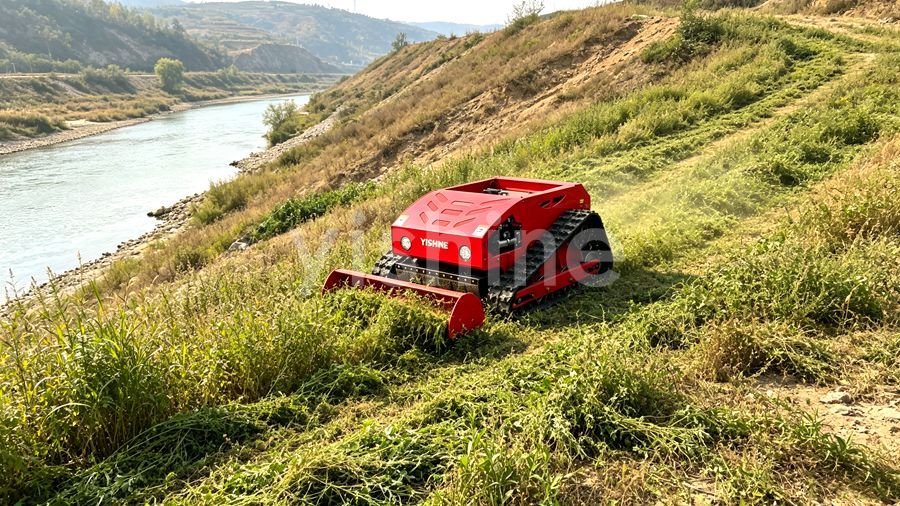
Commercial purchasers are suggested to sort out site terrain, vegetation type, daily working hours, on‑site energy condition and local after‑sales resource before confirming robot lawn mower order. There exists no universally perfect intelligent grass‑cutting machine across all industries. The most worthy‑to‑buy robot lawn mower is the model whose hardware, power and control mode precisely adapt to your real‑world project demands.