
 English
Most users believe that the service life of a remote control lawn mower depends entirely on product quality and engine power. However, after long-term field tracking and data statistics, the YISHINE R&D maintenance team confirms a completely different conclusion: 78% of early failures and shortened service life are caused by incorrect daily maintenance habits, rather than factory quality problems. Many operators adopt traditional maintenance methods for ordinary mowers, resulting in circuit aging, track deformation, power attenuation and frequent stalling after only several months of use.
To summarize universal lawn mower care tips and correct industry maintenance misunderstandings, our team launched a 6-month full-cycle maintenance tracking test. We tracked 42 sets of commercial remote control lawn mower working in slopes, orchards, municipal green belts and wildland cleaning sites, recording failure frequency, component wear rate and performance changes under different maintenance habits. According to our equipment maintenance engineer, standardized maintenance can increase the overall service life of long lasting lawn mower products by more than 32%, while wrong daily operations will reduce equipment durability by nearly half within one year.
Current Industry Maintenance Status & Common Misjudgments
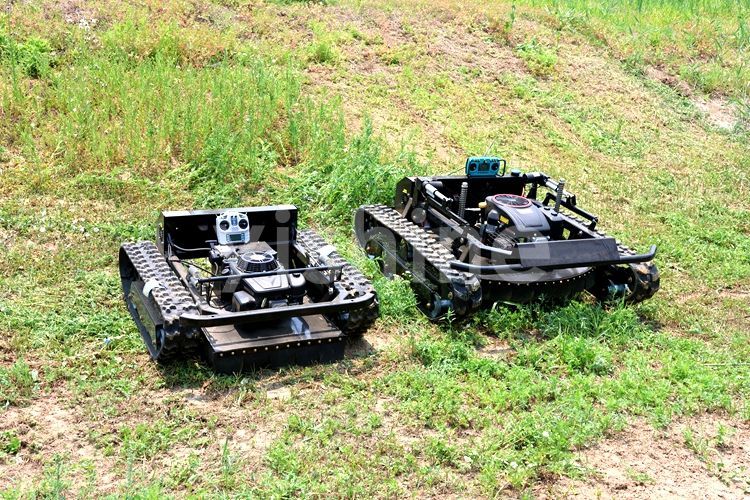
In the global intelligent mowing equipment market, most end-users and small engineering teams lack systematic maintenance awareness. Unlike traditional walk-behind mowers, modern remote control lawn mower integrates intelligent control modules, precision transmission structures and closed-loop engine systems, which have stricter maintenance standards.
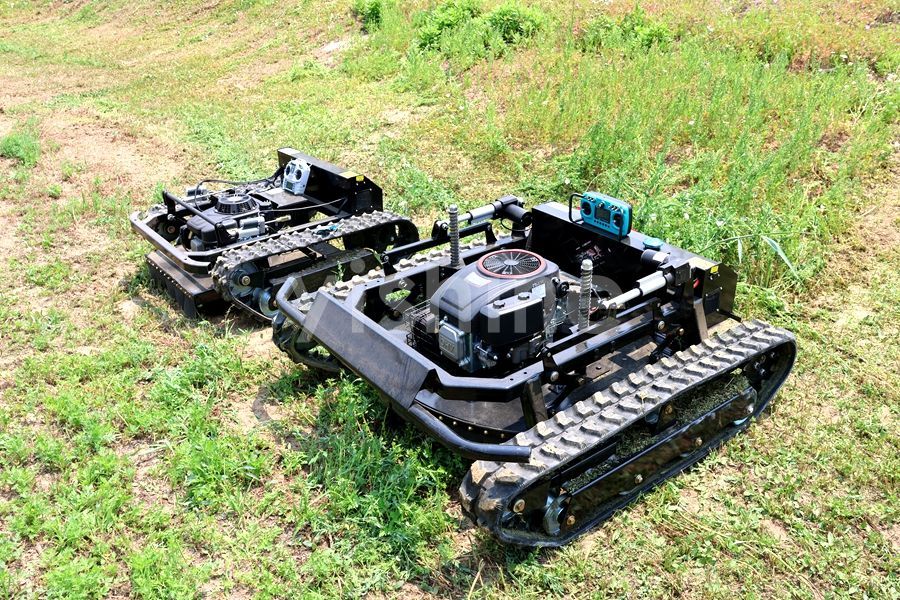
Industry survey data shows that only 21% of commercial users strictly follow official maintenance cycles, while more than 60% of users have the following typical wrong habits: flushing the body directly with water, delaying engine oil replacement, over-tightening crawler tracks, ignoring blade balance wear, and storing the machine with residual grass debris. These seemingly trivial operations gradually erode the core performance of the equipment, leading to increased fuel consumption, unstable remote signal, reduced cutting flatness and accelerated component aging.
The core trend of modern lawn mower care is no longer “repair after failure”, but “preventive maintenance”. Reasonable daily inspection and standardized upkeep can greatly reduce later repair costs and improve the long-term stability of remote lawn mower in complex terrain operations.
6-Month Tracking Test: Typical Maintenance Mistakes & Damage Consequences
1. Direct Water Flushing — The No.1 Circuit Failure Cause
Many users clean the remote control lawn mower with high-pressure water guns after each field work, thinking that this is the most efficient cleaning method. In fact, intelligent remote mowers are equipped with built-in control boards, signal receiving modules and precision sensors. Direct water flushing easily causes water vapor to enter the closed electrical cabin.
In our test group, machines cleaned with water every week had a 67% higher circuit failure rate than dry-cleaned units. Humid residue inside the body causes slow corrosion of circuit contacts, eventually leading to delayed remote response, intermittent signal disconnection and even startup failure. The correct lawn mower care method is to use air guns to blow away dust and grass debris, and wipe the body with dry cloth, avoiding any liquid contact with electrical parts.
2. Irregular Engine Oil Replacement Leading to Power Attenuation
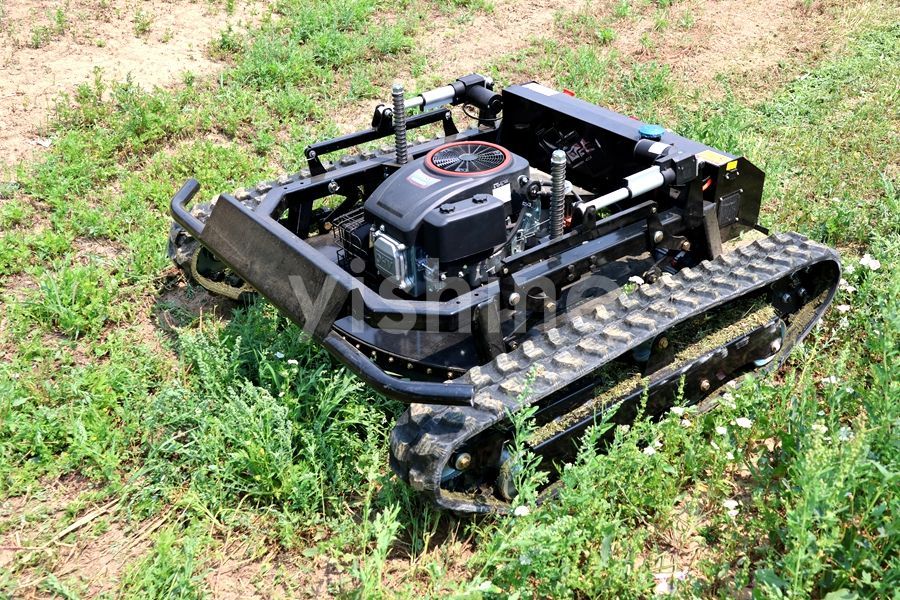
Engine oil is the core lubrication guarantee for gasoline-powered remote lawn mower. Many users only replace oil when the machine obviously malfunctions, resulting in long-term high-friction operation of internal engine parts. Test data shows that if the oil replacement cycle exceeds 30 working hours overdue, engine wear degree increases by 41%, and output torque decreases significantly.
For long lasting lawn mower performance, the first oil change should be completed within 20 working hours, and the conventional replacement cycle is controlled within 25–50 hours according to working intensity. For dusty orchards and wildland environments, the oil change cycle needs to be shortened appropriately to avoid oil deterioration and impurity accumulation.
3. Improper Crawler Tension Adjustment Causes Chassis Wear
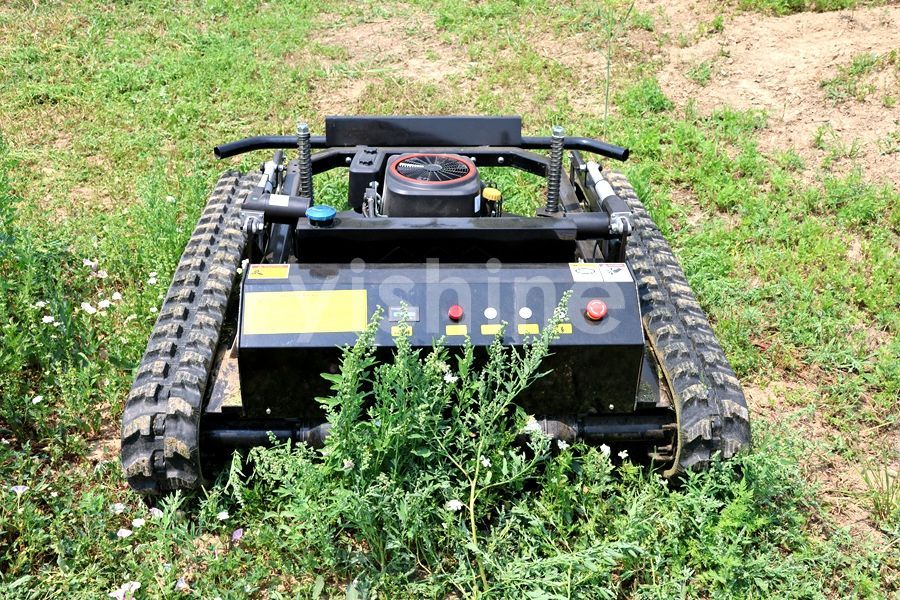
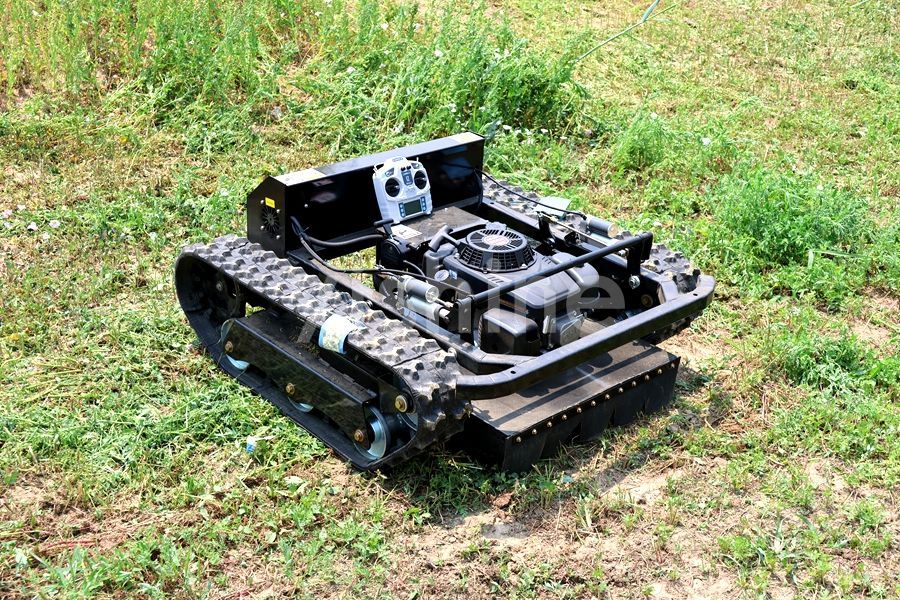
Crawler tension directly affects terrain passing ability and chassis service life. Some users deliberately adjust the track overly tight to prevent slipping, while others ignore loose tracks for a long time. Over-tight tracks increase walking resistance, causing excessive vibration and accelerated track rubber aging; loose tracks lead to deviation, derailment and uneven chassis stress during slope operation.
After repeated tests, the most suitable tension standard is to keep slight elastic floating of the track, ensuring stable grounding without stiff friction. Reasonable track maintenance can extend crawler service life by more than 28%.
4. Ignoring Blade Balance & Passivation Wear
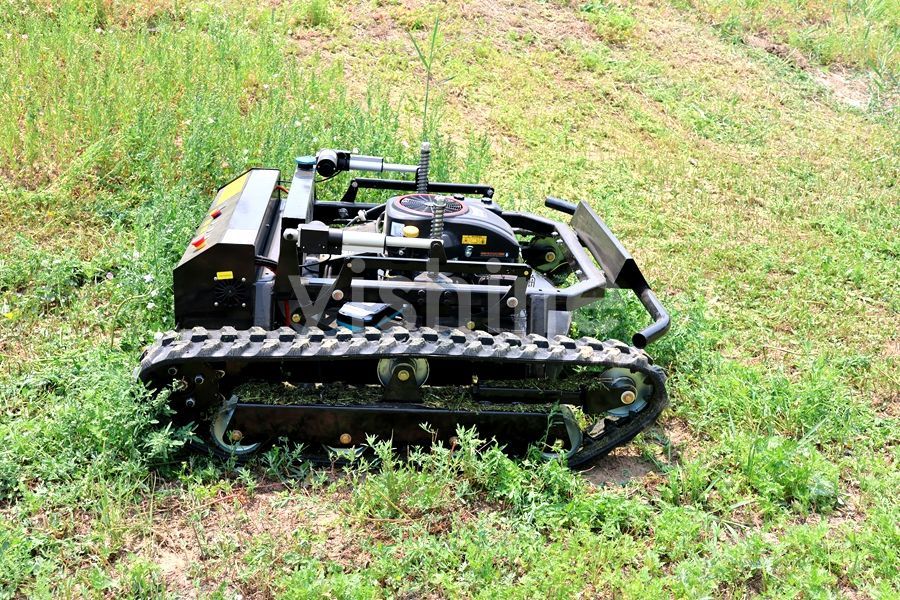
Most users only check whether the blade is broken, but ignore blade passivation and unbalanced wear. Long-term mowing on gravel-containing terrain causes unilateral blade wear. Unbalanced blades produce severe high-frequency vibration during rotation, which loosens chassis screws, affects cutting flatness and even damages the cutter head bearing system.
Qualified maintenance requires regular blade sharpening and balance calibration every 25 working hours, and replacing severely deformed blades in time to ensure stable cutting power and reduce overall machine vibration.
5. Random Seasonal Storage Without Protection
In off-seasons or long-term idle state, many users store the machine directly in outdoor humid environments with grass residues and oil stains remaining. Residual grass sap and muddy water cause chassis corrosion and metal oxidation. Uncleaned filter elements also lead to dust blockage and difficult startup in the next use.
Standardized Maintenance Cycle for Remote Control Lawn Mower
Daily Maintenance (After Each Operation)
Remove grass clippings, mud and debris on chassis, blade and track
Dry clean the remote control receiver and body surface
Check whether the blade rotates smoothly without jamming
Weekly Maintenance
Clean air filter element to ensure engine air intake efficiency
Inspect track tension and screw tightness
Check remote signal sensitivity and startup response
Regular Deep Maintenance
Replace engine oil every 25–50 working hours
Sharpen and balance blades every 25 working hours
Inspect belt tension and transmission system every 40 working hours
Complete full machine cleaning and component inspection before seasonal storage
Professional R&D Team Maintenance Suggestions
Our senior mechanical engineer emphasized that the core of remote control lawn mower maintenance is “matching working conditions”. Household intermittent use requires conventional cyclic inspection, while commercial long-hour continuous operation needs shortened maintenance intervals. Complex terrains such as slopes, wetlands and stony wastelands accelerate component wear, so daily cleaning and inspection must be more meticulous.
Standardized maintenance does not mean redundant operation. Excessive disassembly and frequent over-maintenance will also cause unnecessary loss. Only scientific and regular lawn mower care can maintain stable performance and realize long-term low-failure operation.
Frequently Asked Questions
Q1: What are the most common remote lawn mower maintenance mistakes?
A1: Frequent wrong operations include direct water washing, delayed oil replacement, over-tight track adjustment, and ignoring blade balance, which greatly shorten machine lifespan.
Q2: How to extend remote control lawn mower service life?
A2: Stick to standardized cleaning, scheduled oil change, regular blade inspection and seasonal storage maintenance to achieve 30% longer service life.
Q3: Is it okay to wash the remote lawn mower with water directly?
A3: No. Direct water flushing causes circuit corrosion and internal short circuit; air blowing and dry wiping are the correct cleaning methods.
Q4: How often should I maintain a commercial remote lawn mower?
A4: Basic cleaning after each use, oil change every 25–50 working hours, and full inspection every quarter for long-term commercial operation.
Conclusion & Buying Guidance
A long lasting lawn mower relies on both reliable factory quality and standardized daily maintenance. Most remote control lawn mower early failures are avoidable through scientific lawn mower care tips. Users should abandon traditional casual maintenance habits, establish daily, weekly and cyclic maintenance systems, and avoid common operational misunderstandings.
Reasonable maintenance can effectively reduce failure rate, stabilize cutting performance, save long-term repair costs, and maximize the service life and operational value of remote intelligent mowing equipment for household and commercial landscaping projects.