
 English
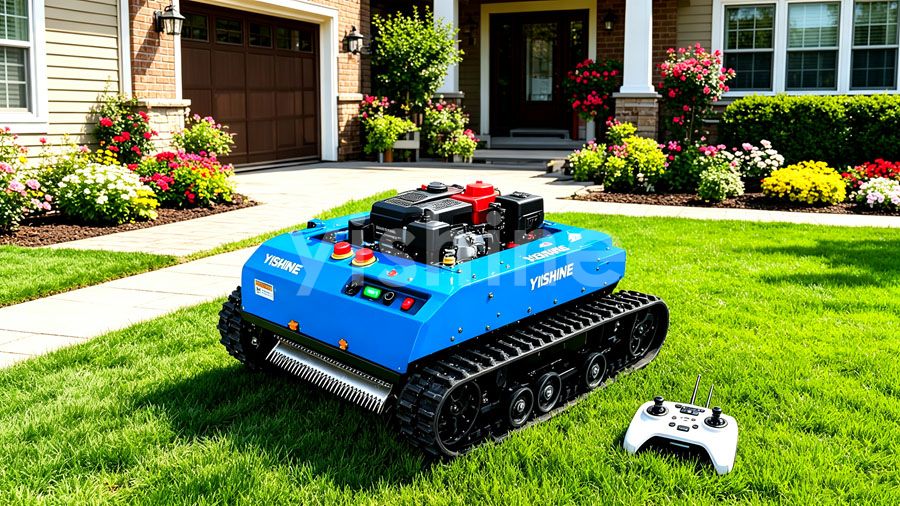
Slope vegetation management has long been one of the most troublesome work items for landscaping contractors and municipal engineering teams. Hillside, river embankment and mountain fire belt areas are covered with weeds and miscellaneous shrubs. Traditional manual mowing or ride-on mowing equipment can hardly operate safely on these inclined grounds. Workers face high fall risks, while the work progress is extremely slow. In recent years, remote control crawler mower, also known as slope lawn mowing machine, has gradually become the preferred commercial remote lawn mower for slope vegetation trimming projects. Our R&D team carried out a 7-month continuous field test starting from January 2026, recording working data on different slope sites to verify the practical value of this remote mowing equipment.
According to the R&D director of our machinery factory, slope mowing is not just a simple grass-cutting task. The core difficulty lies in terrain stability and operator safety. Ordinary lawn mowers easily slip or tip once the terrain slope exceeds 20 degrees. Many construction teams are forced to use manual weed cutting tools, which cost massive labor time and bring potential safety accidents. The remote control crawler mower adopts low center-of-gravity crawler chassis design, solving the tipping problem on sloped land fundamentally. After 7 months of testing on riverbank slopes, mountain fire prevention zones and hilly orchards, the team recorded 840 working hours of data. The test result shows this commercial remote lawn mower can normally work on slopes up to 40 degrees, and its comprehensive mowing efficiency is 276% higher than traditional manual slope trimming.
Core Pain Points Of Traditional Slope Mowing Projects
1. Serious safety hazards for field operators
When workers carry lawn cutting tools to work on steep, slippery slopes, loose soil and wet grass greatly increase the risk of sliding and falling. Many landscaping companies have to purchase high insurance for field staff, which increases the overall project cost. In rainy seasons, slope ground becomes muddy, and manual mowing work has to stop for days or even weeks, delaying the whole construction schedule.
2. Low working efficiency and unstable trimming quality
Manual cutting can only cover a small area each day. Workers get tired quickly after working on inclined terrain, leading to uneven grass height and repeated rework. Ride-on mowers can only be applied on gentle slopes, and they cannot enter steep hillside zones. Project owners often complain that slope weed cleaning projects consume lots of budget but deliver unsatisfactory results.
3. High long-term labor cost
The landscaping industry faces continuous labor shortage globally. Experienced workers who are willing to take high-risk slope trimming work are hard to recruit, and labor wages keep rising year by year. For long-term recurring slope maintenance projects, labor expenditure accounts for more than 70% of the total maintenance cost.
7-Month Field Test: Performance Of Slope Lawn Mowing Machine On Different Sites
1. River embankment slope test
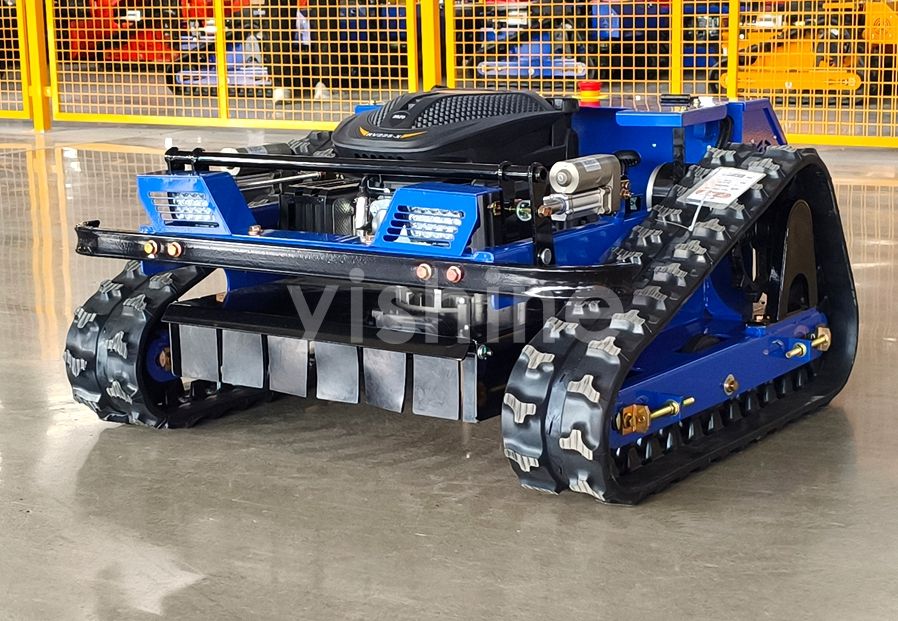
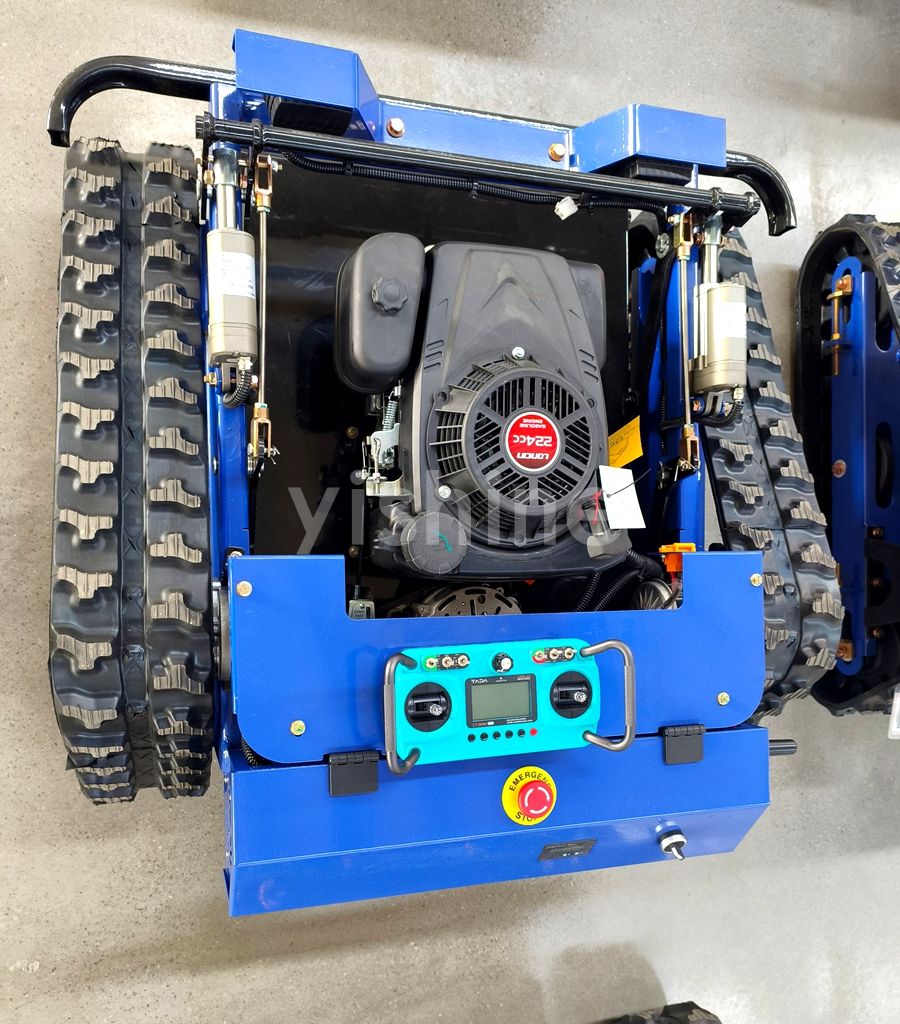
Riverbank slopes feature mixed weeds, moist soil and uneven surface. In this test environment, ordinary gasoline mowers slip frequently. Our remote control crawler mower with thick black crawler tracks maintains stable traction. The machine completes mowing without getting stuck in mud. In this site, the commercial remote lawn mower finishes 1200 square meters of slope grass cutting per working day, compared with only 320 square meters for manual teams.
2. Mountain fire prevention belt test
Mountain fire belts contain thick weeds and small dry branches, which require strong cutting torque. The high-torque gasoline engine in the middle of the machine provides enough power to shred weeds and thin branches without frequent blade blockage. During the whole test period, the equipment only needed simple cleaning once every 3 working days, greatly reducing downtime.
3. Hilly orchard underbrush trimming
Fruit tree orchards usually have scattered slopes and narrow passages between tree rows. The compact body design of the remote control crawler mower allows it to move flexibly between fruit trees, removing weeds competing for nutrition with fruit trees. Unlike large mowing machines, it will not scratch tree trunks or damage orchard ground.
Key Design Features of Commercial Remote Lawn Mower for Slope Work
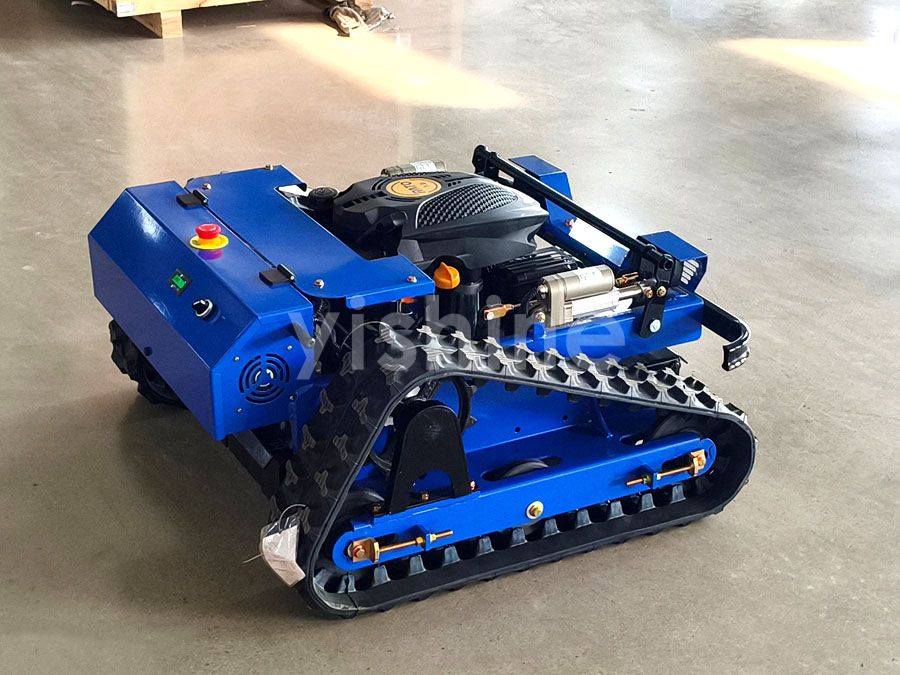
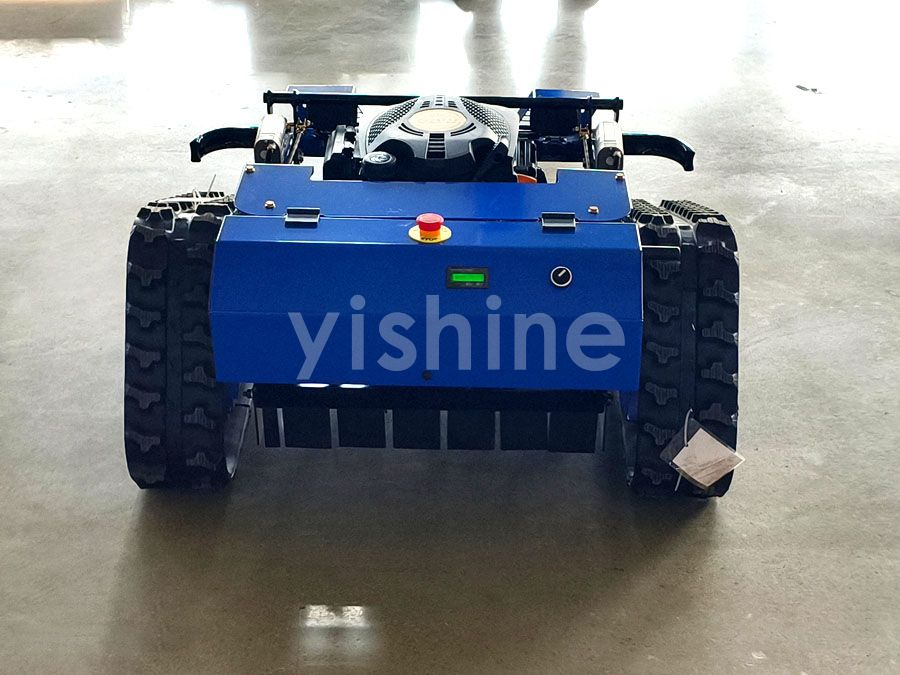
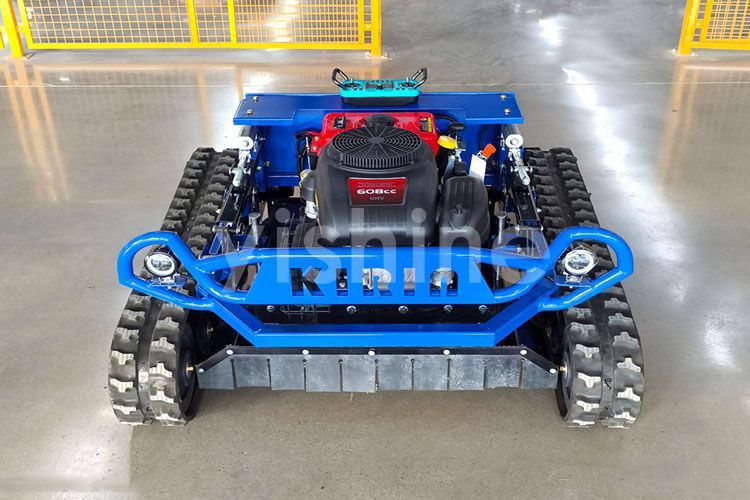
The low-profile crawler chassis is the core design to guarantee slope stability. The black rubber crawler tracks enlarge contact area with the ground and lower ground pressure, preventing sinking on wet and soft soil. The middle black gasoline engine keeps the center of gravity low, avoiding rollover risk during uphill, downhill and side-slope operation. Operators hold the remote controller and stand on flat safe ground, observing the machine working from a distance, no need to step on the dangerous slope surface.
The reinforced cutter deck can adjust grass cutting height freely according to project requirements. The anti-jam blade structure reduces shutdown caused by tangled weeds. The whole machine body can be chosen as full blue or full red paint finish, keeping a sturdy industrial appearance. Daily maintenance only needs simple engine oil replacement, air filter cleaning and track inspection, and spare parts are easy to obtain for commercial users.
Typical Application Scenarios
River and reservoir embankment slope green maintenance
Mountain forest fire prevention belt weed clearance
Hilly fruit orchard undergrowth trimming
Highway side slope vegetation management
Scenic area hillside lawn maintenance
Solar photovoltaic station slope weed removal
Frequently Asked Questions
Q1: What terrain is suitable for remote control crawler mower?
A1: Remote control crawler mower is specially built for steep slopes, river embankments, mountain fire prevention belts and orchard hilly terrain, stable operation within 0-40° slope.
Q2: What safety advantages does slope lawn mowing machine have?
A2: Operators work far away from dangerous slopes by remote control, avoid slipping and falling hazards that often happen in manual slope mowing work.
Q3: Can commercial remote lawn mower cut thick weeds and small shrubs?
A3: Equipped with high-torque gasoline engine and reinforced cutter deck, it can handle thick weeds and thin branches commonly seen on slope sites.
Q4: What is the service life of remote crawler mower for slope projects?
A4: With regular maintenance, the machine can keep stable operation for more than 5 years under commercial continuous working conditions.
Conclusion & Purchase Tips
Slope vegetation maintenance is no longer required to rely on high-risk manual work. Remote control crawler mower changes the working mode of slope trimming completely. This slope lawn mowing machine reduces safety risks and improves working efficiency for municipal, landscaping and photovoltaic projects. When purchasing commercial remote lawn mower, buyers should focus on maximum slope adaptability, cutting width and chassis stability rather than only checking the selling price. For long-term slope maintenance projects, this remote crawler mower brings obvious return on investment.