
 English
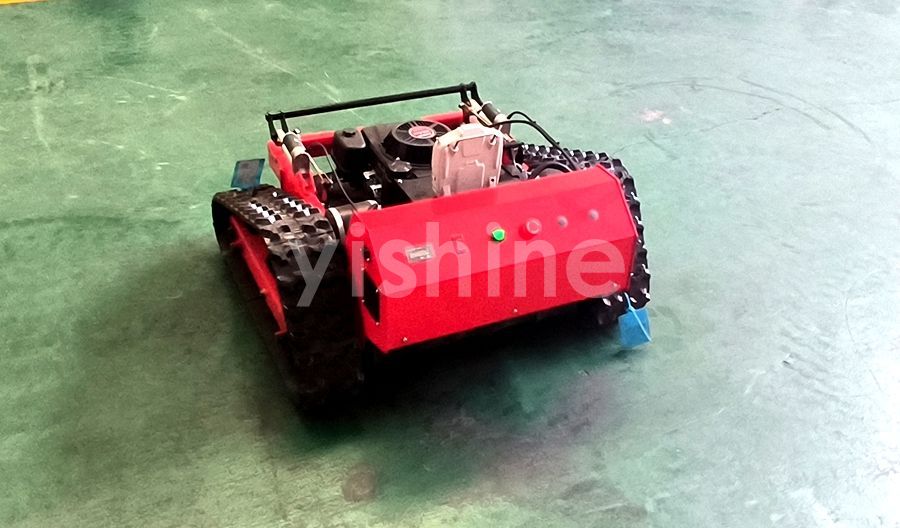
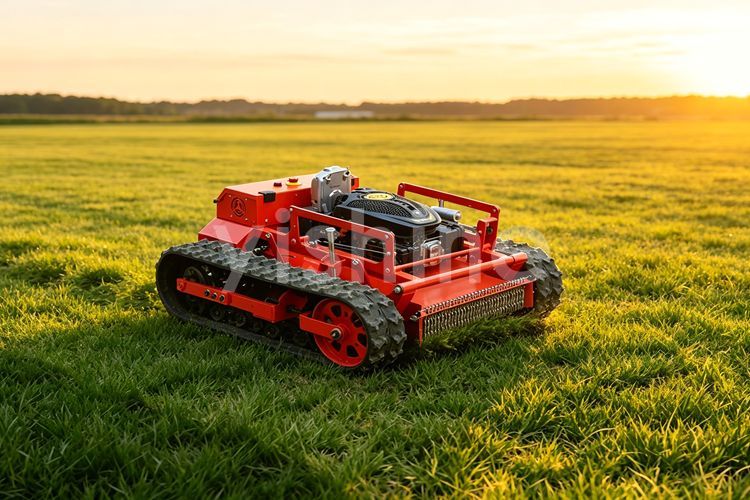
Many landscaping contractors and orchard owners struggle with grass trimming on steep slopes, river banks and hilly wasteland. Traditional walk-behind lawn mowers cannot work on steep terrain, and manual grass cutting brings high fall risk for workers. The YISHINE R&D team completed a 10-month continuous field test, focusing on hillside mowing performance of crawler remote control lawn mowers, recording stability, power change and safety boundaries on different gradient hillsides. The test data shows that crawler remote lawn mowers become a reliable hillside mowing equipment solution for steep bank grass cutting, solving the long-standing safety pain point in green maintenance.
The test selected 7 different field sites, including orchard slopes, reservoir embankments, highway side slopes and mountain wasteland. The gradient ranges from 15 degrees to 48 degrees. The team recorded machine traction, engine oil supply state, remote signal transmission and crawler slip rate in each group of tests. The senior engineer of the R&D department pointed out that wheeled lawn mowers will face serious sliding risk once the slope exceeds 20 degrees, while crawler structure greatly increases ground contact area and friction. Within 45 degrees, the machine can keep stable forward and lateral movement for grass cutting. Once the slope exceeds 45 degrees, engine oil backflow may occur, leading to abnormal engine lubrication and shutdown risk.
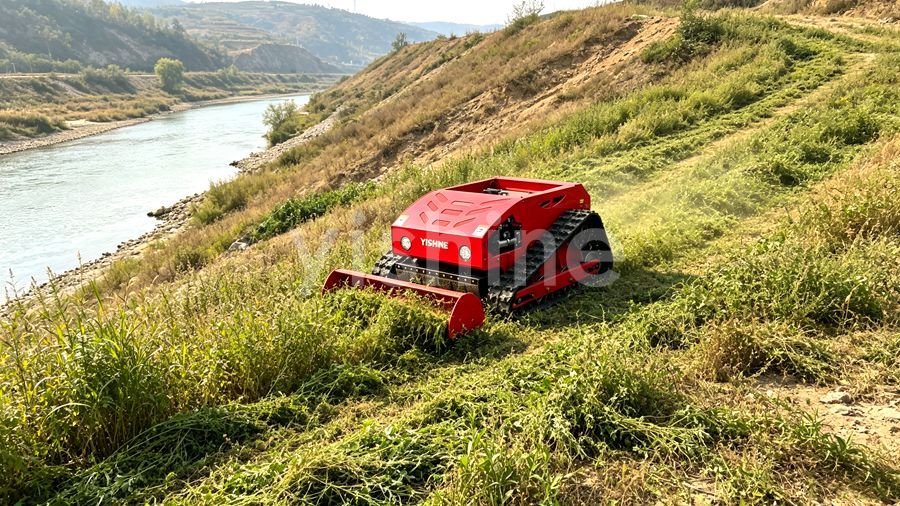
Core Challenges of Hillside Mowing Work
1. Terrain irregularity and hidden obstacles
Hillside ground is rarely flat. Buried stones, exposed tree roots and uneven soil bumps are common. When mowing steep banks, blades may hit hard objects, causing blade bending or damage. Ordinary mowing equipment lacks shock absorption design, and impact force will be directly transmitted to the whole machine, accelerating the wear of transmission parts. In our 10-month test, nearly 36% of machine damage events on slopes were caused by collision with hidden underground obstacles.
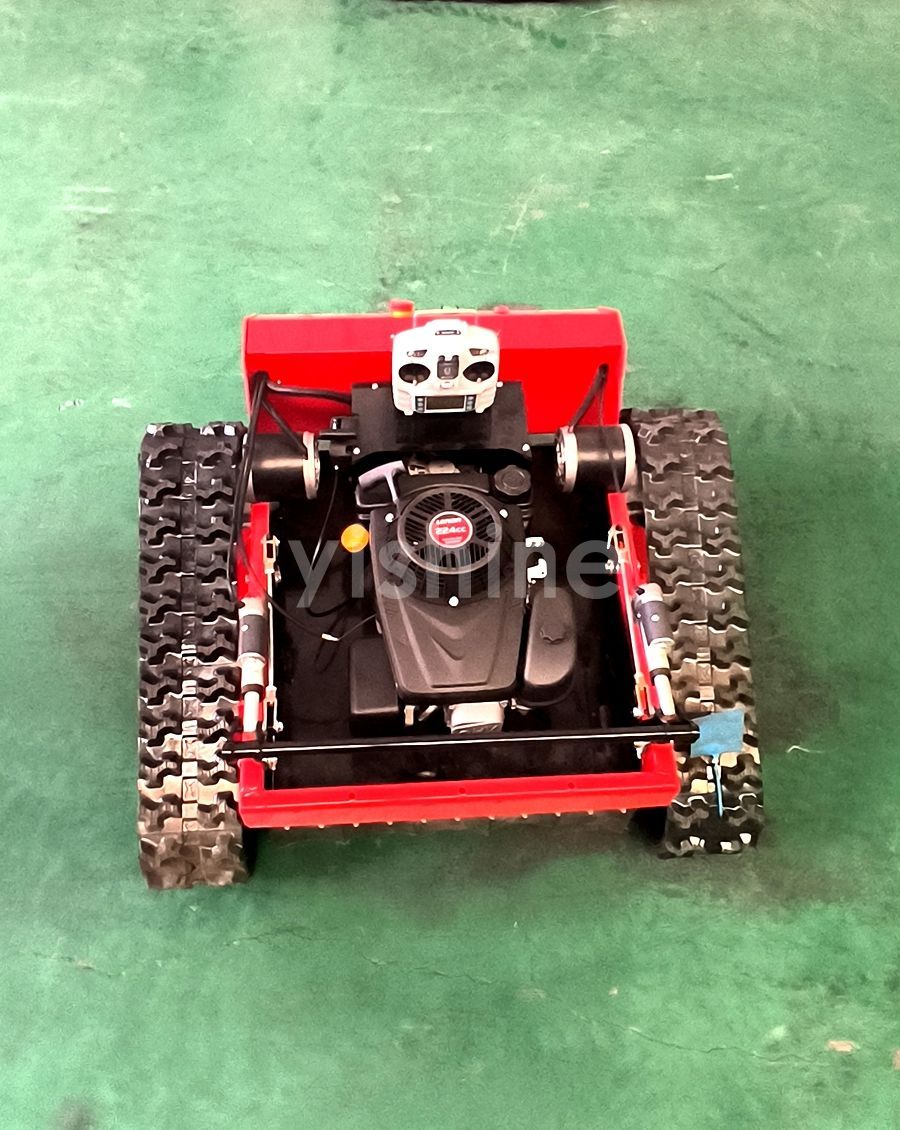
2. Gravity sliding and rollover risk
Gravity changes the stress state of the whole machine on slopes. Wheeled mowers easily slide sideways or roll down. Even for crawler remote control lawn mowers, improper operation such as sudden direction change or sharp turning on steep slopes will increase derailment and tipping risk. Manual operation on slopes is more dangerous; workers may slip on wet grass and suffer injury.
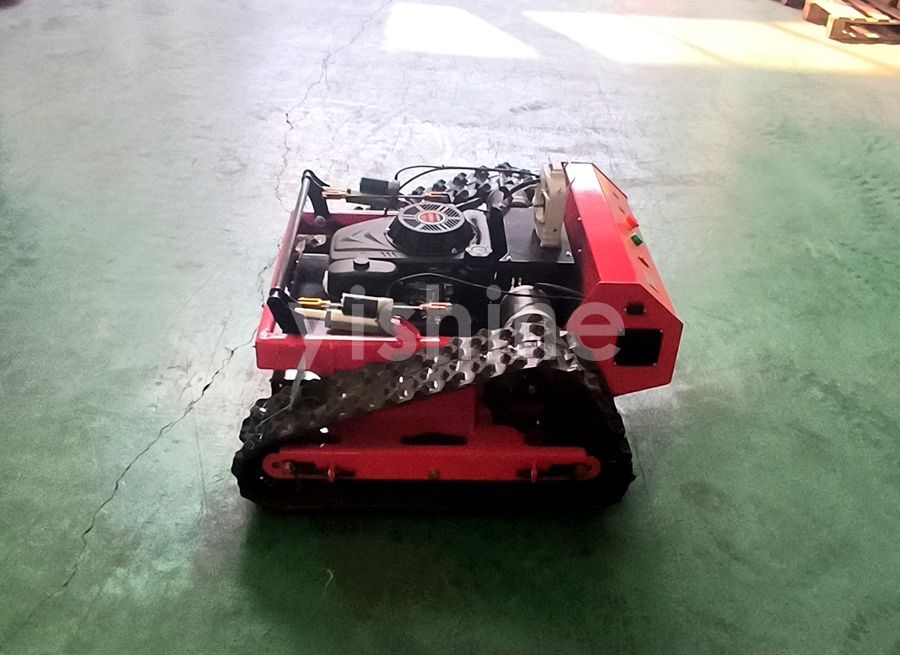
3. Engine oil supply failure under tilting angle
The internal oil pump of the engine is designed for horizontal working state. When the machine tilts greatly, engine oil will flow to one side of the oil tank. If the tilt angle exceeds the design limit, the oil suction port cannot get enough lubricating oil, which will cause engine wear and even permanent damage. This is one of the most overlooked failure factors for hillside mowing equipment.
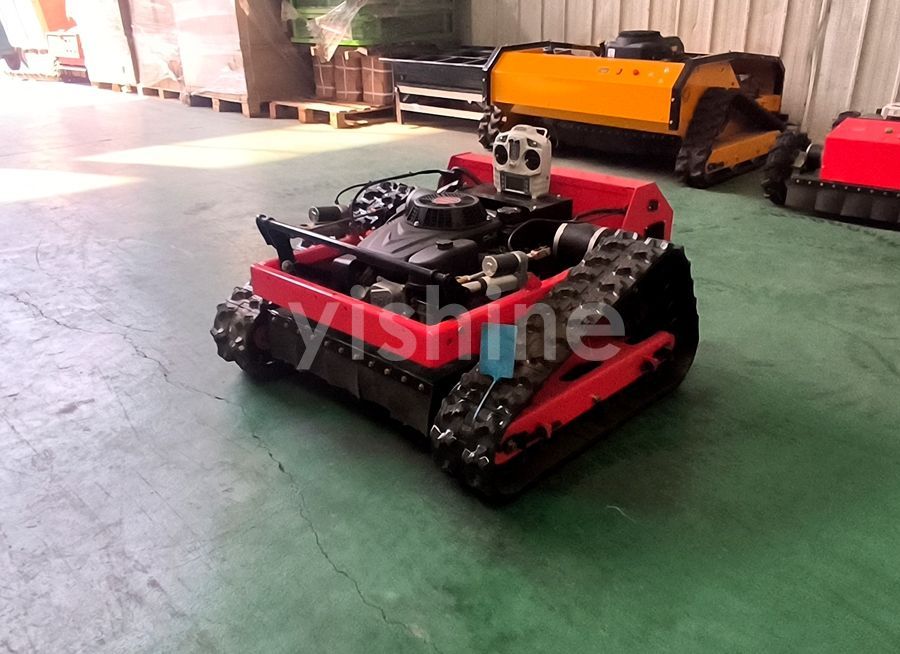
4. Remote signal attenuation in hilly terrain
Hills, trees and terrain undulation may block wireless remote signals. In deep valley and dense shrub slopes, signal delay or intermittent disconnection may happen. If the operator cannot respond in time, the machine may keep moving and hit obstacles. Signal stability test is an essential step before starting steep bank grass cutting.
10-Month Field Test Data & Result Analysis
The test divided slopes into three gradient groups: low slope (10–20°), medium slope (20–35°) and steep slope (35–45°). Each group ran continuous mowing tests, recording slip rate, power retention and fault frequency.
On low and medium slopes, the crawler mower keeps slip rate below 4%, power output remains stable, and the fault rate is only 1.8%.
On steep slopes of 35–45 degrees, the crawler slip rate rises to 9%–14%, engine power drops slightly by around 7%, and the operator needs to reduce moving speed and avoid sharp turns.
When the gradient reaches 46–48 degrees in the extreme test, slip rate jumps above 22%, engine oil backflow warning appears, and the R&D team marks this range as unsafe working zone, not recommended for daily operation.
The R&D engineer explained that slope mowing is not only about maximum climbing angle. Soil condition also matters. Wet muddy slopes have much lower friction than dry hard soil, so the safe working angle will drop by 5 to 8 degrees in rainy days. Even if the machine can climb, users should reduce the upper limit of working gradient on wet ground.
Pre-operation Inspection Checklist for Slope Mowing
Site survey before mowing
Walk through the whole hillside area, remove exposed stones, branches and stumps. Mark large hidden obstacles on the terrain. Check soil status; stop operation if the ground is muddy and slippery after rain.
Machine pre-check
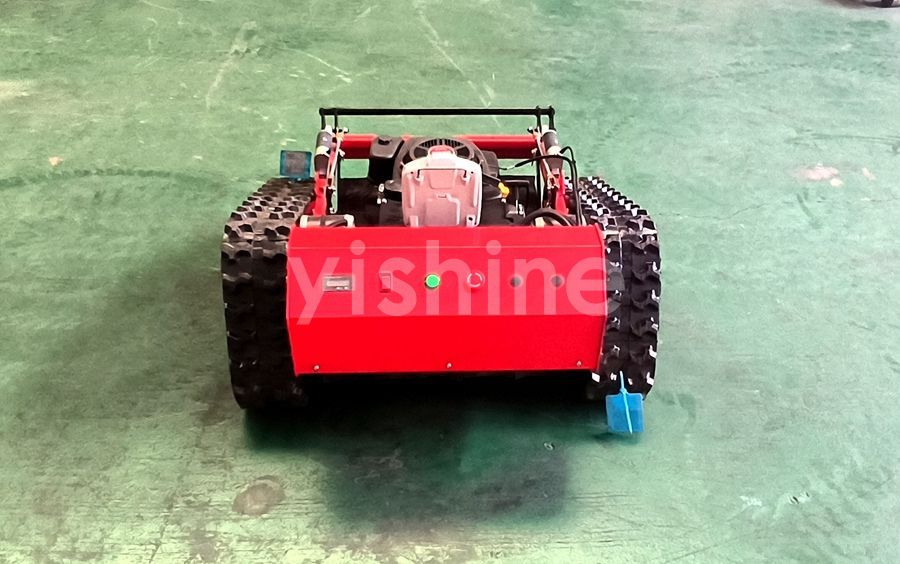
Check crawler tension and rubber wear condition. Inspect blade integrity and fastening screws. Test remote control signal at the top and bottom of slope to confirm stable connection. Check engine oil level to avoid insufficient lubrication during tilting operation.
Operation specification
Operate the machine along the contour direction instead of straight up and down the steep bank. Keep low and steady travel speed, avoid sudden acceleration, sudden braking and sharp turning. Do not overload mowing when grass is extremely thick. Stop immediately if abnormal vibration or signal loss occurs.
Advantages of Remote Control Lawn Mower for Hillside Projects
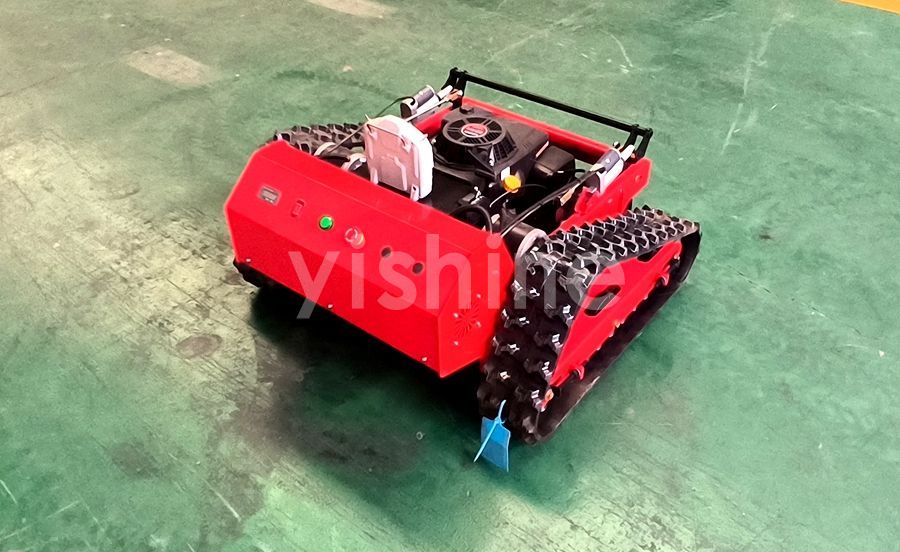
The biggest advantage is personnel safety. Operators stand on stable flat ground to control the machine remotely, no need to climb the dangerous slope. It eliminates the risk of falling, slipping and blade injury during steep bank grass cutting. For municipal river bank maintenance, mountain orchard green care and highway slope vegetation trimming, this hillside mowing equipment greatly reduces work-related accidents.
Compared with manual brush cutters, the crawler remote lawn mower improves working efficiency. The test shows that on a 30-degree hillside, the remote mower’s working speed is 2.7 times faster than handheld manual cutting, and the cutting height is more uniform. Long-term projects can save a lot of labor costs.
Frequently Asked Questions
Q1: What slope angle can a remote control lawn mower handle?
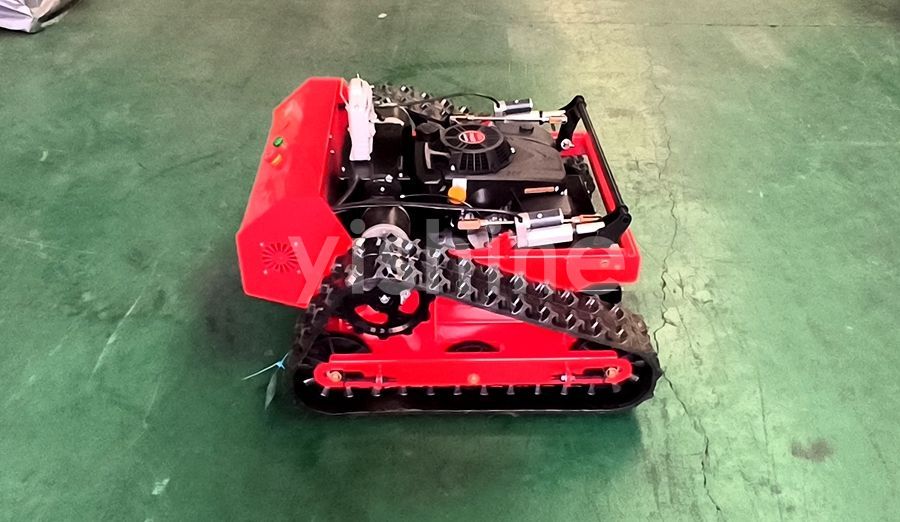
A1: Our test proves YISHINE remote crawler lawn mower can stably operate on slopes up to 45 degrees, while ordinary wheeled mowers are limited below 20 degrees.
Q2: What risks exist when mowing steep banks?
A2: Risks include machine sliding, rollover, engine oil backflow and blade collision with hidden stones on uneven hillside terrain.
Q3: What preparations are needed before hillside mowing?
A3: Survey terrain, remove hidden rocks and tree stumps, check crawler condition and test remote signal stability before starting steep bank grass cutting.
Q4: Is remote lawn mower better than manual mower for hillside work?
A4: Yes. Operators stay away from the dangerous slope area, avoiding falls and cuts, greatly improving safety during hillside mowing.
Conclusion
Slope mowing has always been a tough job in landscaping industry. Remote control crawler lawn mower provides a mature hillside mowing equipment solution for steep bank grass cutting. According to the 10-month field tracking test, users must strictly follow the 45-degree safety limit, complete terrain survey and machine inspection before work, and follow standardized operation steps.
When used correctly, remote lawn mowers can finish slope grass trimming efficiently and keep operators away from high-risk hillside environments. For landscape contractors, orchard farms and municipal green engineering teams, it is a practical equipment choice for long-term steep slope vegetation maintenance.