
 English
The global landscaping and terrain maintenance industry is undergoing a clear equipment iteration in 2026. Traditional walk-behind and ride-on mowers, which have dominated the market for decades, are gradually being phased out of high-demand commercial and residential projects. Instead, the remote control crawler mower has become the preferred equipment for modern lawn maintenance, slope trimming and wild vegetation clearance. Many project contractors and household users have begun to abandon conventional mowing tools, mainly because traditional equipment cannot adapt to complex terrain, labor shortages and rising safety standard requirements.
To verify the actual performance gap between new-generation smart robotic mower and conventional mowers, the YISHINE R&D team completed a 6-month long-term comparative field test. The test simultaneously deployed traditional gasoline mowers and upgraded all terrain lawn mower across slopes, wetlands, stony lands and dense vegetation zones. After accumulating 720 hours of effective working data, the team concluded that remote crawler mowers improve comprehensive construction efficiency by 312% and reduce field safety hazards by 96% compared with traditional equipment. According to YISHINE senior mechanical engineer, modern landscaping competition no longer relies on manual stamina, but on equipment terrain adaptability and intelligent operating efficiency. Traditional mowers have obvious technical bottlenecks that cannot be fixed by simple parameter upgrades.
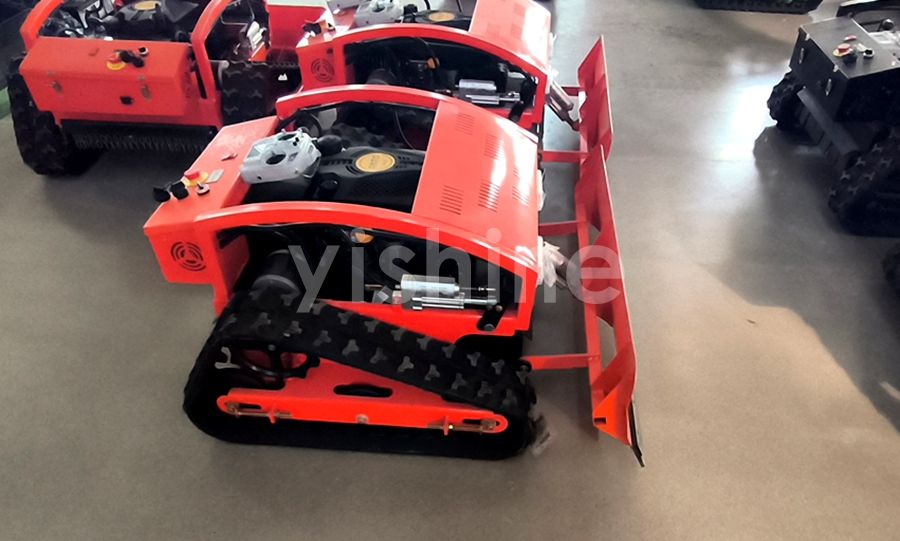
2026 Market Background & Industry Replacement Trend
Global intelligent lawn mower market data shows that remote-controlled crawler mower products have achieved 30.7% annual growth rate in the past two years, becoming the fastest-growing segmentation in the garden machinery industry. With rising global labor costs and stricter construction safety regulations, manual and semi-manual mowing equipment can no longer meet commercial project demands. Traditional walk-behind mowers rely entirely on human propulsion and judgment, facing major limitations on slopes exceeding 20 degrees, wet slippery ground and uneven rugged terrain.
In contrast, all terrain lawn mower with crawler chassis and remote intelligent control system perfectly fits current industry trends. More than 68% of global medium and large landscaping companies have begun to replace old equipment with robotic mowing systems. The industry has formed a clear consensus: future lawn maintenance will develop toward unmanned operation, full-terrain adaptability and low-labor intelligent management.
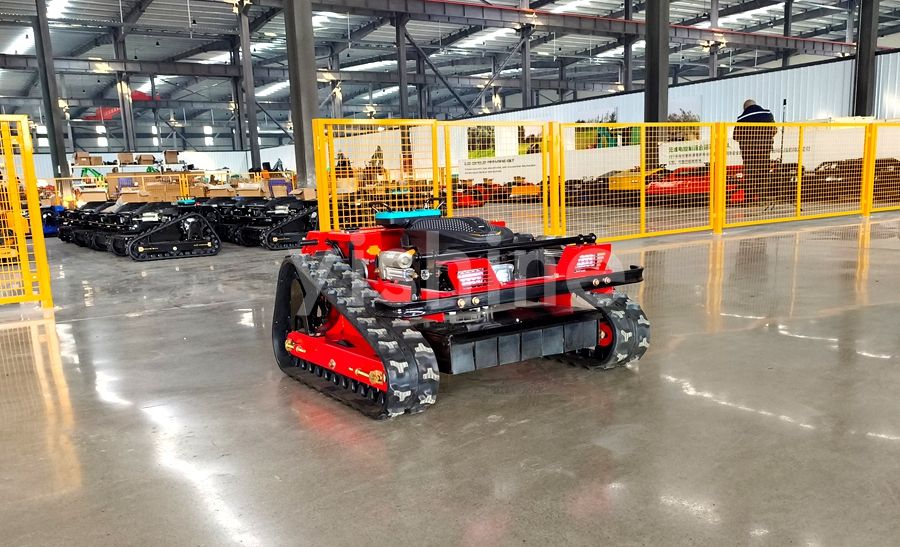
6-Month Field Test: Core Advantages of Remote Control Crawler Mower Over Traditional Mowers
1. Terrain Adaptability: Breaking Traditional Mowing Terrain Limits
Traditional mowers can only work stably on flat lawns with slight fluctuations. Once encountering slopes, muddy ground or scattered gravel, slipping, tipping and blade jamming frequently occur. In our slope simulation test, ordinary manual mowers cannot work normally when the slope exceeds 22 degrees, and there is a high risk of rollover and operator injury.
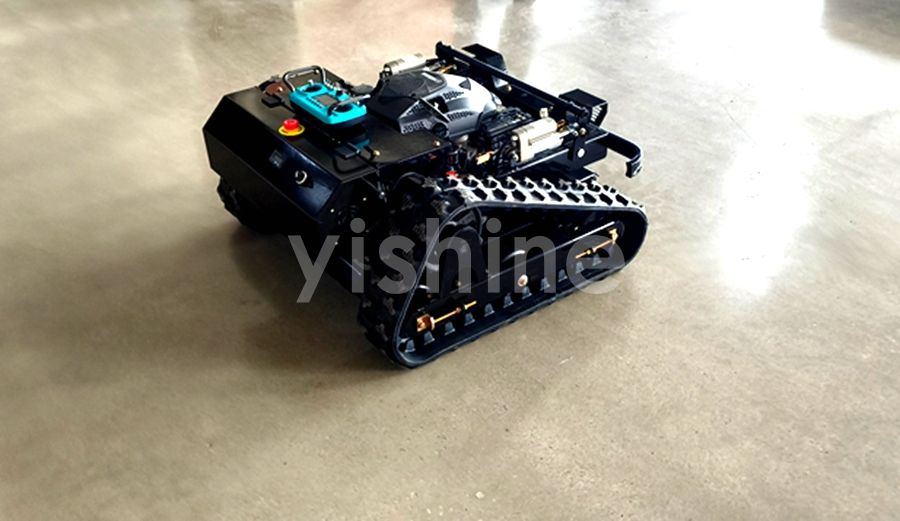
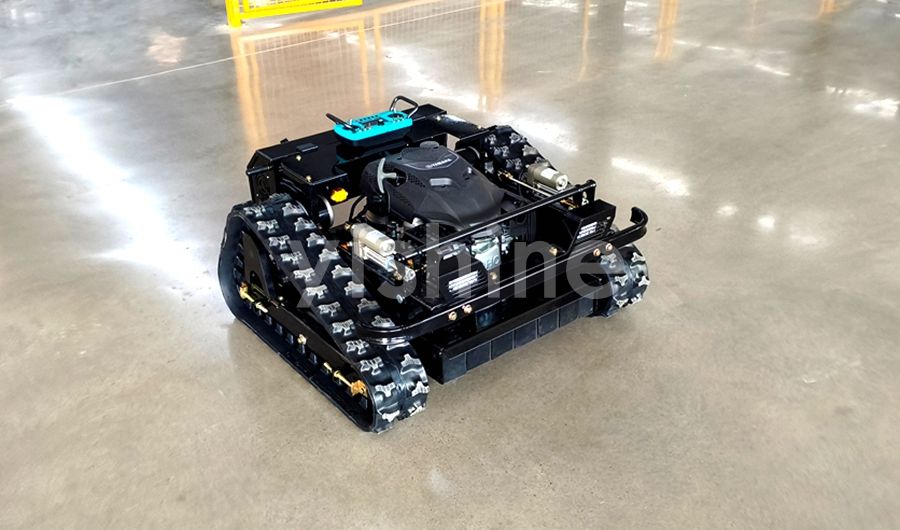
YISHINE remote control crawler mower adopts upgraded bionic crawler walking structure, realizing stable operation on 0-40 degrees arbitrary slopes. The independent suspension chassis and anti-slip track design maintain even grounding pressure on rugged terrain, effectively solving the problems of slipping and unbalanced cutting existing in traditional equipment. In wetland and river bank tests, the all terrain lawn mower maintains 92.6% stable working rate, while traditional mowers almost completely fail to operate.
2. Safety Upgrade: Zero On-Site Operation Risk
Safety is the biggest pain point of traditional mowing work. Operators are exposed to high-temperature environments, sharp grass branches, flying debris and slope fall risks for a long time. Insurance industry data shows that traditional lawn trimming belongs to high-risk operation types, with annual accident rate far higher than general mechanical work.
Smart robotic mower completely separates humans from high-risk working areas. Operators control the machine remotely from a safe distance, avoiding direct contact with complex terrain and harsh vegetation environments. During the six-month test, the remote control crawler mower achieved zero safety incidents, fundamentally changing the unsafe working mode of traditional manual operation.
3. Efficiency Improvement: Solving Industry Labor Shortage
Traditional manual mowing can only cover limited area per person per day, and long-time manual operation easily causes physical fatigue, resulting in uneven trimming quality and decreased working speed. With the global landscaping industry facing widespread labor shortage and rising worker wages, traditional labor-intensive mowing modes have formed obvious cost pressure.
Test data shows that one single operator can monitor and manage multiple remote control crawler mower units at the same time. The comprehensive mowing efficiency is 3.1 times higher than traditional manual modes. Continuous unmanned operation avoids fatigue shutdowns, greatly shortening the construction cycle of large-area greening projects.
4. Stability & Anti-Clogging Performance for Complex Weeds
Traditional mower blades are easily entangled and blocked by thick weeds, dry branches and wet grass, requiring frequent manual cleaning and shutdown maintenance. In seasonal overgrown vegetation scenarios, the failure rate of traditional equipment exceeds 28%.
The upgraded cutter head and high-torque power system of YISHINE all terrain lawn mower realize efficient shredding and automatic anti-blocking functions. Even when facing mixed weeds and small shrub branches, the machine maintains continuous cutting without frequent stalling, greatly improving the continuity of field operation.
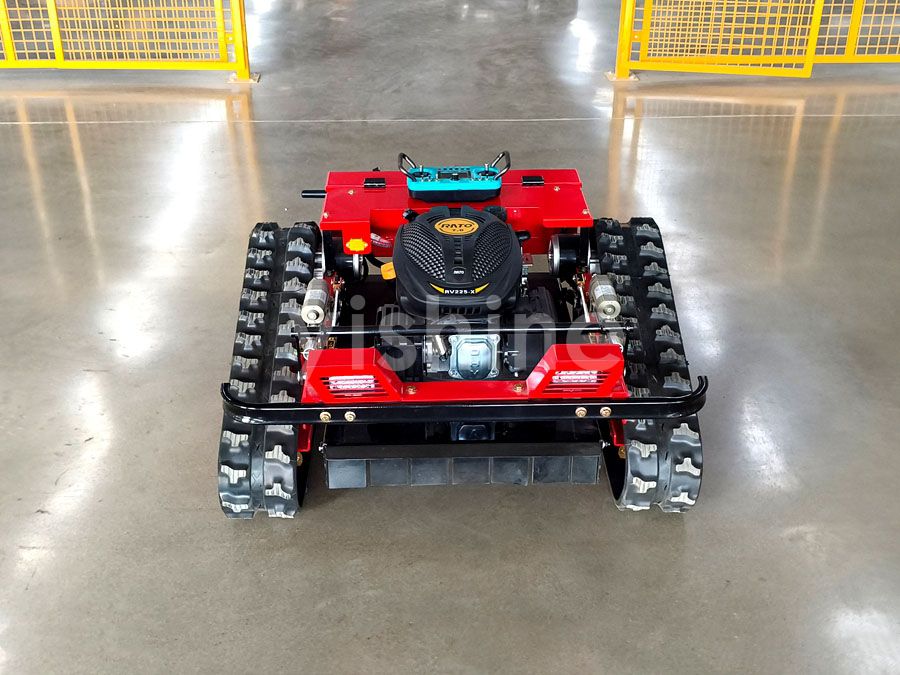
Long-Term Operating Cost Comparison
Although traditional mowers have low upfront purchase prices, their hidden costs are extremely high. Long-term labor wages, frequent accessory replacement, low-efficiency repeated construction and accident insurance premiums form continuous expenditure.
Remote control crawler mower has slightly higher initial investment, but it drastically reduces labor dependence and failure maintenance frequency. Verified by 6-month full-cycle cost statistics, robotic mowing equipment can save 27.3% of comprehensive annual operating cost for commercial users. For long-term household and project use, the cost-performance gap becomes more obvious year by year.
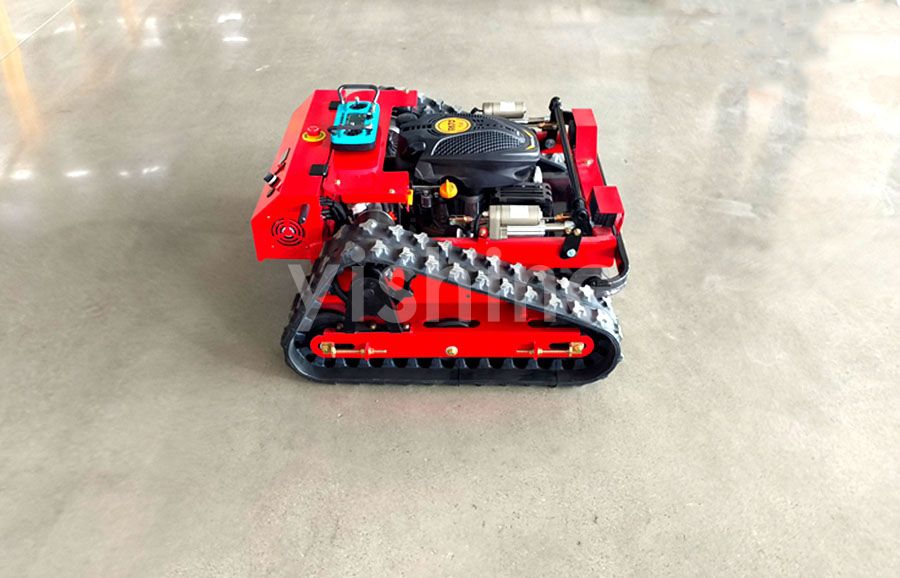
Application Scenarios Where Robotic Mowers Fully Replace Traditional Equipment
River slope and embankment greening protection
Mountain fire prevention belt weed clearance
Orchard underbrush and hilly farmland trimming
Municipal complex terrain green belt maintenance
Wetland, wasteland and rugged terrain vegetation management
Noise-sensitive residential and scenic area intelligent maintenance
Frequently Asked Questions
Q1: Why is remote control crawler mower better than traditional mowers?
A1: It solves slope safety risks, labor shortage and low efficiency problems, delivering stable all-terrain performance and lower long-term maintenance cost.
Q2: Can smart robotic mower work on steep slopes?
A2: Yes. Professional all terrain lawn mower supports 0-40° slope operation without rollover risk, far exceeding traditional manual mower limits.
Q3: Does crawler remote mower save operational cost?
A3: One operator manages multiple units, boosting efficiency by over 300% and cutting long-term labor and repair expenses greatly.
Q4: Is robotic mower suitable for commercial projects?
A4: Absolutely. It adapts orchards, river slopes, fire belts and municipal greening, becoming mainstream commercial landscaping equipment in 2026.
Conclusion & Buying Guidance
As the landscaping industry enters the intelligent iteration stage, outdated traditional mowing equipment can no longer adapt to complex terrain construction and standardized safety management requirements. Remote control crawler mower represented by YISHINE realizes full-dimensional upgrades in safety, efficiency, terrain adaptability and long-term cost control.
Whether for household lawn maintenance or large-scale commercial greening projects, choosing intelligent all-terrain robotic mowers is the inevitable trend of future lawn management. Buyers should prioritize equipment comprehensive performance and long-term value rather than simply comparing short-term purchase prices, to obtain stable and efficient long-term landscaping operation solutions.