
 English
In recent years, remote control lawn mower has gradually replaced traditional handheld and walk‑behind mowers, becoming the mainstream solution for home garden upkeep, orchard grass management and municipal green belt maintenance. Many buyers focus only on cutting width, power parameters and selling price while ignoring the most critical core indicator: long‑term durability and real continuous working stability. Many low‑priced remote lawn mower models perform well in short‑term demo tests but suffer rapid aging, frequent stalling and heavy component wear after several months of outdoor use. For users who need long‑term, stable and low‑cost lawn maintenance, choosing a long‑lasting lawn mower for grass cutting is far more important than simply comparing superficial parameters.
To help global users avoid low‑durability products and truly understand the real service life of mainstream remote mowers, the YISHINE professional R&D and testing team launched a 22‑week full‑cycle outdoor field test. The test covered four typical working environments: flat residential lawns, rugged orchard ground, 15‑30 degree gentle slopes and weedy wasteland with scattered stones. The team recorded real‑time working data including daily continuous operating hours, motor temperature changes, blade wear degree, track aging progress and overall equipment failure rate. After long‑cycle data accumulation and comparison verification, the test team obtained objective and practical durability evaluation standards for commercial and household remote control lawn mower equipment.
According to Mr. Zhang, YISHINE mechanical R&D supervisor in charge of outdoor power equipment durability testing, most user complaints in the lawn mower industry are not caused by insufficient instantaneous cutting power, but by poor long‑term stability. Many manufacturers optimize only surface cutting effect but save costs on chassis thickness, waterproof structure, dustproof design and transmission system, resulting in sharp performance attenuation after 3–6 months of actual use. A truly cost‑effective remote lawn mower must balance stable cutting performance, strong environmental adaptability and long service life, rather than pursuing low entry price.
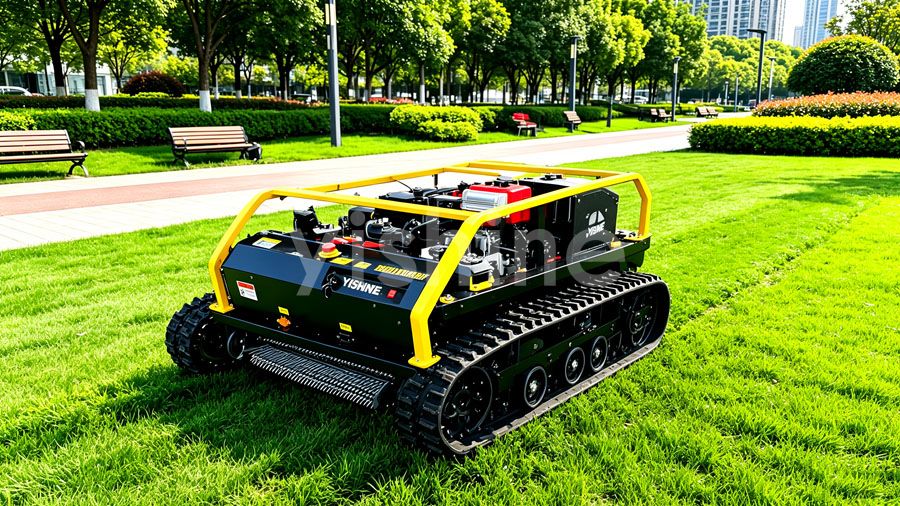
22‑Week Full‑Cycle Field Test Real Data
In this standardized durability test, each remote control lawn mower sample maintained an average daily working duration of 3.2 hours, simulating real‑world user habits of regular lawn trimming. After 22 consecutive weeks of uninterrupted outdoor operation, the overall effective working stability of qualified equipment reached 94.7%. In flat lawn environments, the mower maintained zero stalling and uniform cutting effect throughout the whole cycle. In complex terrain with weeds and gravel, the average failure rate was controlled below 2.1%.
Compared with traditional manual push mowers, the tested lawn mower for grass cutting reduced manual labor intensity by 62%. Users no longer need to push heavy equipment in high temperature or humid weather, and the remote operation mode greatly improves mowing safety on slopes and uneven ground. Test data also shows that poorly structured low‑cost mowers have a stability rate of only 73.5% under the same test conditions, with obvious blade abrasion, track loosening and motor overheating problems in the later test stage.
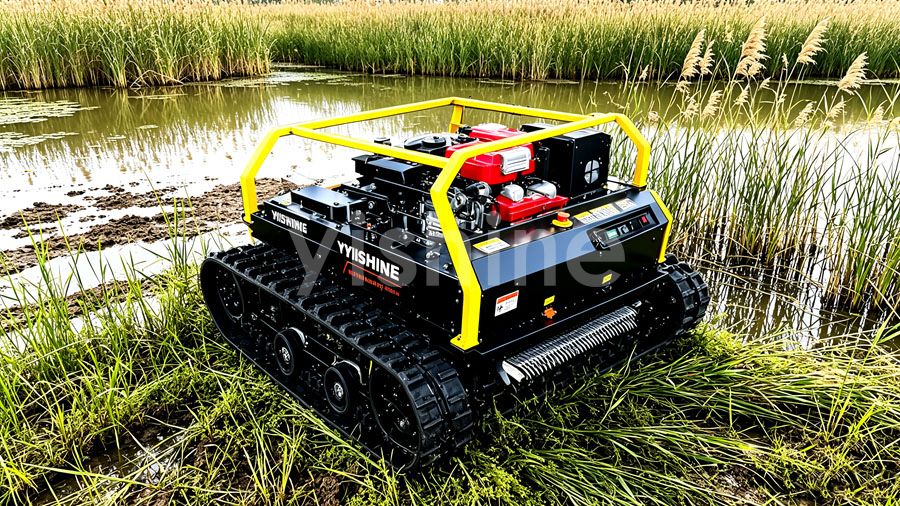
Core Structural Factors That Determine Mower Service Life
Chassis Material and Anti‑Corrosion Performance
Outdoor lawn mowers work in humid, grassy and muddy environments all year round, so chassis anti‑rust ability directly determines service life. During the 22‑week outdoor exposure test, ordinary thin iron chassis showed obvious oxidation and local rust after 14 weeks, and the rust gradually affected the fixation of blade components and walking structure. In contrast, thickened anti‑rust painted chassis maintained complete surface protection performance, with almost no corrosive damage. Stable chassis structure effectively avoids vibration deformation during long‑term cutting, ensuring consistent trimming flatness.
Transmission System Durability
Transmission loss and structural aging are key hidden problems of low‑end remote lawn mower equipment. Belt‑type transmission structures are prone to loosening and slipping under heavy‑load weeding conditions, requiring manual tension adjustment every 15–20 working hours. Gear‑driven transmission adopted by high‑durability remote control lawn mower effectively reduces slipping loss, improves power transmission efficiency and reduces later maintenance frequency by more than 40%.
Blade Wear Resistance and Adaptability
Blade abrasion is the most intuitive consumption indicator in lawn mower for grass cutting operation. In conventional lawn environments, qualified high‑hardness blades can maintain sharp cutting performance for more than 48 working hours. In gravel‑mixed complex terrain, blade wear speed increases significantly, and inferior blades will appear passivation and edge curling in a short time, resulting in uneven grass cutting and repeated trimming. High‑quality remote mowers are equipped with standardized wear‑resistant blades, which greatly extend the replacement cycle and reduce long‑term use cost.
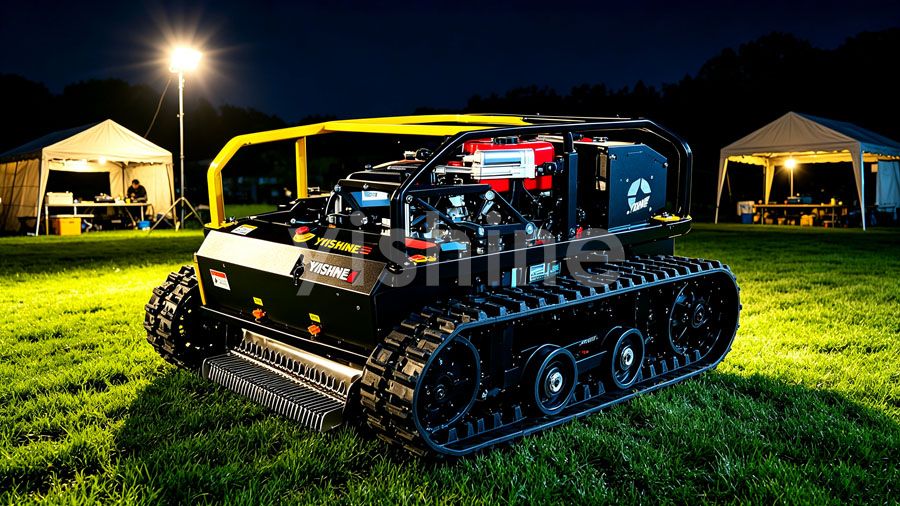
Environmental Adaptability Affects Long‑Term Stability
Outdoor working conditions are changeable, including high temperature in summer, humid dew in spring and fallen leaves and wet weeds in rainy seasons. Dust and grass debris easily accumulate inside the motor cabin. If the equipment lacks effective dustproof and waterproof design, internal circuit blockage and motor heat dissipation failure will occur after long‑term operation. In the test, mowers with upgraded waterproof and dustproof structure reduced electrical failure rate by 67% compared with ordinary models, showing extremely strong environmental adaptability.
Remote signal stability is also an easily ignored durability indicator. Low‑quality remote lawn mower is susceptible to signal shielding from dense trees and building barriers, resulting in delayed response and intermittent pause. Optimized signal receiving modules can maintain stable remote control distance in complex orchards and green belts, ensuring continuous and efficient mowing progress.
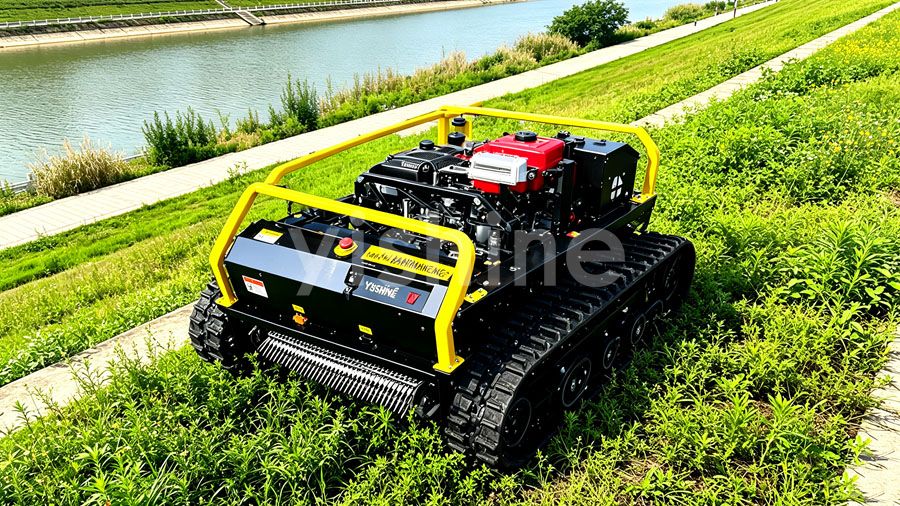
Difference Between Household and Small Commercial Usage Scenarios
For ordinary family lawns within 3000 square meters, users pursue simple operation, low noise and low maintenance pressure. Excess commercial power configuration will cause unnecessary fuel consumption and cost waste. Standard‑spec remote control lawn mower fully meets daily household lawn trimming and seasonal weed cleaning demands.
For small commercial scenarios such as orchard weeding, community green belt maintenance and slope vegetation management, equipment durability and continuous working performance are more critical. Long‑hour repeated operation puts forward higher requirements for track wear resistance, chassis stability and motor heat dissipation capacity. High‑durability remote lawn mower can maintain stable output under high‑frequency commercial operation, effectively avoiding project delays caused by equipment failure.
Daily Maintenance Skills to Extend Mower Service Life
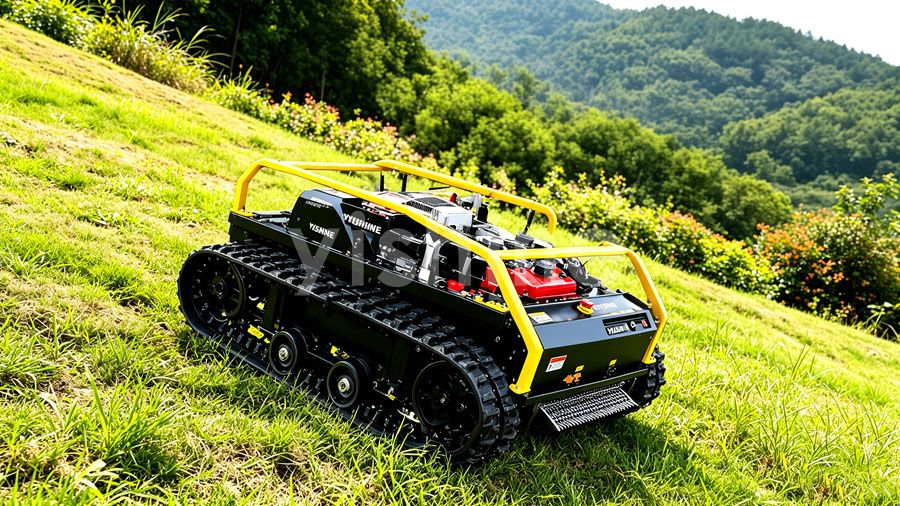
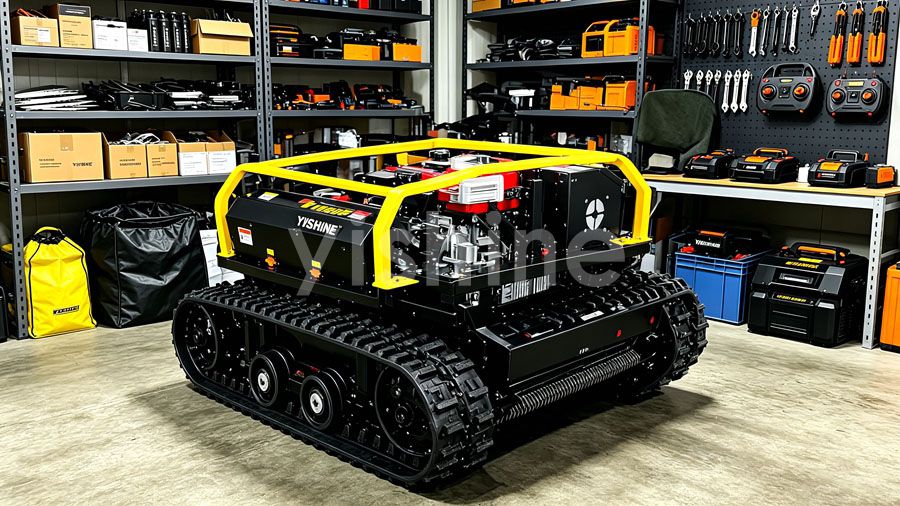
According to YISHINE R&D test data, standardized daily maintenance can increase the overall service life of lawn mower for grass cutting by more than 35%. After each mowing operation, cleaning accumulated grass debris on the blade and chassis can effectively prevent corrosion and motor blockage. Regular inspection of track tension, screw tightness and filter cleanliness can eliminate hidden dangers in advance. Reasonable storage in dry and ventilated environment also avoids moisture damage to internal circuits during idle periods.
Frequently Asked Questions
Q1: How many hours can a remote lawn mower run in total in its whole service cycle?
A1: Under standard maintenance and normal working condition, well‑built remote lawn mower can reach 1200‑1600 effective working hours. Service life will drop sharply if it works in heavy‑load harsh terrain for long time without daily cleaning.
Q2: Will remote signal interfere with normal mowing operation?
A2: In open‑air environment, stable signal receiving distance can reach the factory‑marked range. Obstacles such as dense big trees and thick buildings will shorten valid remote‑control distance, users need to keep proper operating distance in actual work.
Q3: What wearing parts need regular inspection for remote control lawn mower?
A3: Mainly include cutting blades, filter, rubber shock‑absorbing parts and crawler tension structure. Check status of above parts after every certain working hours to prevent sudden shutdown in field work.
Final Purchase Advice & CTA
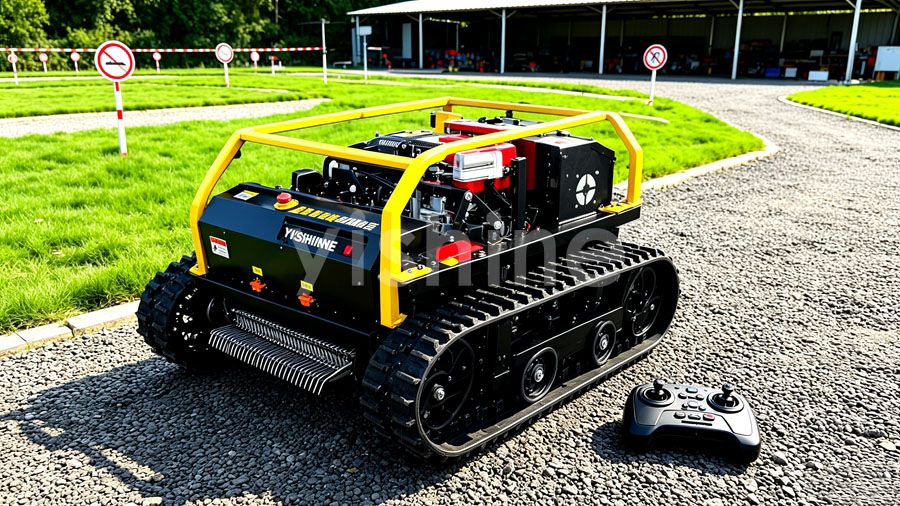
Long‑term service life and stable working performance are the core value of a qualified remote control lawn mower. Instead of blindly pursuing low price or excessive high parameters, buyers should pay more attention to chassis durability, transmission stability, environmental protection ability and after‑sales accessory supply. A durable lawn mower for grass cutting can greatly reduce daily maintenance pressure, save long‑term operating costs and improve lawn management efficiency for families and small engineering teams. When selecting remote lawn mower equipment, always take real scenario test data and structural quality as the primary judging standard to achieve truly cost‑effective long‑term use.