
 English
H2:Current Market Status Of Global Commercial Vegetation Maintenance
Labor resource strain and tightening worksite safety regulations are reshaping commercial vegetation maintenance across global regions in 2026. Multiple industry survey statistics indicate that 68% of landscaping and municipal engineering contractors have met obstacles in recruiting skilled field operators for high‑risk mowing assignments. Many veteran front‑line workers choose to retire or transfer to lower‑risk posts, creating a continuous talent gap within the whole vegetation management industry. Traditional manual‑driven grass‑cutting workflows bring steadily‑rising comprehensive costs including salary, work‑injury insurance and staff turnover loss. Many project tenders put forward stricter safety assessment standards, forcing operators to look for alternative equipment represented by Remote Control Lawn Mower Robot. In past operating modes, lots of complex‑terrain projects cannot be delivered efficiently, even with sufficient capital budget. Project delays and subcontract expenses further compress profit margins for small and medium‑sized engineering enterprises. Contractors are often forced to accept thinner profit margins just to keep project orders. Under such market background, Remote Lawn Mower gains fast‑growing attention among commercial purchasers as one feasible hardware upgrade option for Lawn Mower For Grass Cutting. Many buyers begin to evaluate long‑term operating benefit rather than only focusing on one‑time procurement expense, and they actively learn about commercial tracked mowing machinery to fill equipment gaps in their fleet.
H2:26‑Week On‑Site Tracking Survey Background & Sample Profile
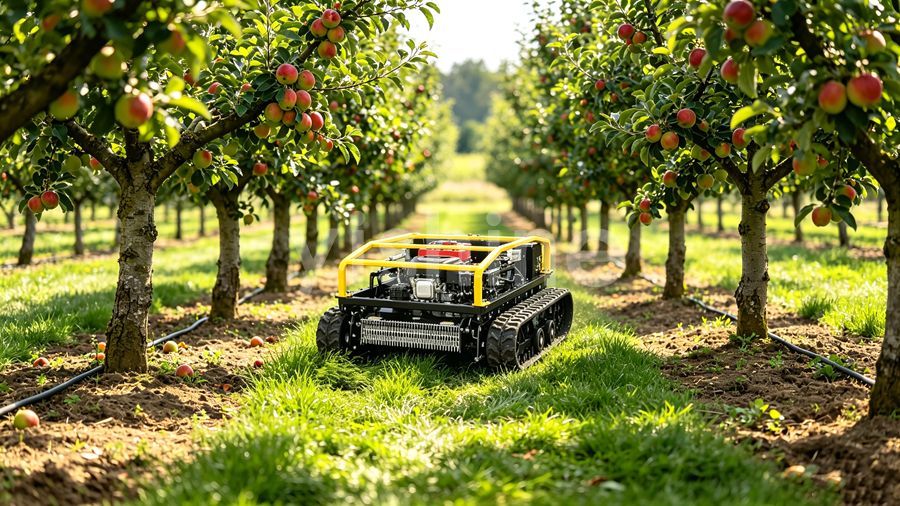
Our internal R&D team finished a 26‑week continuous on‑site tracking survey cooperating with 14 independent commercial contractors from different regions, collecting first‑hand operating data from real‑world job‑sites rather than ideal lab environments. The surveyed projects cover orchard belts, highway side‑slope sections, photovoltaic green belts, riverbank protection zones and hilly wasteland renovation sites. Each selected site contains mixed vegetation height, scattered stones and uneven soil surface which users will meet in daily jobs. Some test zones also include residual crop stalks and fallen tree branches, conditions seldom reproduced in laboratory demonstration. During the whole tracking cycle, inspectors recorded working efficiency index, equipment jam frequency, site adaptability performance and manpower input changes when using Remote Control Lawn Mower Robot. Each working group kept unified recording standards for daily operation log, so as to obtain comparable quantitative data for subsequent analysis. Besides working efficiency records, investigators also collected subjective feedback from onsite operators about operation difficulty, noise performance and daily cleaning burden. All sample sites match the actual working conditions most overseas buyers will encounter when selecting a qualified Lawn Mower For Grass Cutting. Before formal testing started, all participating teams completed unified operation training based on vegetation‑maintenance equipment for slope projects, to eliminate operating skill deviation affecting final test result.
H2:Core Practical Data Reflected By Field Tracking Results
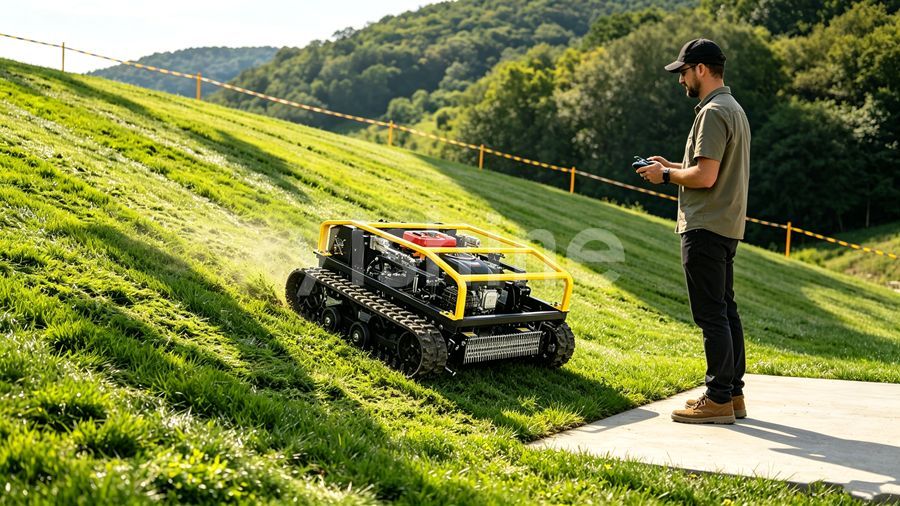
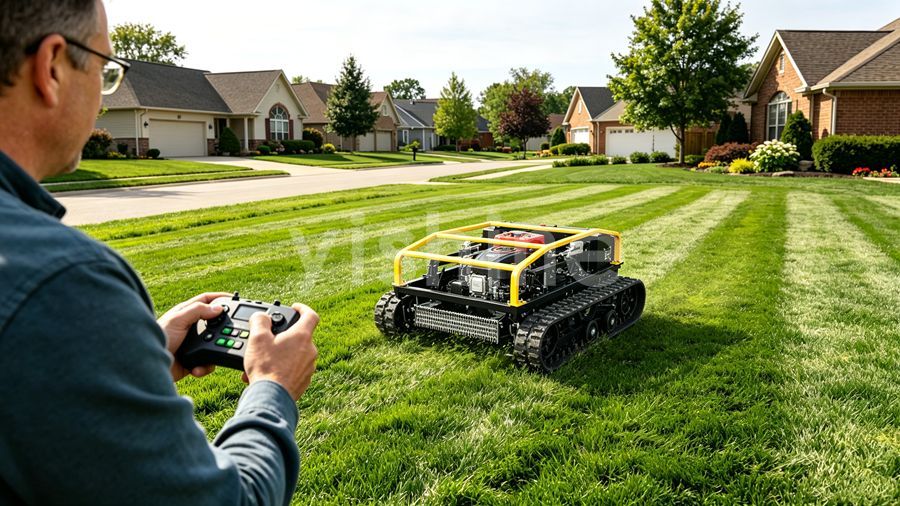
Quantified data collected from 26‑week tracking shows obvious difference between remote‑control equipment and conventional mowing solutions. For a 9500㎡ mixed‑terrain project area, traditional operation arrangement needs 2‑3 on‑site workers rotating shifts to complete grass‑cutting tasks. Workers also need frequent rest intervals under high‑temperature outdoor environment, further dragging down overall progress. After deploying Remote Lawn Mower, only one operator completes the whole mowing procedure from safe observation area. Within survey samples, on‑site personnel input drops by 62%, while overall project cycle efficiency rises by 31%. On gravel‑mixed slope sections, average equipment stuck‑downtime reduces by 77% compared with ordinary wheel‑type mowing machinery. Ground‑contact structure optimization enables Remote Control Lawn Mower Robot to pass uneven ground without heavy soil compaction, which protects existing root system of fruit trees and surface foundation of solar installations. Operators also reported less secondary cleaning work after mowing on wild wasteland zones. Thick weed clusters and small shrub sprouts can be cut in one single pass without repeated back‑and‑forth trimming. For users searching for stable Lawn Mower For Grass Cutting, those field‑verified indexes provide important reference basis for purchasing judgement. Many participating contractors mentioned they previously searched for outdoor power machinery product range but found few models that could adapt to such diverse complicated working conditions.
H2:Professional Interpretation From R&D Supervisor On Site‑Oriented Design Concept
H2:Main Technical Features Supporting Multi‑Scenario Adaptation
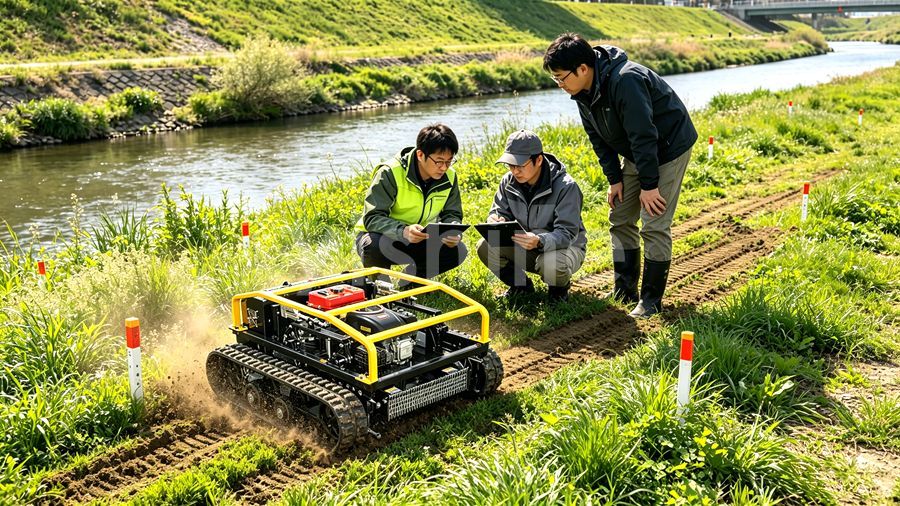
Robert Hu, R&D supervisor responsible for outdoor commercial machinery, delivered professional analysis based on 26‑week field tracking dataset. “Many purchasers only compare static parameter sheets at selection stage. But real‑world construction sites contain gravel, residual branches, uneven soil and slope angle variation. A capable Remote Control Lawn Mower Robot must be developed around actual site chaos instead of ideal lab conditions. Some low‑cost products on market perform well under demonstration environment yet break down frequently once entering real projects. Reliable Remote Lawn Mower should balance passing capacity, signal anti‑interference performance and easy‑maintain structure, this is exactly what commercial‑grade Lawn Mower For Grass Cutting needs.”
Chassis travelling system of Remote Control Lawn Mower Robot adopts reinforced tracked structure, distributing unit ground pressure reasonably when crossing uneven ground. Built‑in tilt monitoring module triggers automatic blade‑stop protection once inclination exceeds safe threshold, lowering hidden safety hazard during slope mowing work. Upgraded wireless transmission module strengthens anti‑interference capacity against dense branches and metal obstacles existing inside photovoltaic stations. Modular assembling design allows field staff to finish blade replacement and wearing‑part inspection without special professional tools, shortening routine maintenance time consumption. Operators can quickly take apart key assemblies, this is one core advantage of intelligent grass‑cutting hardware solution for end‑users without professional repair workshop. All above‑mentioned technical settings are oriented toward real‑world commercial site requirements for Lawn Mower For Grass Cutting. When equipment runs in wet grassland environment, the sealing structure can effectively prevent mud and grass debris entering internal transmission parts, reducing unexpected failure probability.
H2:Return‑On‑Investment Analysis For Commercial Project Owners
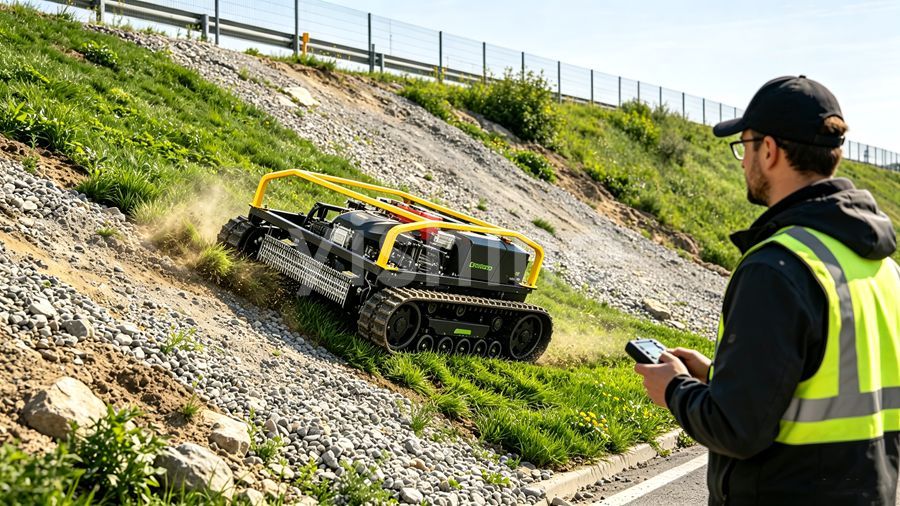
Initial procurement expenditure is one major concern for most contractors when introducing Remote Control Lawn Mower Robot. Though purchase cost is higher than common fuel‑powered mowers, comprehensive benefit emerges in long‑term repeated project execution. According to statistics from tracked samples, after continuous use for 11‑13 months, the saved cost on labor, accident‑related compensation and project rework can offset most part of equipment premium. Remote Lawn Mower helps contractors qualify for tender projects involving high‑risk terrain, expanding available business scope which cannot be undertaken by traditional mowing equipment. For medium‑size engineering companies, proper selection of Lawn Mower For Grass Cutting brings not only efficiency promotion but also competitive advantage in bidding activities. Many participants pointed out that they paid extra attention to modular maintenance‑friendly mower series, because frequent complicated repair will offset part of economic gains brought by efficiency improvement. Before signing new project contracts, enterprise managers can refer to municipal engineering site equipment guide to make reasonable budget planning for machinery updating.
H2:FAQ
Q1: Will dense branches block wireless signal of Remote Control Lawn Mower Robot on orchard sites?
A1: Optimized anti‑interference wireless module keeps stable connection under dense fruit‑tree shelter; tilt‑triggered automatic stop function guarantees operation safety.
Q2: How much time is required for site staff to get familiar with Remote Lawn Mower daily operation?
A2: General field workers can grasp main operating flow within 7 hours guided practice, no specialized technical background required.
Q3: Can this Lawn Mower For Grass Cutting handle gravel‑scattered highway slope sites?
A3: Reinforced tracked chassis adapts gravel‑mixed terrain effectively and reduces stuck incidents during continuous mowing work.
H2:Suggestions On Equipment Selection & Operation Deployment
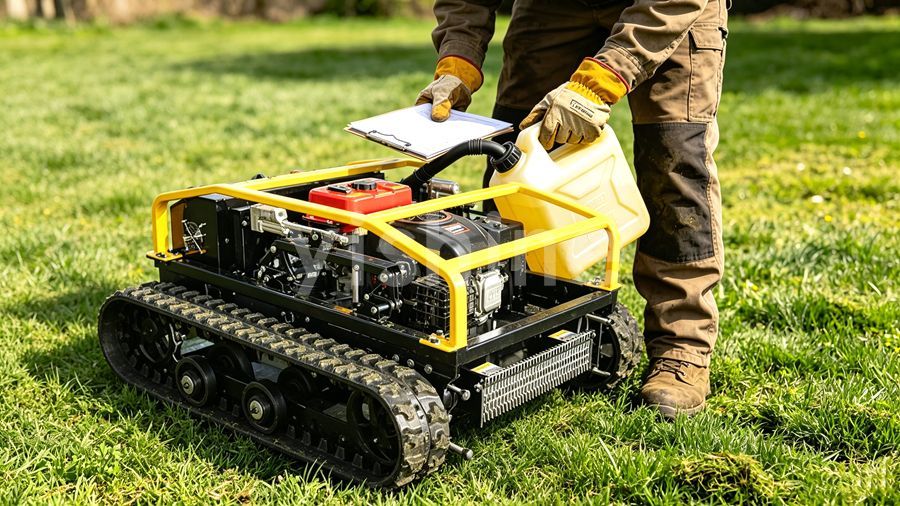
When evaluating Remote Control Lawn Mower Robot, buyers should attach importance to real‑site feedback data instead of relying merely on laboratory index. It is recommended to confirm matching degree between equipment performance and local project terrain, vegetation condition and working scale before final model confirmation. Reasonable daily inspection rhythm will extend service life of Remote Lawn Mower, including cleaning grass residue after each shift and regular checking for track tension and cutting‑blade wear status. Operators should also pay attention to fuel status and heat dissipation after long‑hour continuous operation, avoiding over‑load running under extremely high ambient temperature. Choosing suitable Lawn Mower For Grass Cutting brings stable efficiency promotion for orchard operators, municipal contractors and new‑energy‑park maintainers. When managing large‑scale new‑energy projects, buyers may also learn relevant experience from photovoltaic‑park vegetation management solution to arrange equipment working schedule scientifically. Project owners can pick matched configuration according to own business requirement to achieve desirable long‑term operation return.
Commercial purchasers are advised to compare site‑adaptation performance of different configurations before making purchasing decisions. Select proper Remote Control Lawn Mower Robot according to actual project conditions, so as to obtain stable efficiency improvement and comprehensive business benefit for long‑term vegetation‑maintenance assignments.