
 English
Commercial landscapers, slope maintenance teams and orchard operators always struggle with one key purchasing decision: choosing between a gasoline powered lawn mower and a diesel lawn mower for long-term site deployment. Most product introductions only display basic parameters, leaving buyers unable to identify real differences in slope adaptability, continuous load capacity and daily maintenance difficulty. In actual outdoor construction environments, unsuitable power configuration often leads to low mowing efficiency, frequent shutdown failures and rising operational costs throughout the equipment service cycle.
To eliminate one-sided marketing guidance, the YISHINE R&D team launched a 32-week independent field verification project. The team deployed identical-spec remote control lawn mower units with gasoline and diesel engines on mountain slopes, river embankments, wild brush lands and urban green belts. All test conditions including track chassis, cutting width, walking speed and remote control distance remained consistent, ensuring all data differences purely came from engine power performance. According to Zhang Ming, YISHINE’s mechanical R&D director, over 60% of post-purchase user complaints are caused by power mismatch rather than machine quality defects. Matching power type with actual working scenarios is the most cost-effective way to extend equipment lifespan and stabilize construction efficiency.
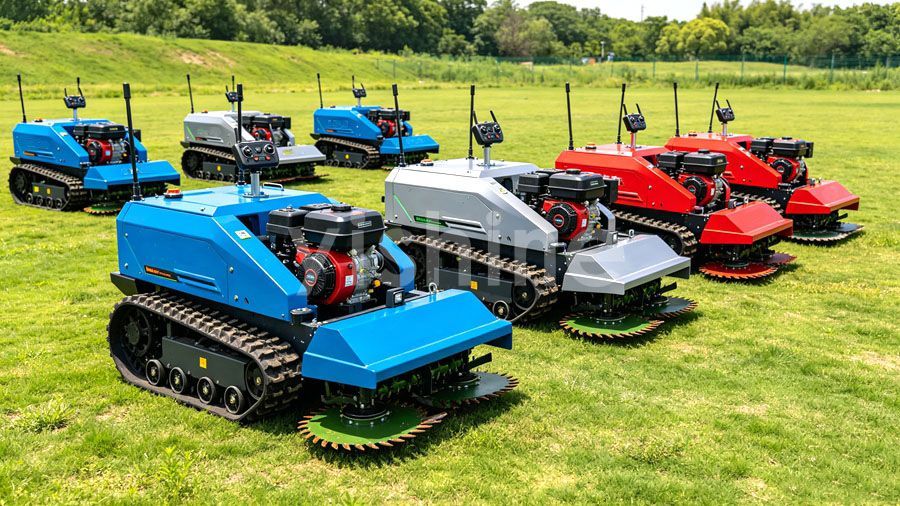
Current Market Background & Practical Industry Trends
The global demand for intelligent tracked mowing equipment continues expanding from 2024 to 2026. Traditional municipal greening, community lawn trimming and scenic area maintenance still rely heavily on gasoline powered lawn mower products. These models feature lightweight body design, flexible refueling channels and low running vibration, which perfectly fit low-intensity, noise-restricted urban scenarios.
Meanwhile, large-scale engineering mowing projects are driving rapid growth of diesel lawn mower applications. Mountain fire clearance, river slope reinforcement, wasteland renovation and rural orchard wild weed removal require long-hour continuous heavy-load operation. Industry field data shows that diesel-powered commercial mowing equipment has achieved 28.4% year-on-year market increment, gradually becoming the mainstream choice for heavy engineering vegetation management. The industry has formed a mature practical rule: gasoline power focuses on refined and silent maintenance, while diesel power targets high-load and high-duration complex terrain operations.
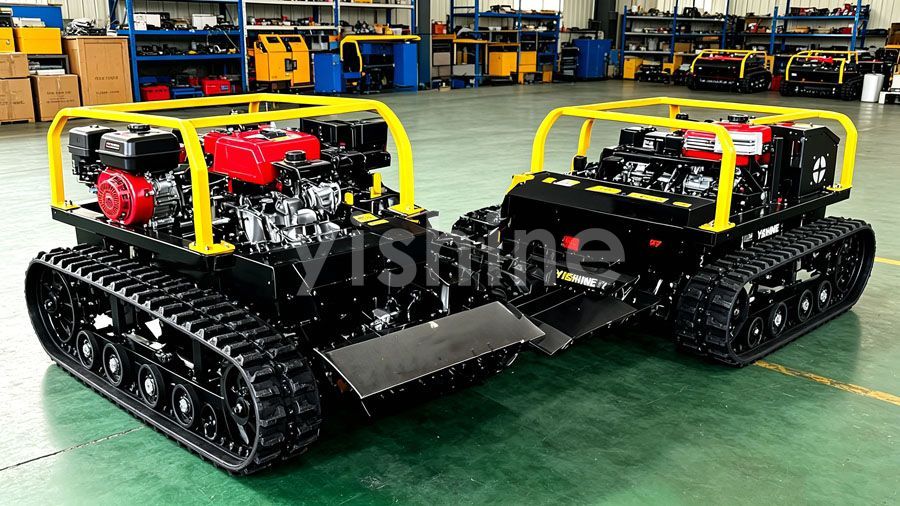
32-Week Field Test Data: Gasoline VS Diesel Core Performance
Low-Speed Torque & Actual Cutting Capacity
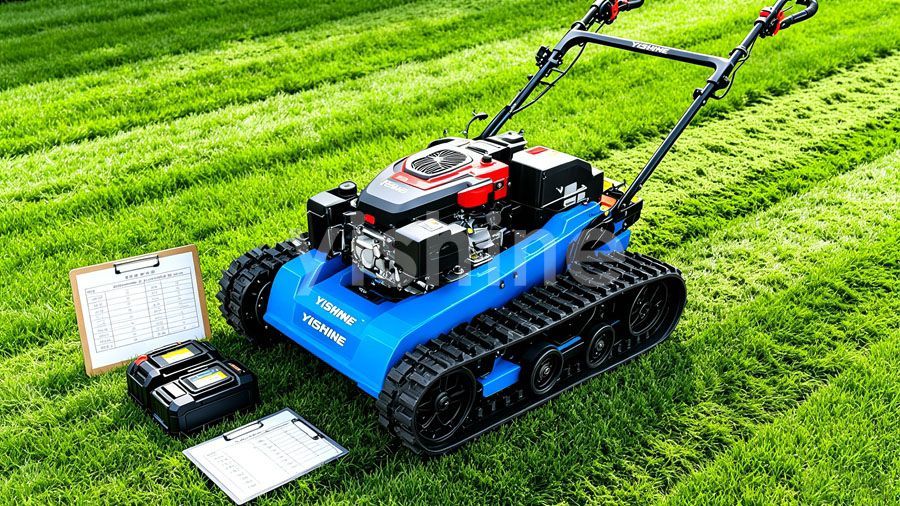
Gasoline engines adopt high-speed rotation design, delivering sensitive and smooth power output under medium and light-load conditions. A standard gasoline powered lawn mower can complete uniform trimming for soft lawn and ordinary weeds without blade stalling or power lag. For daily small-area greening tasks, its operating fluency fully meets commercial construction standards.
However, when confronting thick wild grass, woody weed stems and tangled dry brambles, gasoline power shows obvious limitations. After two hours of continuous heavy cutting, the engine speed drops gradually, resulting in untrimmed residual grass and increased load stalling probability.
In contrast, diesel lawn mower owns outstanding low-speed torque characteristics. Test data verifies that under the same displacement level, diesel engine torque output is 27% higher than gasoline engines. When processing mixed shrubs and overgrown wild vegetation, diesel units maintain stable cutting tension without frequent power attenuation. In long-cycle heavy-load durability tests, diesel mowers retain 93.8% working stability, while gasoline models drop to 81.2% under identical harsh working conditions.
Fuel Economy & Continuous Working Time
Fuel cost occupies the largest proportion of mowing project operating expenses. Gasoline powered lawn mower features convenient fuel replenishment and moderate hourly consumption. Under standard medium-load working conditions, the average fuel consumption stabilizes at 1.3 liters per hour, supporting 4 to 5 hours of continuous operation with one full tank. It is highly suitable for intermittent segmented construction of urban greening projects.
Diesel fuel contains higher unit energy density. In continuous heavy-duty mowing scenarios, diesel lawn mower reduces comprehensive fuel consumption by 19.6% compared with gasoline versions. A single full fuel tank can support 5.5 to 6.5 hours of non-stop working. For large-area slope renovation and wildland clearance, the longer continuous working time effectively reduces refueling downtime and greatly improves overall project progress.
Slope Adaptability & Tilt Operation Stability
Slope resistance is the core difference distinguishing the two power types. Most gasoline engines use traditional splash lubrication systems. When working on slopes over 30 degrees for a long time, the lubricating oil cannot be evenly distributed, causing partial component friction increase and subtle power decline. Long-term inclined operation will accelerate cylinder wear and shorten engine service life.
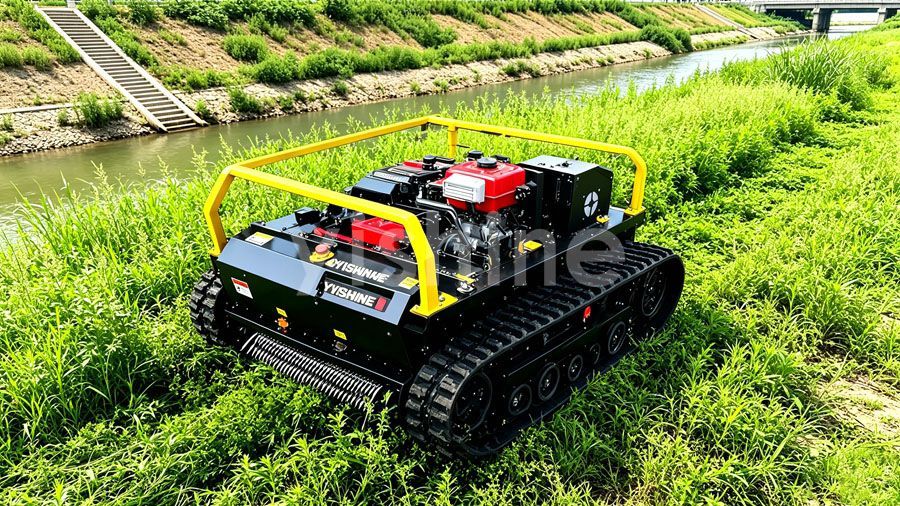
YISHINE diesel lawn mower adopts upgraded forced pressure lubrication structure. In the 38-degree extreme slope endurance test, diesel units maintain balanced oil circuit circulation and stable torque output. No overheating alarm or abnormal mechanical abrasion occurred during long-term tilted operation. For mountain orchards, river embankment protection and fire belt trimming projects, diesel power provides far higher operational safety and mechanical stability.
Noise Vibration & Site Environmental Adaptability
Gasoline powered lawn mower runs smoothly with small mechanical vibration. The actual operating noise is 12-15 dB lower than diesel equipment, which complies with urban environmental noise control standards. It can work normally in residential communities, urban parks and tourist scenic areas without causing resident complaints or environmental supervision risks.
Diesel lawn mower produces stronger vibration and louder operating noise. Although it cannot adapt to noise-sensitive urban core scenarios, it has no usage restrictions in remote mountainous areas, open wastelands and engineering construction sites, fully meeting the requirements of heavy outdoor construction.
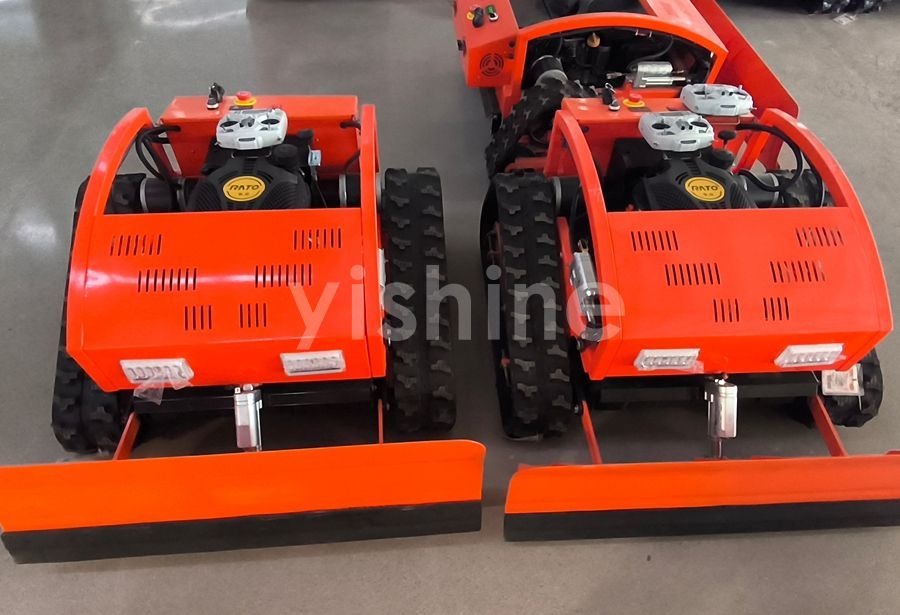
Maintenance Cycle & Whole-Life Cost Analysis
Gasoline Engine Maintenance Advantages and Disadvantages
Gasoline engine structure is simple and mature, with universal accessories and low replacement cost. Daily maintenance work mainly includes air filter cleaning, spark plug inspection and engine oil replacement every 25 working hours. On-site operators can complete routine maintenance independently without professional technical training, reducing equipment management thresholds.
The main shortcoming is short maintenance intervals. Frequent daily inspection is required to avoid power drop caused by clogged filter elements and aging accessories.
Diesel Engine Maintenance Advantages and Disadvantages
Diesel engines extend the oil replacement cycle to 50 working hours, reducing overall maintenance frequency by nearly 50%. The overall failure rate of long-term continuous operation is far lower than gasoline engines. Although precision parts such as fuel injectors have higher replacement costs, diesel equipment shows better stability and longer service life in high-frequency commercial scenarios, with lower comprehensive annual loss cost.
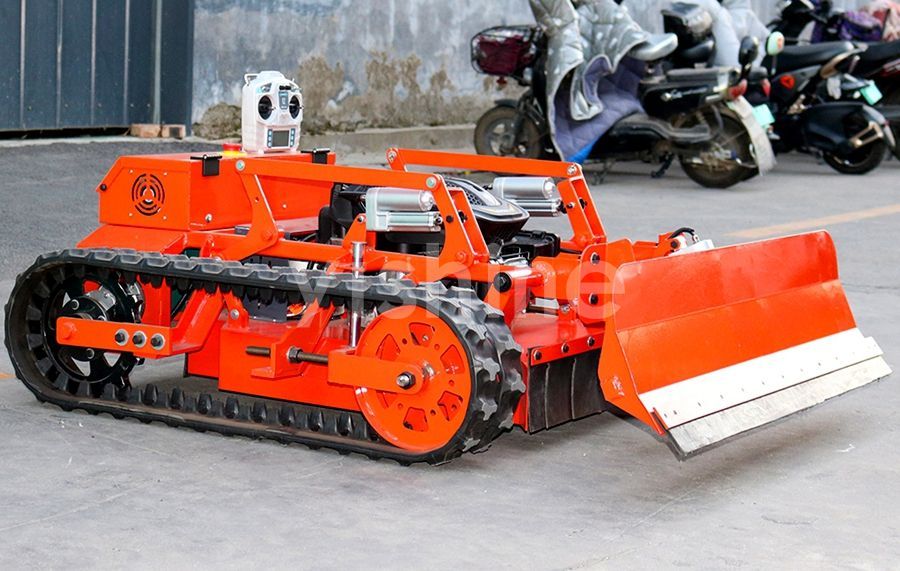
Scenario-Based Selection Guide for Commercial Buyers
Choose Gasoline Powered Lawn Mower If:
Your projects focus on urban parks, residential green belts and scenic area maintenance
Construction sites have strict noise and environmental protection restrictions
Working areas are medium or small, dominated by soft lawn and ordinary weeds
Equipment works intermittently without long-term full-load continuous operation
Choose Diesel Lawn Mower If:
You need large-area wildland renovation and steep slope vegetation cleaning
Working environments contain thick weeds, dry brambles and mixed small shrubs
Equipment runs continuously for long hours with high utilization rate
Construction terrain is complex, including mountain slopes, river embankments and rugged wasteland
Frequently Asked Questions
Q1: Is diesel remote control lawn mower always better than gasoline type?
A1: No absolute superior power type exists. Diesel performs better in heavy-load and steep-slope engineering scenarios, while gasoline models are more suitable for quiet urban refined maintenance with lower vibration and easier daily management.
Q2: Can gasoline mowers work stably on steep slopes?
A2: Gasoline units support short-term slope operation. Long-term full-load inclined work will affect lubrication balance and accelerate component wear. Sustained slope projects are more suitable for diesel power configuration.
Q3: Which power type saves more long-term operating costs?
A3: Diesel lawn mower has lower fuel consumption and failure rate for year-round commercial use. Gasoline powered lawn mower has lower entry cost and maintenance pressure for occasional small-area tasks.
Q4: Does YISHINE upgrade the chassis for diesel mowers?
A4: Yes. All YISHINE diesel remote control lawn mower models adopt reinforced chassis, thickened wear-resistant tracks and strengthened cutter head structures to match high-torque diesel engines, avoiding frame deformation and power mismatch problems.
Final Buying Suggestion
Commercial purchasers should never blindly define good or bad power types for remote control lawn mower equipment. Gasoline powered lawn mower brings quiet, flexible and low-threshold solutions for urban refined greening, while diesel lawn mower provides high-torque, high-stability and long-duration working capacity for harsh complex terrain projects.
Before purchasing, buyers need to comprehensively evaluate local terrain conditions, vegetation thickness, daily working hours and environmental rules. Selecting the most matching power configuration can maximize mowing efficiency and effectively control long-term fuel consumption, maintenance loss and equipment replacement costs.