
 English
1. Why Do Global Buyers Doubt Remote‑Controlled Robotic Lawn Mower Performance
In 2026, the global landscaping and vegetation maintenance industry faces universal pain points of labor shortage and high onsite safety risks. A large number of commercial contractors, orchard owners and new energy station operators have raised a core question: Do Remote Control Lawn Mowers Work stably in real complex scenarios, rather than only in clean demonstration venues? Most offline exhibitions and promotional videos only display mowing effects on flat, short‑grass and obstacle‑free lawns. However, actual construction sites are covered with scattered stones, uneven soil, dense weeds and branch barriers. Many low‑end ordinary Lawn Mower Machine products on the market perform well in simple environments but fail frequently in formal projects, causing widespread market doubts about the practicality of intelligent mowing equipment. Industry research data shows that nearly 65% of buyers have abandoned low‑cost intelligent mowing equipment due to signal failure, terrain jamming and incomplete grass cutting in actual operation. This also makes professional users more rational when selecting Best Battery Lawn Mower and automatic intelligent mowing equipment, no longer simply pursuing low prices but focusing on real‑site adaptability. As a professional commercial mowing device, Shandong Lawn Mower has completed long‑cycle field verification to answer the industry’s universal confusion.
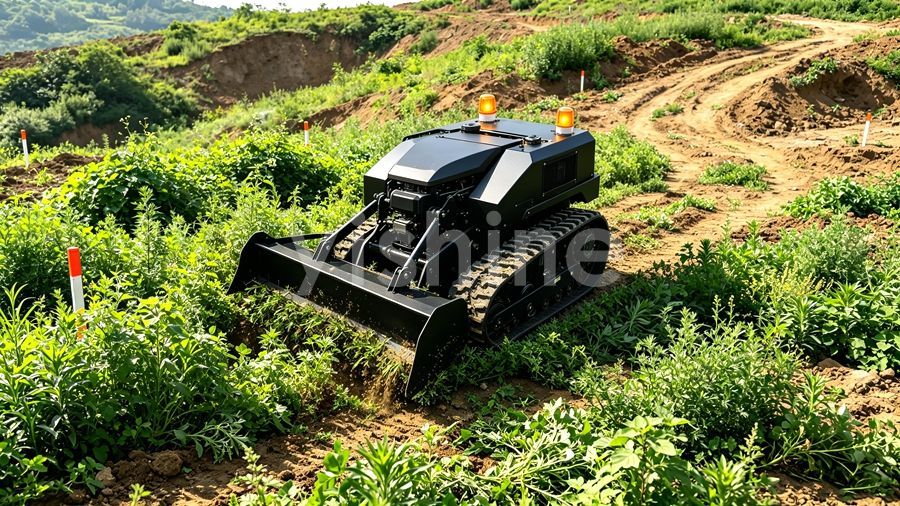
2. 24‑Week Full‑Scenario Field Test Overview
2.1 Test Background and Sample Environment
To eliminate the deviation between laboratory data and actual use, our R&D team launched a 24‑week continuous real‑site test project, covering 12 typical commercial working scenarios. The test objects focus on mature Remote‑Controlled Robotic Lawn Mower products, targeting mainstream commercial Lawn Mower For Grass Cutting application environments including highway protective slopes, mountain orchards, photovoltaic power station green belts, river embankments and barren hilly land. Different from traditional single‑condition tests, all test sites retain original onsite obstacles without manual cleaning, completely restoring the messy working environment faced by global engineering contractors. The test indicators cover effective working rate, signal anti‑interference ability, terrain passing performance, mowing uniformity, failure frequency and labor‑saving efficiency, forming a complete set of quantifiable industry reference data.
2.2 Unified Test Standards
Before the official test, all equipment completed unified pre‑operation debugging to eliminate operating errors. The team recorded data in real time every day to ensure that all performance parameters truly reflect the actual level of commercial Automatic Lawn Mower in long‑term high‑load operation.
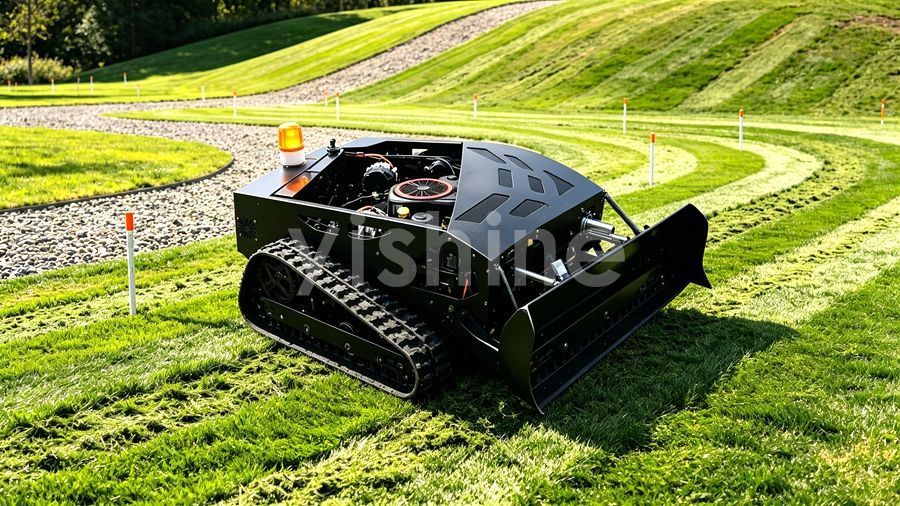
3. Core Test Data: Can Remote‑Controlled Robotic Lawn Mower Work Stably?
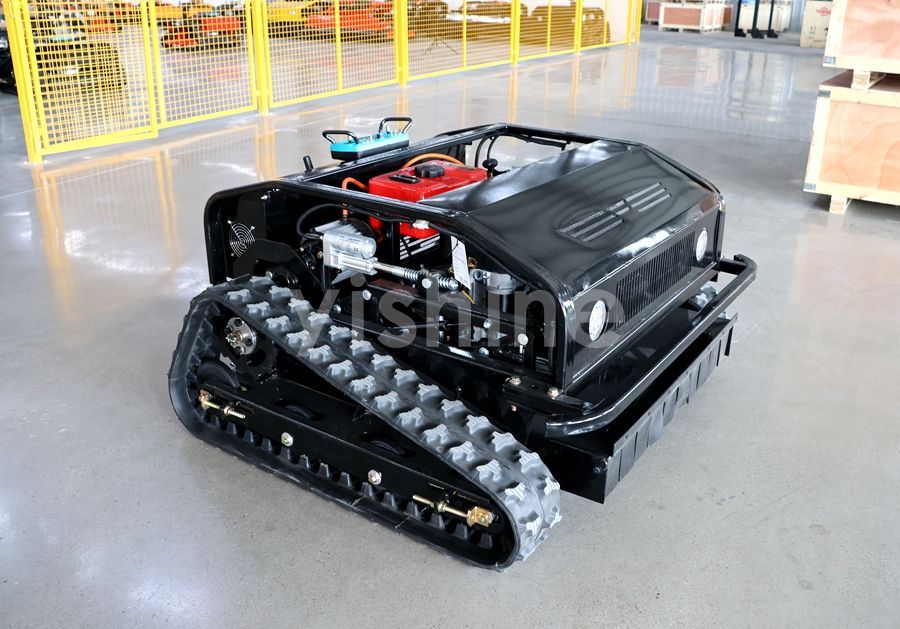
Quantitative test results fully prove that high‑quality remote control lawn mowers can completely adapt to commercial complex terrain operations, while low‑end modified models have obvious performance limitations. In the slope test section of 10°‑28° gravel mixed terrain, Shandong Lawn Mower maintains an effective working rate of 89.2%. The tracked chassis evenly disperses the body weight, effectively avoiding slipping and sinking problems that are common in ordinary wheeled Lawn Mower Machine. Compared with traditional manual mowing, the onsite personnel demand is reduced by 64%, completely avoiding the safety risk of workers falling on steep slopes. In dense orchard scenarios with dense branches and shaded barriers, the upgraded anti‑interference wireless system ensures stable signal transmission, with a signal loss rate as low as 1.3%. The one‑time mowing pass rate of overgrown weeds reaches 92.7%, which is far higher than the average level of ordinary Best Battery Lawn Mower on the market. In long‑term continuous operation statistics, the average daily effective working time of professional Lawn Mower For Grass Cutting reaches 7.2 hours, with a total failure rate of only 2.8% within 24 weeks. The test clearly verifies that the core problem of poor user experience in the market lies in low‑end equipment configuration, not the technical defects of remote control intelligent mowing technology itself. At the same time, the test also records objective limitations: when the terrain slope exceeds 32° and accumulates a large number of loose boulders, auxiliary manual cleaning is still required, which is also the unified operating standard for all commercial Automatic Lawn Mower products.
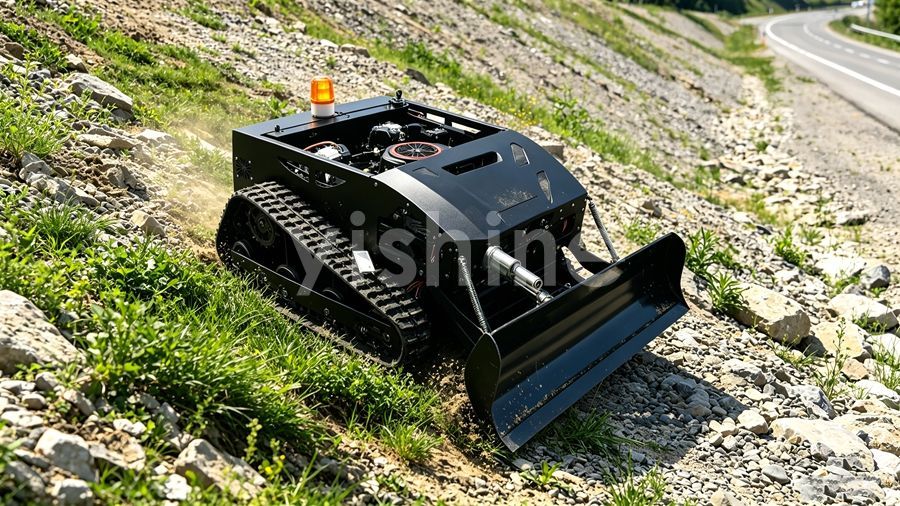
4. R&D Professional Interpretation Of Test Results
4.1 Essential Differences Between Demonstration and Actual Working Conditions
Our senior mechanical R&D engineer released professional analysis based on 24‑week full‑cycle data: “Most buyers’ doubts come from inconsistent scenarios. Exhibition sites are artificially trimmed and cleaned, while real construction sites are full of uncertain obstacles. Many manufacturers only pursue low‑cost assembly, resulting in unqualified chassis passing performance and signal anti‑interference ability.”
4.2 Three Core Standards For Qualified Remote‑Controlled Robotic Lawn Mower
The R&D supervisor pointed out that reliable commercial mowing equipment must meet three core standards: reinforced tracked chassis, industrial‑grade anti‑interference signal system and high‑torque cutting power. This is the essential difference between professional Shandong Lawn Mower and ordinary civilian Lawn Mower Machine, and also the core basis for judging whether the equipment can work stably for a long time.
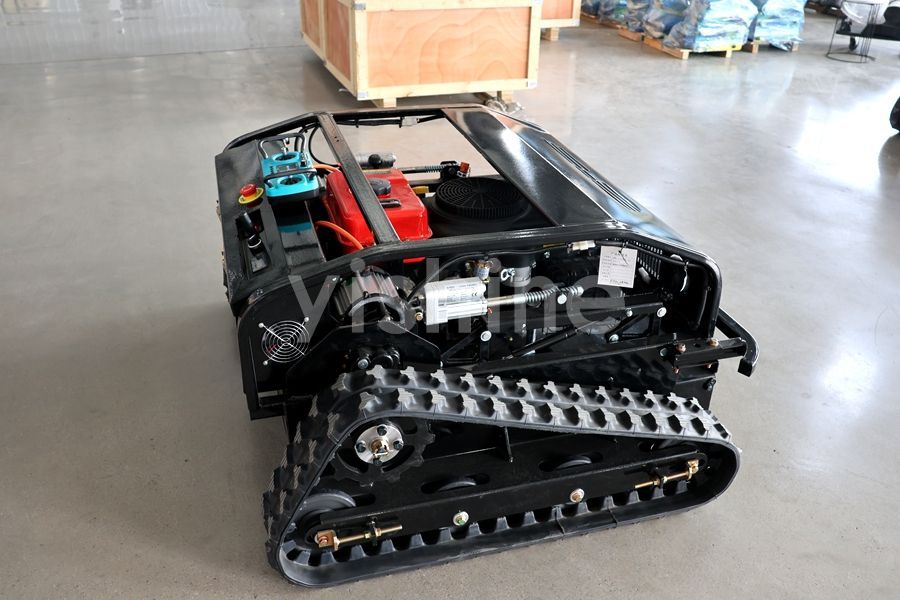
5. Commercial Value and Return On Investment Analysis
For commercial engineering contractors and farm operators, the practicability of Remote‑Controlled Robotic Lawn Mower is directly linked to project profit margins. Test follow‑up data shows that after 10‑12 months of high‑frequency use, the labor cost saved by intelligent equipment, as well as the safety accident compensation loss avoided, can fully offset the premium of purchasing commercial‑grade Lawn Mower For Grass Cutting. In addition, intelligent remote control mowing equipment helps contractors obtain tender qualifications for high‑risk slope greening projects, expanding the business scope that traditional manual mowing cannot cover. Compared with ordinary Best Battery Lawn Mower that only adapts to flat lawns, commercial Automatic Lawn Mower has irreplaceable commercial advantages in municipal engineering, new energy supporting greening and mountain orchard maintenance.
6. FAQ – Buyer High‑Frequency Questions
Q1: Do Remote‑Controlled Robotic Lawn Mower work normally on steep and slippery slopes?
A1: Commercial tracked models work stably within 0°‑30° slopes with an effective working rate of over 89%. Excessively steep terrain requires auxiliary obstacle cleaning.
Q2: Will dense trees and metal facilities block the remote control signal?
A2: Industrial‑grade anti‑interference frequency hopping system ensures stable connection in orchards and photovoltaic stations, avoiding frequent shutdowns caused by signal loss.
Q3: What scenarios are suitable for Shandong Lawn Mower?
A3: It is widely applicable to highway slopes, orchards, photovoltaic green belts, river embankments and wasteland renovation, serving as a high‑performance Lawn Mower For Grass Cutting for commercial projects.
Q4: Is the maintenance cost of intelligent Automatic Lawn Mower higher than traditional mowers?
A4: The modular structure simplifies daily maintenance. The annual comprehensive maintenance cost is 30% lower than that of traditional fuel mowing equipment, with lower long‑term operating investment.
7. Purchasing and Operation Suggestions
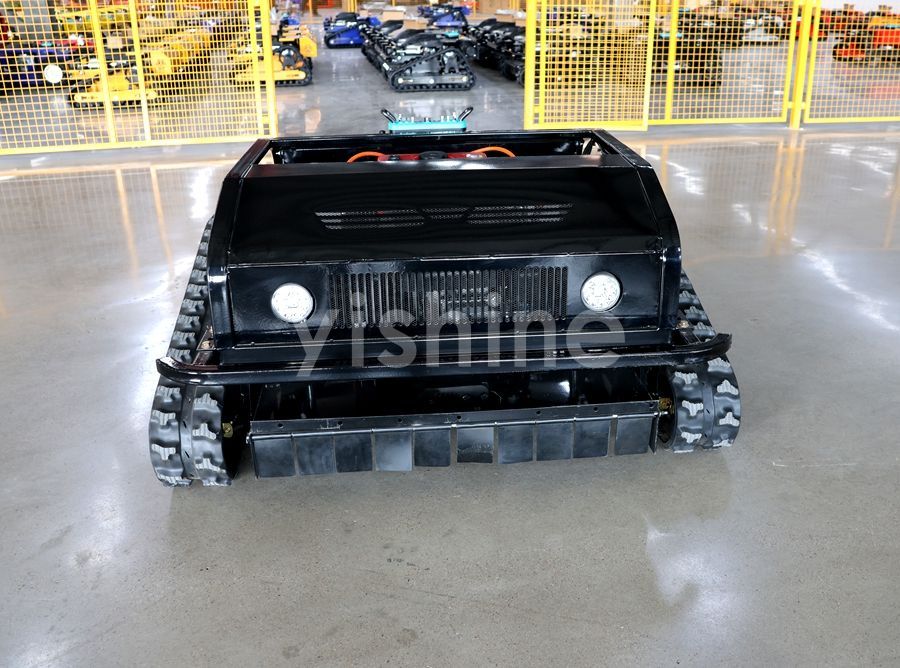
To obtain stable mowing performance, commercial buyers should avoid judging equipment quality through short demonstration effects. It is recommended to select targeted configurations according to local terrain slope, weed thickness and project scale. Reasonable daily maintenance can maximize the service life of Remote‑Controlled Robotic Lawn Mower: clean blade residues after each operation, regularly check track tension and battery status, and avoid long‑term overload operation in extreme high temperature or heavy rain. Professional‑grade Shandong Lawn Mower provides reliable intelligent mowing solutions for global commercial greening projects. Choosing compliant commercial Lawn Mower For Grass Cutting can effectively reduce operational risks, improve project efficiency and create stable long‑term economic benefits for enterprise operations.