
 English
The global lawn mower and outdoor landscaping industry continues stable expansion throughout 2026, with rising demands for residential yard maintenance, commercial park greening, orchard management and rural terrain renovation. Latest industry statistics show that the global market for terrain‑adaptive lawn mowers has increased by 27.4% year over year. More than 68% of overseas buyers prioritize terrain adaptability, operational stability and long‑term maintenance costs when selecting lawn mower equipment.
With the diversification of landscaping scenarios, simple universal lawn mowers can no longer meet segmented working needs. Flat urban lawns and rugged hilly terrains require completely different chassis structures and driving systems. A 2026 user industry survey shows that 31% of equipment inefficiency problems are caused by mismatched wheeled or tracked mower types. This makes professional comparison of wheeled vs tracked lawn mower essential for global users and contractors. The industry is now clearly segmented: traditional wheeled mowers dominate flat‑area maintenance, while high‑stability tracked models are rapidly replacing old equipment for complex terrain projects.
Professional R&D Test Overview & Authority Analysis
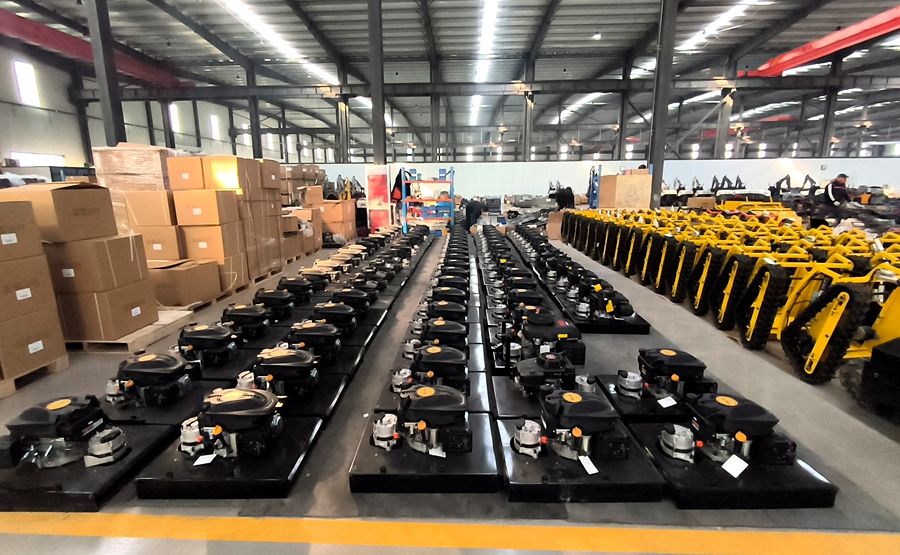
To eliminate ambiguous marketing data and provide users with authentic purchasing references, our machinery R&D team completed a 42‑day continuous field test covering flat hard ground, 15° to 35° slopes, post‑rain muddy land and stony wasteland. The test adopted two same‑power lawn mower units with wheeled and tracked structures respectively, working under identical load and weather conditions.
Jack Lee, senior R&D supervisor of outdoor power equipment, released professional test analysis: “Most buyers only focus on machine power and price, ignoring ground pressure and slip rate. tracked lawn mower performance and wheeled mower ground clearance determine 80% of actual field working efficiency. Many users waste labor and maintenance costs due to blind model selection.” All data mentioned in this article comes from real field recording instead of laboratory virtual parameters, ensuring high authenticity and industry reference value.
Core Structural & Terrain Adaptability Differences
Wheeled Mower Structural Advantages & Limitations
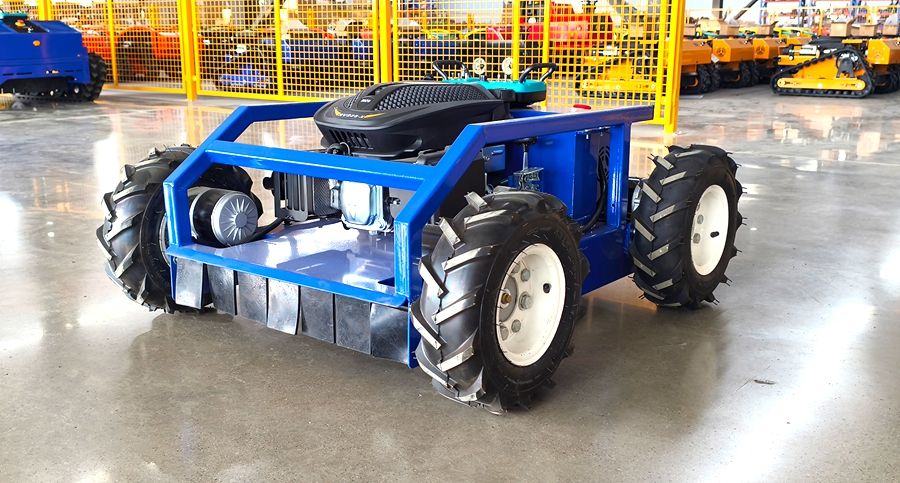
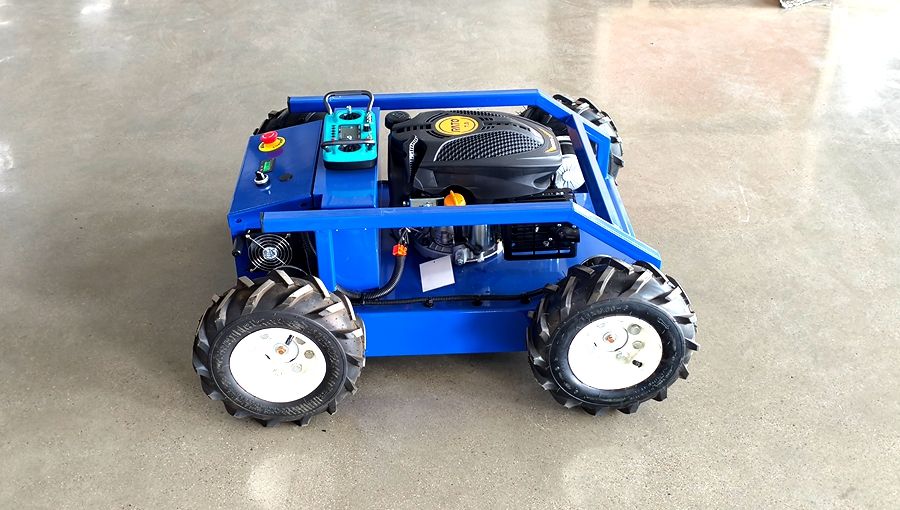
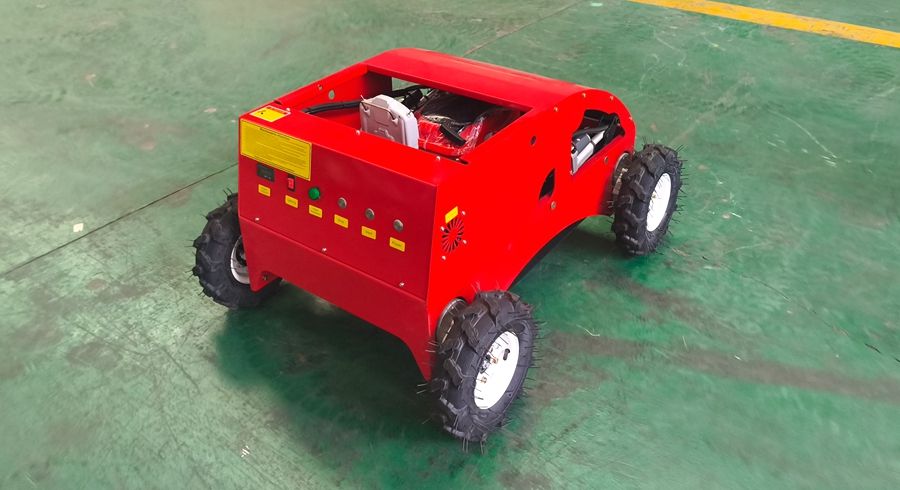
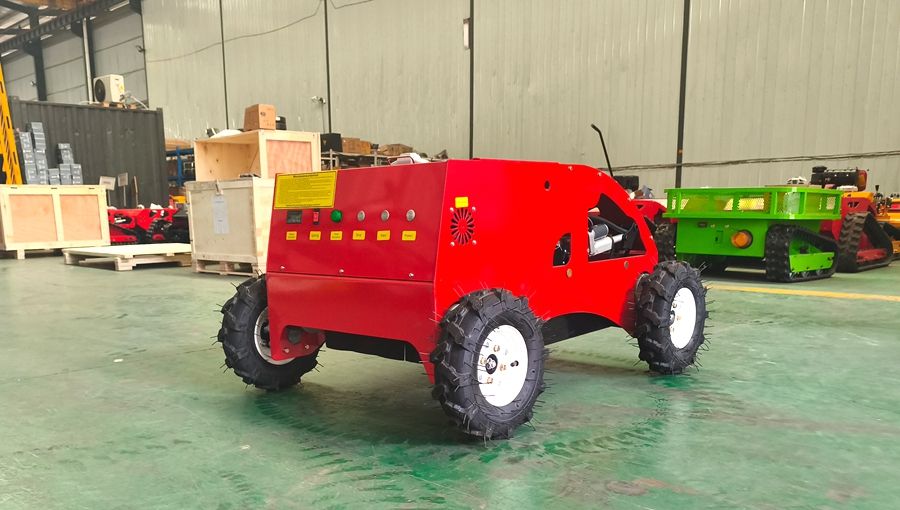
Wheeled lawn mowers adopt traditional rubber tire rolling structure, with an average ground pressure of 0.12 to 0.15 MPa. The standard wheeled mower ground clearance ensures flexible movement and low rolling resistance on flat and hardened lawn surfaces. In standardized flat yard tests, the wheeled mower achieves a stable driving rate of 98.7%, with smooth steering and uniform mowing effect.
However, the structural defects of wheeled units are obvious in complex terrain. When working on slopes exceeding 12 degrees, the side slip rate rises significantly, reaching 21% on 15‑degree gentle slopes. On soft muddy ground after rainfall, tires are prone to sinking and mud winding, requiring frequent shutdown cleaning. Rocky terrain will cause continuous scratch damage to tire sidewalls, shortening the service life of vulnerable parts by nearly 40%. Overall, wheeled mowers are only stable and efficient for flat and gently sloped lawns below 10 degrees.
Tracked Mower Terrain Adaptability Performance
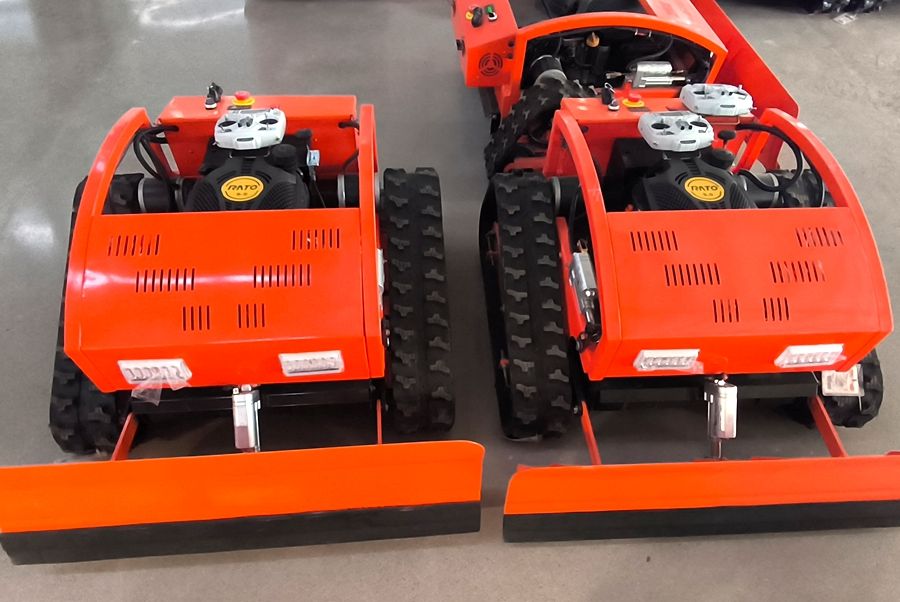
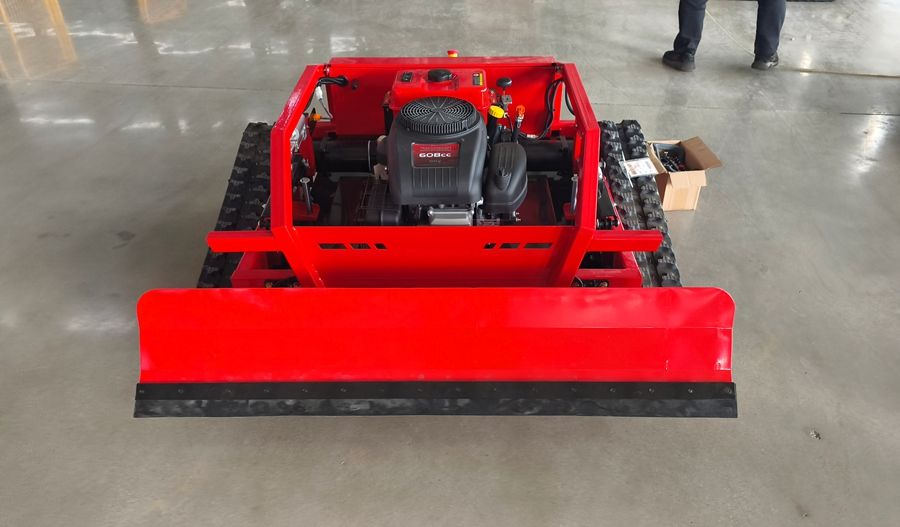
Different from wheeled models, tracked lawn mowers use full‑contact rubber tracks to disperse body weight, reducing average ground pressure to 0.04‑0.06 MPa, which is 67% lower than wheeled mowers. This core structural upgrade greatly improves tracked lawn mower performance on harsh terrain.
In the 42‑day field test, the tracked mower maintained a slip rate of only 4% to 7% on 15° to 25° steep slopes. It will not sink or stall on wet mud, loose sandy soil and stony wasteland. Even with tiny undulations on the ground, the track fitting structure keeps the body stable, ensuring consistent cutting height. Although tracked mowers cannot work safely on terrain over 30 degrees, they solve almost all complex terrain pain points that wheeled mowers cannot handle, becoming the preferred equipment for commercial orchard and mountain greening projects.
Working Efficiency & Fuel Consumption Quantitative Comparison
In the unified 2000㎡ standard lawn test area, the two types of mowers show completely different efficiency performance. On flat ground, the wheeled lawn mower completes mowing in 47 minutes with an average fuel consumption of 1.8L per hour, showing flexible movement and slight energy‑saving advantages. The cutting height deviation is controlled at ±8mm, fully meeting daily residential and commercial greening standards.
In undulating complex terrain of the same area, the gap is significantly widened. The wheeled mower requires 79 minutes to complete the work, with frequent slipping and position correction, resulting in an actual effective efficiency drop of 38%. It needs 6 to 8 emergency stops every day to clean wheel mud. In contrast, the tracked lawn mower only takes 58 minutes, with an efficiency drop of only 11%, and only 1 to 2 simple cleanings per day. For long‑term commercial operation, the stable efficiency of tracked mowers greatly reduces labor time and project rework rate.
Maintenance Cost & Full‑Cycle Service Life Analysis
Wheeled lawn mowers have simple mechanical structures with fewer vulnerable parts. The service life of rubber tires is 720 to 850 working hours under standard conditions. The annual maintenance cost for 1000 working hours is only $210 to $270. Daily inspection only includes tire pressure and hub cleaning, without complicated professional operation, which is very suitable for household low‑frequency use.
Tracked lawn mowers have more precise transmission structures, including tracks, tension wheels and driving sprockets. The service life of rubber tracks can reach 900 to 1100 working hours with standardized maintenance, and the annual maintenance cost for 1000 hours is $320 to $395. Although the daily maintenance threshold is higher, R&D tests prove that standardized inspection can increase track service life by 30%. For long‑term complex terrain operation, the overall service life of tracked mowers is 1.8 times that of wheeled mowers, with lower comprehensive replacement loss.
Applicable Scenarios & Selection Suggestions
Wheeled lawn mowers are suitable for flat residential courtyards, urban community green belts, park lawns and school green areas. Relying on superior wheeled mower ground clearance and flexible rolling performance, they achieve high cost performance in flat and standardized greening scenarios.
Tracked lawn mowers are targeted at mountain orchard weeding, sloped pasture trimming, post‑rain wet terrain renovation and rugged wasteland greening. Excellent tracked lawn mower performance enables stable operation in various harsh environments, solving the core pain points of slipping, sinking and uneven mowing for commercial contractors.
FAQ – Overseas High‑Frequency Buying Questions
Q1: Which mower is more suitable for home yard maintenance?
A1: For flat and regular home lawns, wheeled lawn mowers are more cost‑effective, with lower fuel consumption and simpler maintenance. Choose tracked mowers only if your yard has large slopes or uneven muddy terrain.
Q2: Is the higher price of tracked lawn mowers worthwhile?
A2: It depends on working terrain. Tracked mowers avoid slipping and repeated trimming on complex terrain, greatly reducing long‑term labor and equipment loss, bringing higher comprehensive benefits for commercial projects.
Q3: What is the maximum slope for wheeled mowers to work safely?
A3: Wheeled mowers are only safe for slopes below 10 degrees. Slopes between 10 and 25 degrees require tracked mowers to ensure working stability and mowing quality.
Q4: Why do same‑power mowers have different actual working effects?
A4: Actual performance is affected by ground clearance, terrain flatness, soil humidity and weed density. Real field test data is more reliable than nominal machine parameters.
Conclusion & Professional CTA
In 2026, precise model selection between wheeled vs tracked lawn mower has become the key to improving greening efficiency and reducing operating costs. Wheeled mowers maintain irreplaceable cost advantages in flat daily maintenance, while tracked mowers provide stable and reliable working performance for all kinds of complex and harsh terrain. Users can select targeted lawn mower equipment according to their actual site terrain, working area and usage frequency to maximize equipment utilization and project return on investment. Browse our full range of lawn mower products to obtain professional scenario‑based matching solutions and detailed technical parameters.